Emergency and Troubleshooting
Burning smell or sparking outlet in a Grand Rapids home? Call now
A burning smell with no obvious source, a scorched outlet, or sparks at the panel means something is overheating right now. Turn off the breaker for that area, keep the room clear, and call. We find the connection that is cooking and repair it before it becomes a fire.
Updated September 2026
- Answered 24/7
- Dispatched, not booked
- Thermal and meter checks
- Grand Rapids and Kent County
Quick answer
A burning smell or sparking outlet in a Grand Rapids home usually means a loose connection, a melted backstab wire, an overloaded device or arcing in the panel. Turn off the breaker feeding that area, unplug nearby devices, and call. If there is smoke or flame, leave the house and call 911 first.
What you notice first
Treat these as emergencies
Fishy or sharp plastic smell
Overheated insulation or a melting device.
Scorch marks on an outlet or switch
Arcing has already happened inside.
Sparks when plugging in
Worn contacts or a loose connection.
Buzzing or crackling at the panel
Arcing at a breaker or bus.
Warm switch plates or cords
Resistance building at a connection.
Smoke or flame
Leave the house and call 911 first.
Time on site
How long the power stays off
Usually only the affected circuit stays off while we work, and most overheated connections are repaired in the same visit. If the damage is at the panel, the main may need to be shut off for the repair, and if a cable is burned inside a wall, that section is replaced before power returns. We tell you before we start how long you will be without that circuit.
What this job is
What overheats, and why the smell comes first
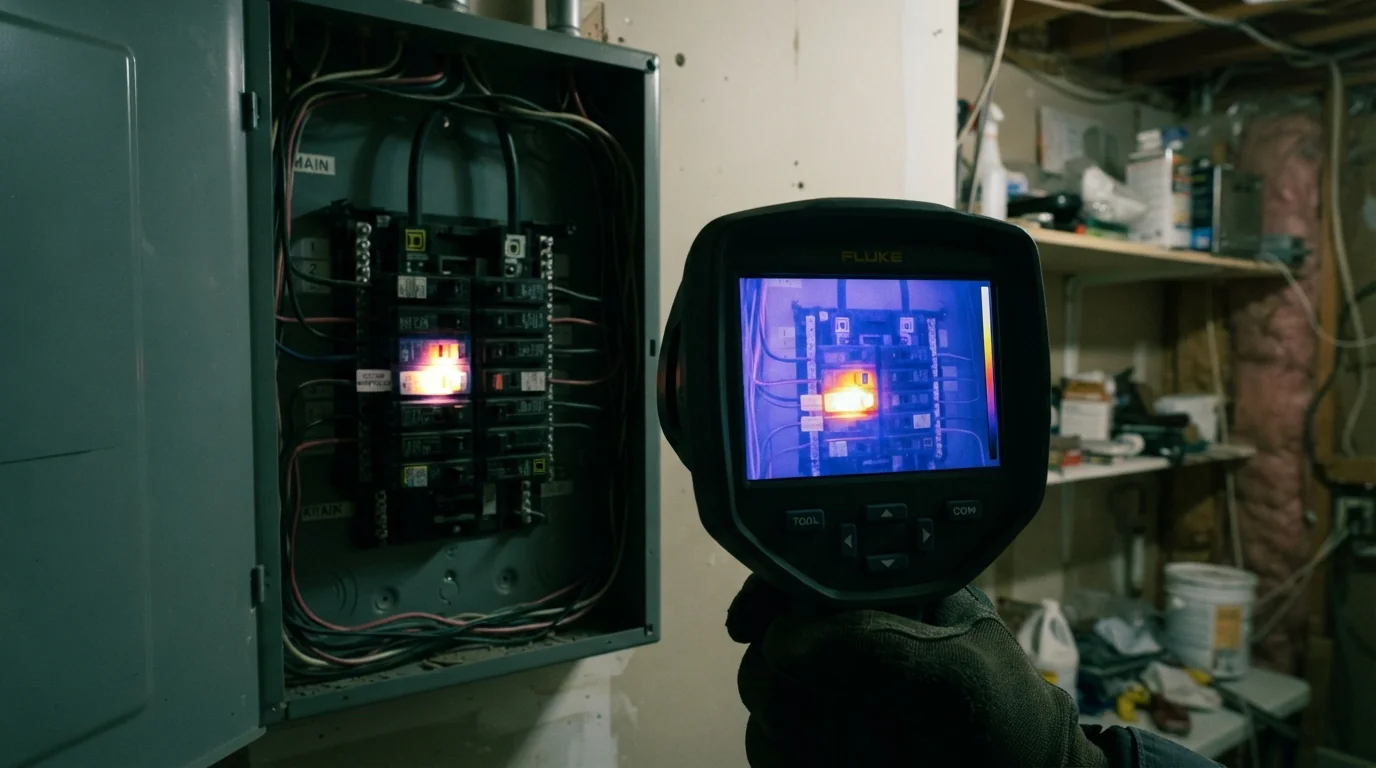
Electrical fires usually start small: a connection that has loosened over years builds resistance, heats, and cooks the insulation around it. That is the sharp plastic or fishy smell people describe, often hours or days before anything visible happens. Finding it means opening the boxes on the affected circuit and checking the panel, sometimes with a thermal camera, until the hot spot is found.
The versions of this job
Scorched receptacle
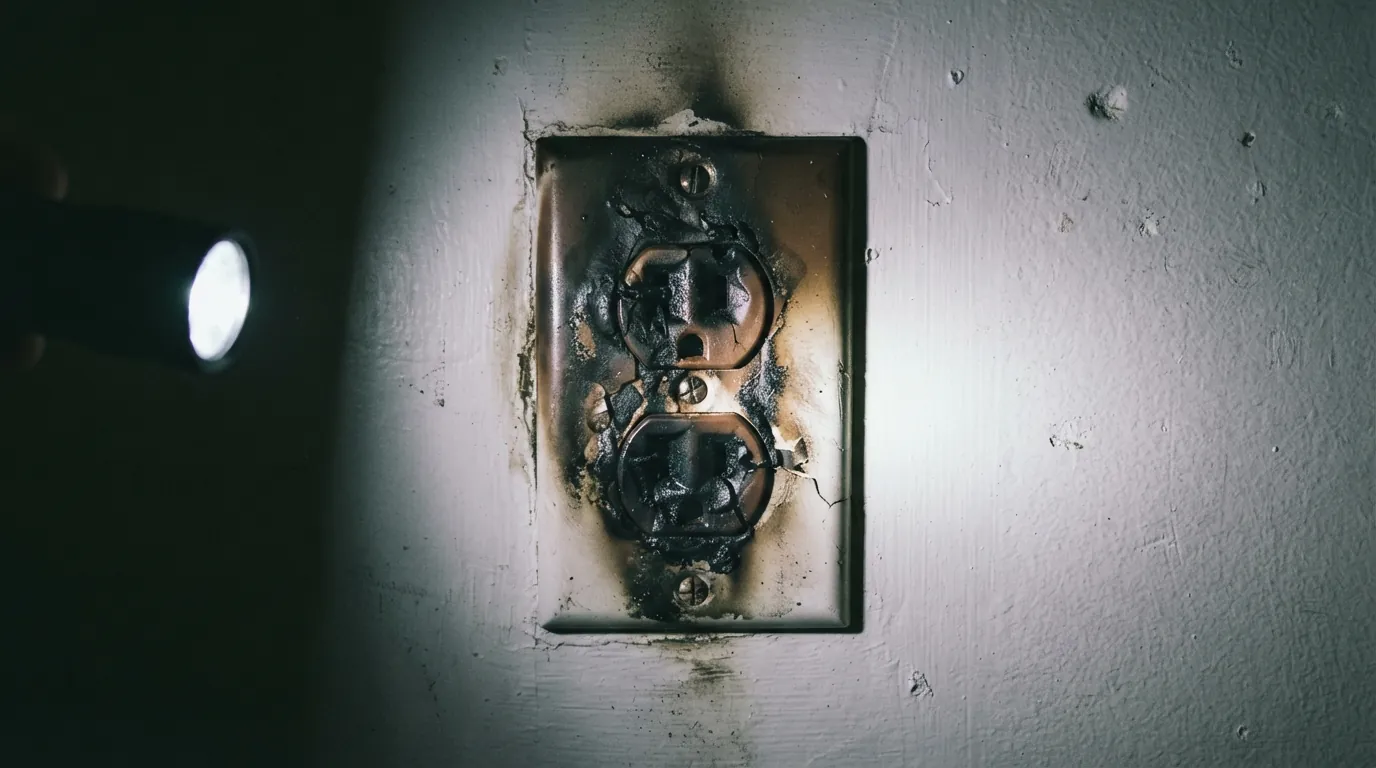
A scorched outlet is usually the end of a long story: a heavy load such as a space heater, a worn device with weak contacts, or a loose wire on a terminal. The outlet overheats, the plastic darkens, and sometimes the wire insulation behind it melts. We replace the device, cut back and reterminate any damaged wire, check the box and the next outlet upstream, and recommend a dedicated circuit if a heater or appliance was the cause of the overload.
Loose backstab connection
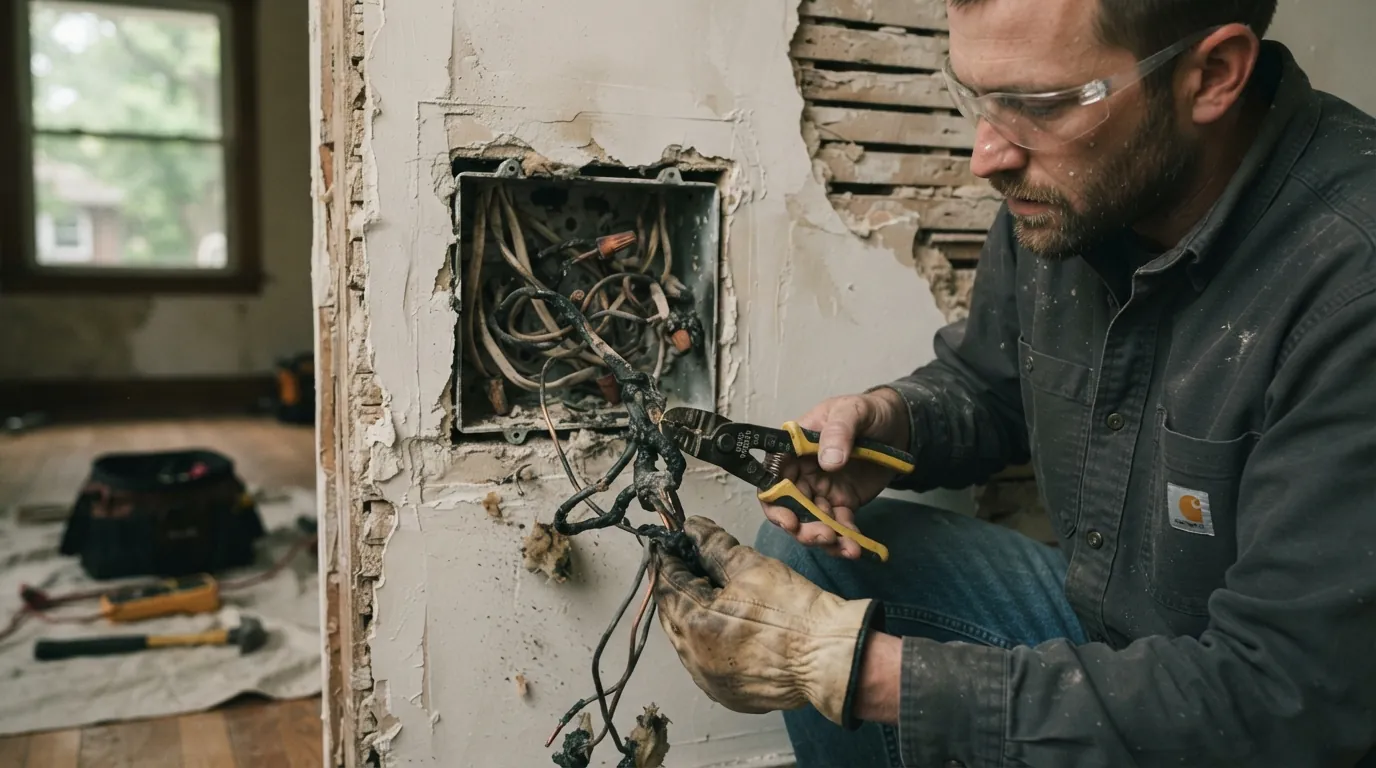
Many homes have outlets wired through push-in backstab holes rather than screw terminals. Over years of heating and cooling, those spring contacts lose grip, and a loose contact under load gets hot enough to melt plastic. We move the wires onto the screw terminals or pigtail them with listed connectors, and check the other devices on the same run, because a house wired one way usually has the same weakness in more than one box. Any contact that shows discoloration gets a new device, not just a tightened wire.
Melted wire insulation
When the smell traces back to a cable rather than a device, the insulation has been overheated along a length of wire, usually from an overload or a splice buried without a box. Burned sections are cut out and replaced, splices are put into accessible boxes, and the circuit is tested before it is turned back on. If the circuit is old knob-and-tube, we explain what replacing that run involves rather than patching it, because a single repaired splice does not make the rest of an overheated run safe.
Arcing at the panel
Sparks, buzzing or a burnt smell at the panel point to arcing at a breaker, a loose lug on the bus, or corrosion. This is the most urgent version of the call because the panel feeds everything. We shut off the main, inspect the bus and connections, replace damaged breakers, and if the bus itself is burned or the panel is a brand with known problems, we will tell you plainly that the panel needs replacing and price it the same day, rather than leaving a damaged panel in service.
How the job runs
What happens after you call about a burning smell
Stay safe first
Breaker off, devices unplugged, 911 if smoke.
Technician dispatched
Any hour, not booked for later.
Find the hot spot
Panel, boxes and thermal checks.
Make it safe
Isolate the damaged section.
Repair
Reterminate, replace device, cable or breaker.
Test before power returns
Circuit tested under load.
Local conditions
Local conditions that change the work
Heritage Hill, just east of downtown, is a historic district of Victorian-era houses, and houses of that age often carry original or patched wiring behind plaster walls. When a burning smell comes from a wall there, it is often an old splice or knob-and-tube run rather than a device, so we open carefully and check the run before calling the job done.
Cost factors
What moves the price on this job
Finding the hot spot is most of the visit; the repair depends on what burned.
Typical regional ranges: $79 to $179 for a service call fee and $100 to $200 installed for a breaker replacement, as planning figures rather than our price.
- 01
Time to locate
An obvious scorched outlet is quick; a hidden splice is not.
- 02
What burned
Device, cable, breaker or panel bus.
- 03
Damage extent
One box or a whole run of connections.
- 04
Wall access
Plaster and finished walls take more care.
- 05
Wiring age
Knob-and-tube may widen the repair.
- 06
Panel condition
A burned bus can mean a panel replacement.
- 07
Timing
Night calls can cost more than a booked visit.
Straight answers
Questions about burning smell and sparking outlet repair in Grand Rapids
Still unsure? Call (616) 699-4794 and ask a technician.
Turn off the breaker for that area, unplug nearby devices and call. If there is smoke or flame, leave and call 911.
Yes. Loose or worn connections heat up under load and can ignite nearby material.
Often. Overheating wire insulation and some plastics give off a fishy odor.
Yes. Burning smells and sparking are dispatched any hour.
No. Leave it unused and the breaker off until it has been checked.
Same category