Emergency and Troubleshooting
Breaker keeps tripping? Grand Rapids fault finding and repair
A breaker that trips is doing its job; the question is why. We test the circuit, then fix the actual cause instead of swapping parts.
Updated September 2026
- Answered 24/7
- Tested before replaced
- Breaker matched to your panel
- Grand Rapids and Kent County
Quick answer
A breaker that trips in a Grand Rapids home is usually one of three things: too much load on the circuit, a short or ground fault, or a worn-out breaker. A technician tests the circuit to tell which, because each has a different fix and price.
What you notice first
When a tripping breaker means stop and call
Trips the instant you reset
A dead short. Leave it off.
Trips with a burning smell
Heat at a connection. Leave it off.
Breaker hot to the touch
Worn breaker or loose bus lug.
Same breaker, every day
Chronic overload or a failing breaker.
AFCI or GFCI trips at random
Shared neutral, damaged cord or the device.
Lights dim before the trip
Heavy load or a loose neutral.
What this job is
Why the same trip has three different fixes
Each reset heats the fault again. Trips when the heater and microwave run together mean overload; trips the instant you reset mean a short; random trips with nothing running point at the breaker. Telling them apart takes a meter, not guesswork.
The versions of this job
Overloaded circuit
The most common cause in older Grand Rapids homes is a circuit carrying more than it was designed for: a kitchen counter shared with the refrigerator, or a bedroom running a space heater and a window unit. We measure the load, find which devices share the circuit, and either move loads to a lightly used circuit or run a dedicated circuit for the appliance that keeps tipping it over. Swapping in a larger breaker is never the fix; the wire sets the limit, not the breaker.
Short circuit and ground fault
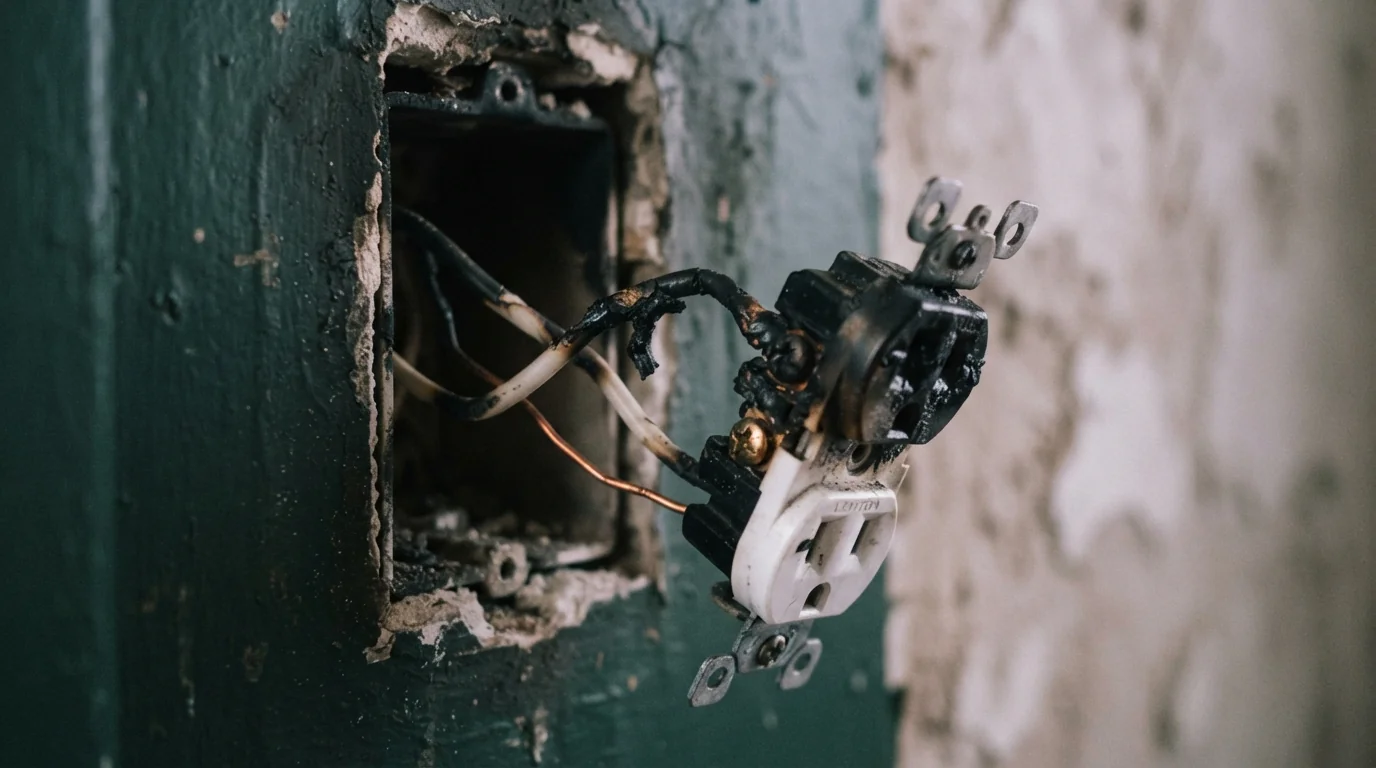
A short trips the breaker instantly, often with a pop. We isolate the circuit and test it section by section: a pinched cable behind a picture hook, a nail through a wire, a failed appliance cord or a scorched receptacle. Ground faults show up most on GFCI-protected circuits in kitchens, bathrooms, garages and outside, where moisture gets into a box or a cord. Once the damaged section is found, it is repaired or replaced and the circuit tested before the breaker goes back on.

Failing or worn breaker
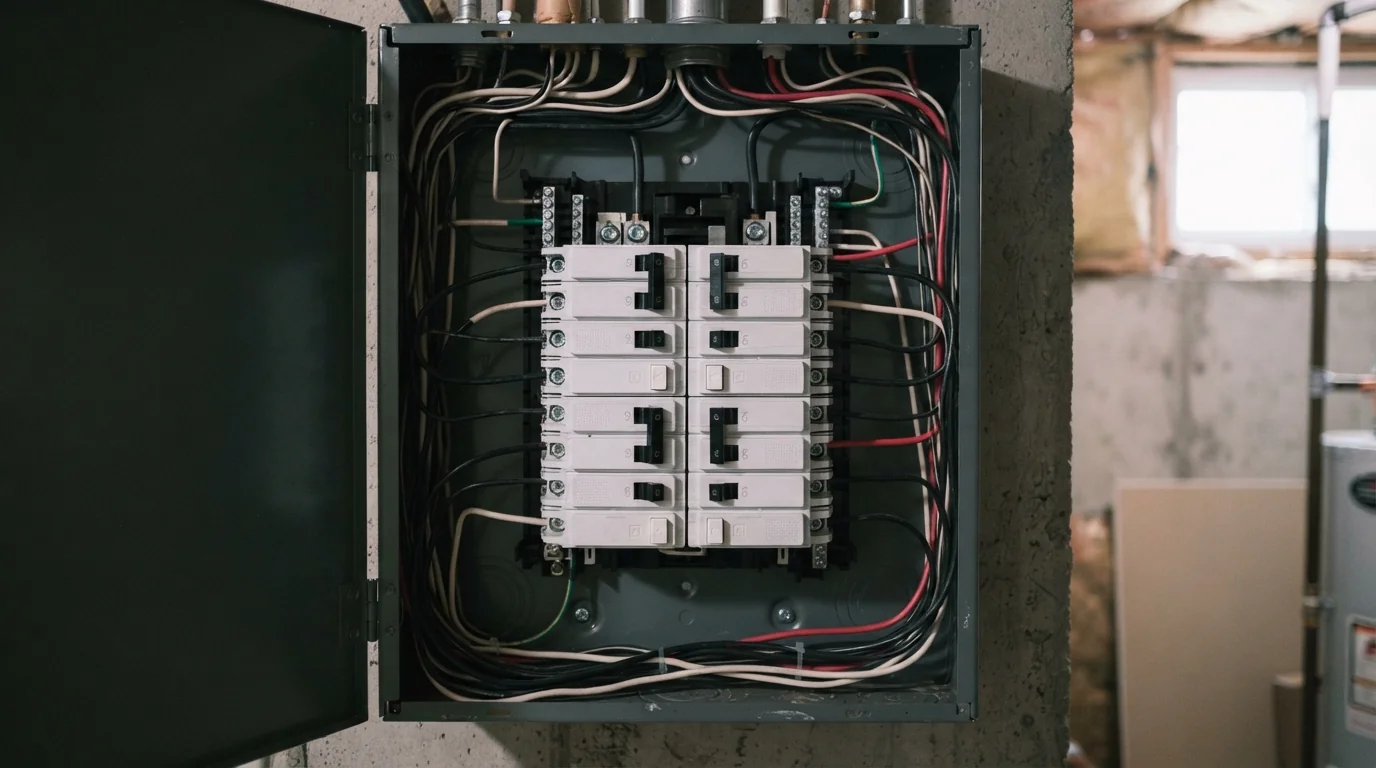
Breakers wear, especially ones that have tripped hundreds of times or sit in a panel that runs warm. A failing breaker trips below its rating, feels hot, or will not reset firmly. We test it under load, check the bus connection behind it, and replace it with the listed type for your panel brand. If several breakers show the same wear, or the panel is a brand with known problems, we will tell you and price a panel replacement alongside the repair.
Typical regional range for a breaker replacement: $100 to $200 installed, as a planning figure rather than our price.
AFCI and GFCI nuisance tripping
Arc-fault and ground-fault breakers are more sensitive by design, and some trips are real: a damaged cord, a loose connection, or a shared neutral from an older wiring job. Others come from older appliances with motors that the device reads as an arc. We check the wiring first, then the load, then the breaker itself, and only replace the device once the circuit has been cleared. Removing the protection is not an option we offer, because these devices exist to stop exactly the kind of fault that starts fires in older wiring.
How the job runs
How we find out why the breaker trips
Ask what happens
When it trips, what was running, any smell.
Check the panel
Breaker, bus and connections, cover off.
Measure the load
Current on the circuit with its normal loads on.
Test the wiring
Insulation and continuity, section by section.
Fix the cause
Split the load, repair the fault or replace the breaker.
Prove it holds
Circuit run under load before we leave.
Local conditions
Why this looks different across Grand Rapids
Most homes built before 1980 came with 100 amp service, and in Grand Rapids, where the median house dates to 1953, many kitchens and bedrooms still run on circuits sized for that era. That is why so many trips here are overloads rather than faults: the wiring is sound but it is being asked to carry a modern kitchen and a space heater at once.
Before you call
What you can check yourself and what needs an electrician
| Situation | Safe to do yourself | Leave to us |
|---|---|---|
| Trips when two appliances run | Move one to another circuit | Split the circuit or add one |
| GFCI outlet trips | Unplug everything and reset | Find the leaking device or wire |
| Trips on reset, no load | Leave the breaker off | Test for the short and repair it |
| Warm or buzzing breaker | Do not touch the panel cover | Replace breaker, check the bus |
Cost factors
What moves the price on this job
Most of the price is finding the fault; the repair is often small.
Typical regional ranges: $100 to $200 installed for a breaker replacement and $79 to $179 for a service call fee, as planning figures rather than our price.
- 01
Time to find it
Obvious shorts are quick; intermittent ones are not.
- 02
What failed
Breaker, receptacle or cable.
- 03
Breaker type
AFCI and GFCI cost more.
- 04
Panel brand
Some older panels take rare breakers.
- 05
Wall access
Opening plaster adds time.
- 06
New circuit
Splitting a circuit means new wire.
- 07
After hours
Night calls can cost more.
Breakers matched to Square D, Eaton and Siemens panels.
Straight answers
Questions about tripping breaker repair in Grand Rapids
Still unsure? Call (616) 699-4794 and ask a technician.
Once, to see if it holds. If it trips again, leave it off.
No. The wire sets the limit. The fix is less load or a new circuit.
Usually moisture, a damaged cord or a failing appliance; sometimes the device.
Yes. If it will not reset, smells hot or kills the furnace or sump, call any hour.
Typically $100 to $200 installed regionally; most of the visit is finding the cause.
Same category