EV Chargers, Generators and Backup
Solar panel electrical hookup and panel work in Grand Rapids
Solar panels on the roof are only half the job. The other half is electrical: whether the main panel can accept the solar breaker, how the inverter and disconnects are wired, and the interconnection steps Consumers Energy requires before the system can run. That half is ours.
Updated September 2026
- Answered 24/7
- Panel capacity checked
- Inverter and disconnect wiring
- Interconnection steps handled
Quick answer
Solar electrical hookup in Grand Rapids covers the wiring between the solar array and the house: checking the main panel can accept the solar breaker, wiring inverters and disconnects, upgrading the panel where needed, and completing the Consumers Energy interconnection application and operating agreement before the system is switched on.
What this job is
The panel decides how solar connects
Solar feeds power back into the main panel, and the panel's busbar rating limits how much it can accept. Many older 100 amp and some 200 amp panels cannot take a large solar breaker without changes. The options are a panel upgrade, a supply-side connection ahead of the main breaker, or a smaller system. We check the panel first, so the solar design matches what the house can safely accept.
Cost factors
What moves the price on this job
The panel and the point of connection decide most of the electrical cost.
Typical regional ranges: panel upgrades to 200 amps $1,300 to $3,000 and an electrical permit $50 to $300, as planning figures rather than our price.
- 01
Panel capacity
An upgrade is the biggest swing.
- 02
Point of connection
Supply-side work costs more than a breaker.
- 03
Inverter type
Wiring differs by inverter design.
- 04
Distance to the array
Longer conductor runs.
- 05
Disconnect locations
Outdoor equipment and labeling.
- 06
Battery added
Storage adds equipment and planning.
- 07
Permit
Solar electrical work is inspected.
What is included
What the solar electrical work covers
- Main panel busbar and breaker space check
- Point of connection chosen and sized
- Inverter or microinverter circuit wiring
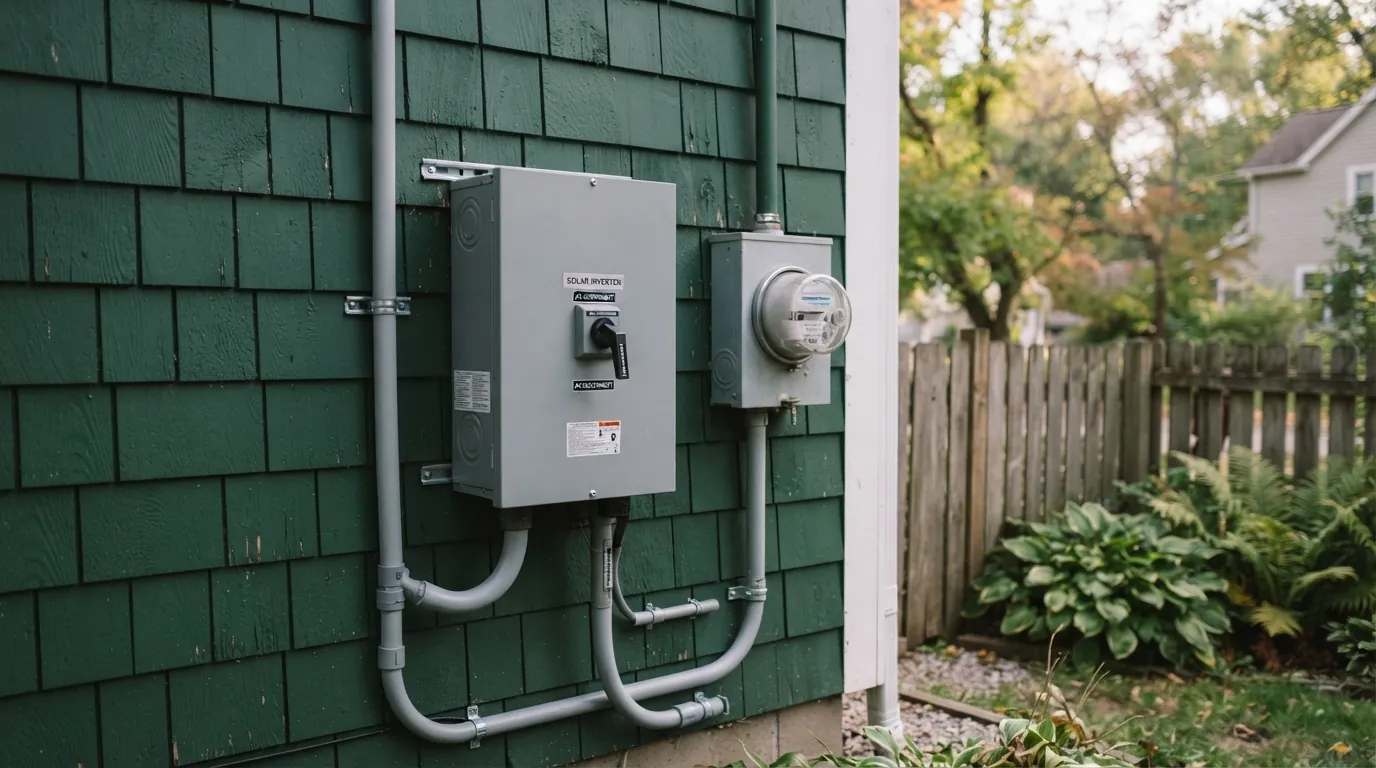
- AC and DC disconnects placed and labeled
- Rapid shutdown and labeling where required
- Panel upgrade where the panel is undersized
- Interconnection application support
- Permit and electrical inspection
- Commissioning with the solar installer
Choosing between them
How solar connects to the house
| Connection | Best for | Trade-off |
|---|---|---|
| Load-side solar breaker | Panels with busbar headroom | Limited by the panel rating |
| Supply-side connection | Full panels or larger systems | Work at the service entrance |
| Panel upgrade first | Old or undersized panels | Adds cost, adds capacity for EVs too |
The versions of this job
Panel capacity for solar
The panel's busbar rating and main breaker set how much solar can be backfed through a breaker in that panel. We read the panel label, calculate the allowance under the current code, and tell you how large a system the panel can accept as it stands. If the planned system is larger, the choice is a supply-side connection, a new panel, or a smaller array, and we price each so the solar installer can finalize the design on real numbers.
Inverter and disconnect wiring
String inverters, microinverters and hybrid inverters each wire differently, but all need correctly sized conductors, overcurrent protection and disconnects that are accessible and clearly labeled. We run the AC circuits from the inverter to the point of connection, install the disconnects where the utility and the inspector expect them, and apply the required labeling, so first responders can see at a glance how to shut the system down. Conduit on the roof and exterior is routed neatly and supported against snow loads, and every termination is torqued and checked before the inspector arrives.
Utility interconnection paperwork
Consumers Energy requires an interconnection application before a customer-owned system connects, and a signed Generator Interconnection Operating Agreement before it operates. The electrical details on that application, such as the inverter model, system size and point of connection, have to match what was installed. We supply those details, coordinate the inspection, and make sure nothing on the electrical side holds up permission to operate. If the utility asks for changes after review, we make them and resubmit, so the paperwork does not stall between the installer, the inspector and the utility.
Solar-ready panel upgrades
If you are planning solar in the next few years, upgrading an old panel now avoids doing it twice. A new 200 amp panel with a busbar rated for solar, spare spaces and an outdoor emergency disconnect makes the later solar connection simple, and gives room for an EV charger or a heat pump. We plan the upgrade with the future solar connection in mind, so the installer finds the panel ready when they arrive and the connection takes an afternoon rather than a second project.
Local conditions
Why this looks different across Grand Rapids
Michigan's Distributed Generation program replaced net metering in 2021, and under PA 235 customers can size distributed generation up to 110% of their previous 12 months of use. Consumers Energy requires an interconnection application and a signed operating agreement before a system in Grand Rapids operates, so the electrical details have to be right before the system is switched on.
How the job runs
How the solar electrical side runs
Review the solar design
Size, inverter type and roof layout.
Check the panel
Busbar rating and spare spaces.
Choose the connection
Breaker, supply-side or upgrade.
Permit and application
Electrical details for the utility.
Wire and label
Inverter circuits, disconnects, labels.
Inspect and commission
With the installer and the utility.
Straight answers
Questions about solar panel electrical hookup in Grand Rapids
Still unsure? Call (616) 699-4794 and ask a technician.
It depends on the busbar rating and main breaker; we calculate how much it can accept.
Sometimes; larger systems on older panels often need an upgrade or a supply-side connection.
Yes. Solar electrical work is permitted and inspected.
An interconnection application and a signed operating agreement before the system operates.
Not by itself; grid-tied solar shuts off in an outage unless paired with a battery.
Same category