Inspections and Commercial
Electrical code violations corrected so the permit can close in Grand Rapids
A failed inspection or a list of violations usually comes down to a handful of recurring faults. We read the correction notice, fix each item to the current Michigan code, and book the reinspection so the permit can close, whether the original work was yours, a past owner's or another contractor's.
Updated September 2026
- Answered 24/7
- Correction notices read line by line
- Reinspection booked
- Grand Rapids and Kent County
Quick answer
Electrical code violation correction in Grand Rapids fixes the items an inspector or home inspector flagged, such as open splices without boxes, double-tapped breakers, missing grounds, missing GFCI or AFCI protection and uncovered boxes, then books a reinspection so the permit can close. All residential work falls under the 2023 Michigan Electrical Code.
What this job is
Most violations are the same dozen faults
Correction notices look alarming, but most items are familiar: splices hanging loose in a ceiling, two wires under one breaker screw, a basement circuit without GFCI protection, a panel missing its knockout covers. Each has a standard fix. We work through the notice line by line, fix every item, photograph the work for the file, and tell you if anything else in the panel would fail the next inspection.
Cost factors
What moves the price on this job
The number of items and how hidden they are decide the price.
Typical regional ranges: electrician labor $75 to $150 per hour and an electrical permit $50 to $300, as planning figures rather than our price.
- 01
Number of items
Each correction is priced on its own.
- 02
Accessibility
Exposed faults are quicker than hidden ones.
- 03
Panel work
Double taps and bonding mean panel time.
- 04
GFCI and AFCI devices
Protective devices add parts cost.
- 05
Wall and ceiling access
Finished surfaces take more care.
- 06
Permit status
An expired permit may need renewing.
- 07
Reinspection
Fees and scheduling for the return visit.
What is included
Common corrections we make
- Open splices moved into covered, accessible boxes
- Double-tapped breakers separated or pigtailed
- Missing equipment grounds restored
- GFCI protection added in kitchens, baths, garages and outside
- AFCI protection where current code requires it
- Missing box covers, blanks and knockout plugs installed
- Cables secured and protected where exposed
- Grounding and bonding corrected at the panel
- Panel directory completed and labeled
The versions of this job
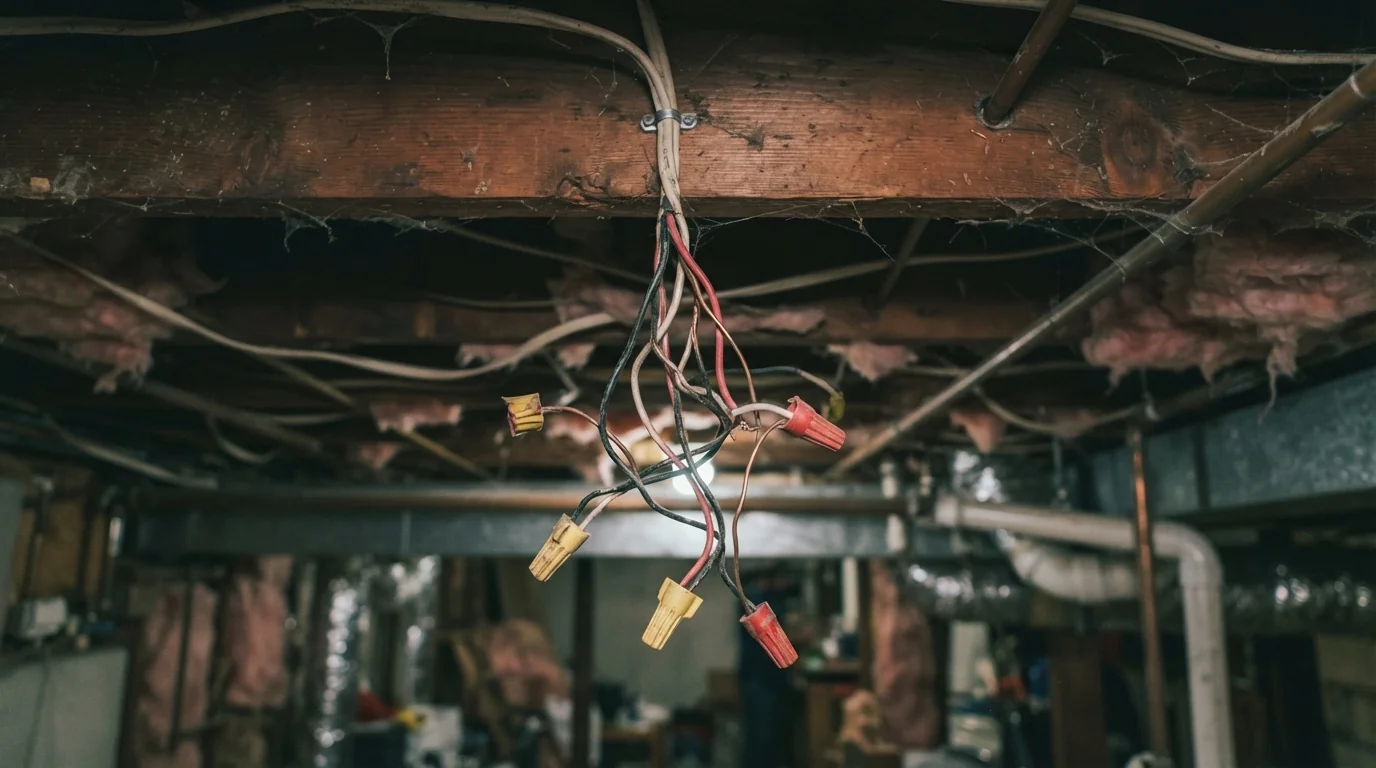
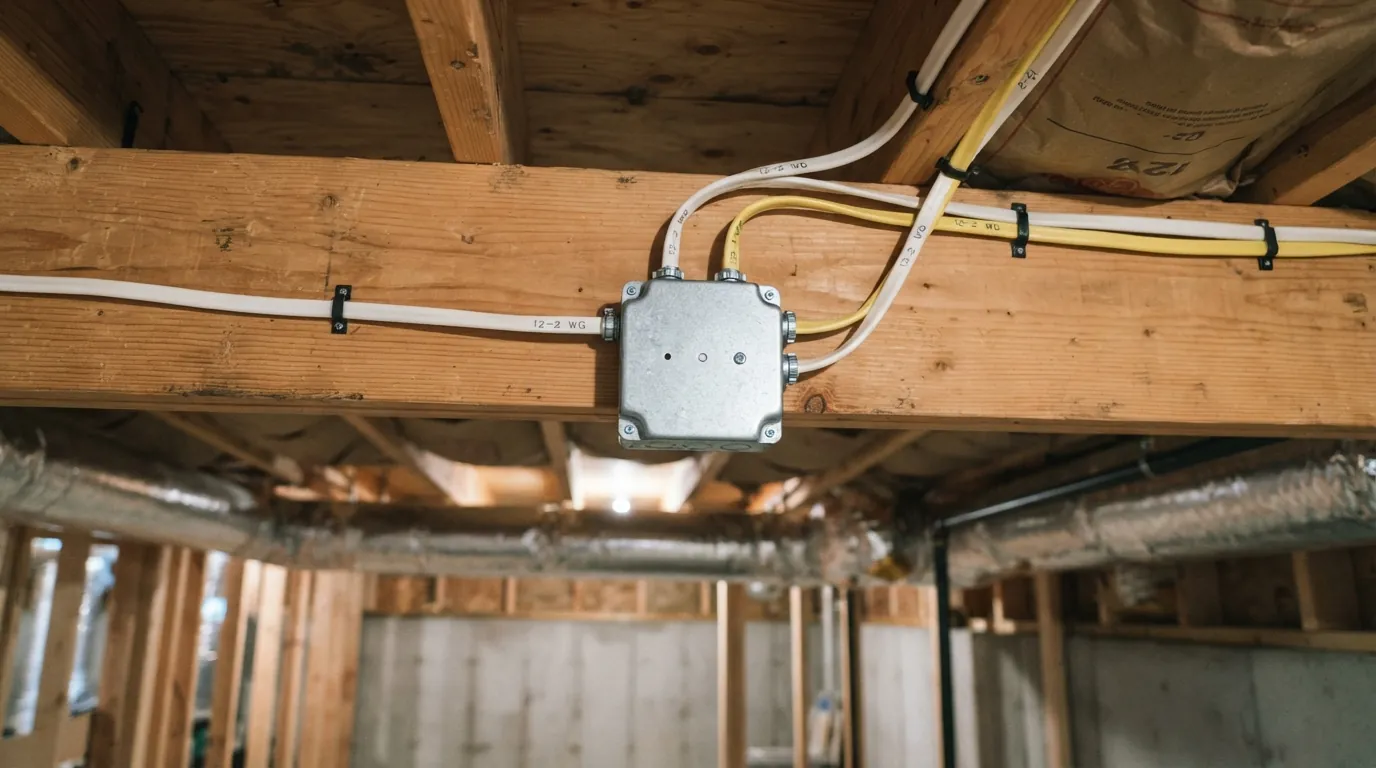
Open splices and junction boxes
The most common basement and attic violation is wires spliced together with no box around them, often from a past owner adding a light or outlet. Every splice has to live inside a covered box that stays accessible. We cut back damaged conductors, install proper boxes, make the splices with listed connectors, and fit covers. Where a splice is buried in a finished wall, we make the box accessible with a blank cover plate rather than leaving a hidden connection behind drywall.
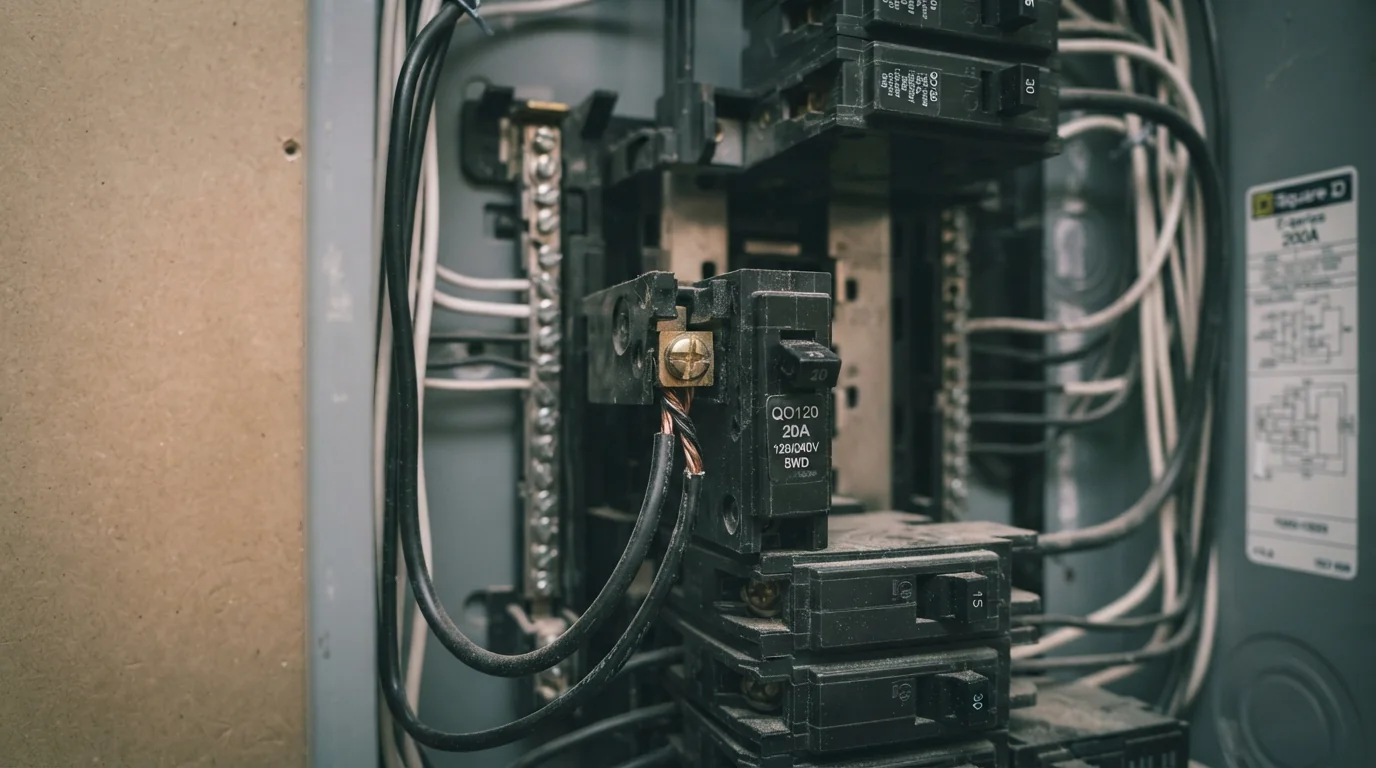
Double-tapped breakers
Two wires under one breaker terminal is flagged on almost every home inspection. Most breakers are listed for one conductor only, and a second wire can loosen and overheat. The fix is either a pigtail, joining the two wires to one short lead into the breaker, or a separate breaker for each circuit if the panel has space. We choose based on the circuits involved and the panel's capacity, then label both circuits so the directory is correct and the next inspector sees a clean panel.
Missing grounds
Ungrounded three-prong outlets, grounds cut off inside boxes, and metal boxes with no ground connection are all common findings. Where a ground conductor exists but is disconnected, we reconnect it. Where the circuit has none, the code allows GFCI protection with the correct labeling as an alternative to rewiring the circuit. We explain both options and their costs, because the right answer depends on how many outlets are affected and what plugs into them. Surge protectors and some electronics work best on a true ground.
Permit close-out repairs
Sometimes a permit was pulled years ago and never closed, which surfaces during a sale or refinance. We find out what the permit covered, inspect the work, correct anything that would fail, and schedule the final inspection. If the original permit has lapsed, we explain whether a new permit is needed first. Closing an old permit cleanly usually costs far less than letting it hold up a closing date, and it clears the property record for the next buyer too.
Local conditions
Why this looks different across Grand Rapids
Michigan's residential code no longer carries its own electrical chapters, so every one- and two-family home falls under the 2023 Michigan Electrical Code. And because no Michigan electrical permit may last longer than 180 days, old open permits in the city often need checking before a correction can be reinspected, which is the first thing we look up in Grand Rapids.
Time on site
How long it takes to close the permit
Most correction lists are finished in one or two visits, then the reinspection is booked. Under Michigan's rules an electrical permit may not last longer than 180 days, so an old open permit can need renewing or replacing before the work is inspected again. We check its status first so the reinspection does not stall on paperwork.
How the job runs
How code corrections run
Send the notice
Correction list or inspection report.
Check the permit
Open, expired or never pulled.
Inspect each item
Confirm what is wrong and why.
Price line by line
One line per correction.
Correct and photograph
Fixed to current code, documented.
Reinspection
Booked and attended; permit closed.
Straight answers
Questions about electrical code violation correction in Grand Rapids
Still unsure? Call (616) 699-4794 and ask a technician.
Open splices, double-tapped breakers, missing grounds, missing GFCI or AFCI protection and uncovered boxes.
Yes. We work from the correction notice and book the reinspection.
No longer than 180 days under the state's Part 8 rules.
Often, with GFCI protection and the correct labels, where the code allows it.
Yes, where the inspector wants the contractor present.
Same category