EV Chargers, Generators and Backup
Workplace, retail and multifamily EV charging for Grand Rapids properties
Commercial charging starts with the building's electrical service, not the charger catalog. We measure what the service can spare, plan the number of ports around it, then trench, wire and commission the stations.
Updated September 2026
- Answered 24/7
- Capacity study first
- Level 2 and load-managed
- Offices, retail, multifamily
Quick answer
Commercial EV charging in Grand Rapids means Level 2 stations for workplaces, retail lots and apartment or condo buildings, sized to the spare capacity of the building's electrical service. A capacity study comes first, because the service size, not the number of parking spaces, decides how many chargers can run at once.
What this job is
Why the service decides the number of chargers
Every charger added to a building draws on the same electrical service as the lights, HVAC and equipment. Ten chargers at full output can exceed what an older service can supply. Load management lets more ports share less capacity by throttling them as demand rises, which often avoids a costly service upgrade. We read the utility demand history and measure the panel before recommending a port count.
Cost factors
What moves the price on this job
Commercial charging is priced from the capacity study and the site plan.
- 01
Port count
More ports mean more circuits and hardware.
- 02
Charger type
Networked units cost more than basic ones.
- 03
Service capacity
A service upgrade is the biggest swing.
- 04
Trenching distance
Long runs across paving add the most labor.
- 05
Surface type
Concrete and asphalt repair add cost.
- 06
Accessibility work
Accessible spaces and signage.
- 07
Utility coordination
New service or meter work adds time.
What is included
What a commercial charging project includes
- Service capacity study using demand data
- Port count and charger placement plan
- Load management where capacity is tight
- Panel or switchboard work for new circuits
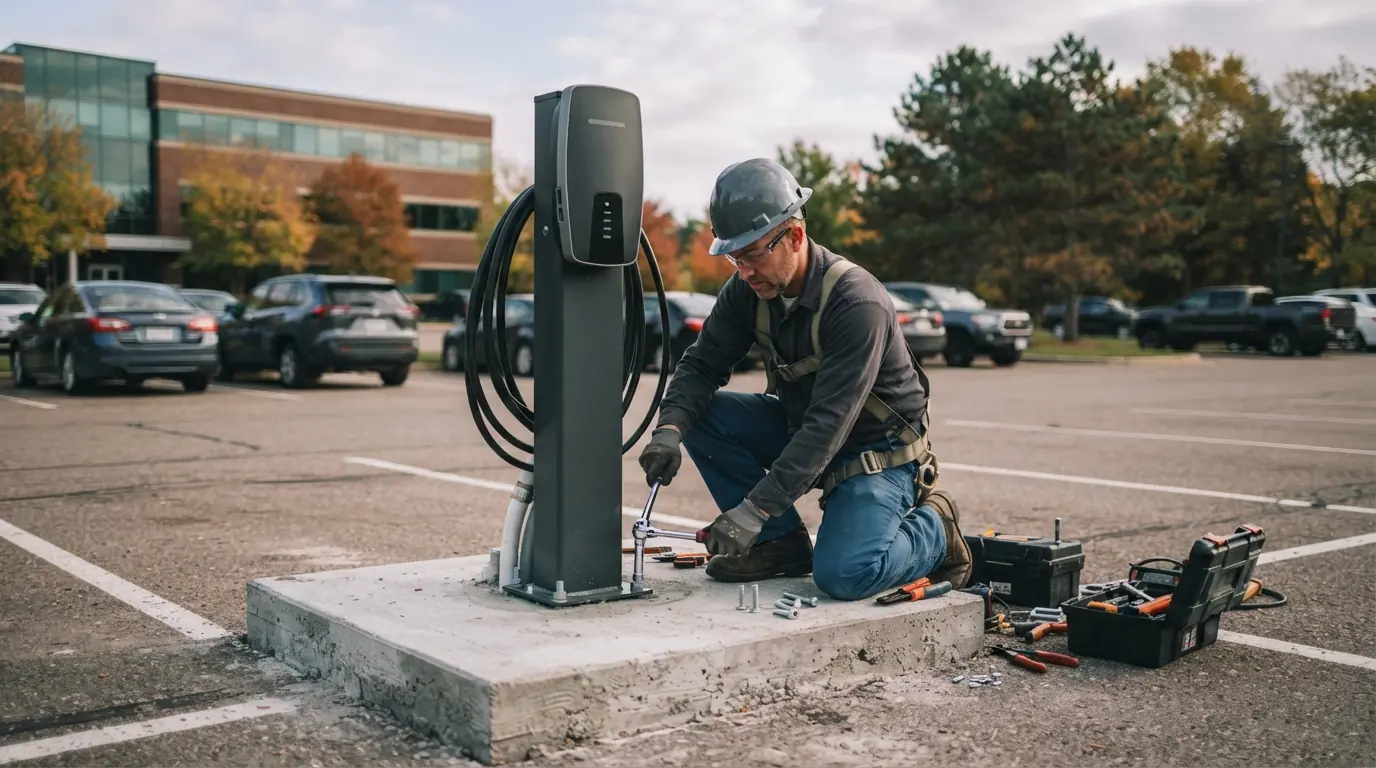
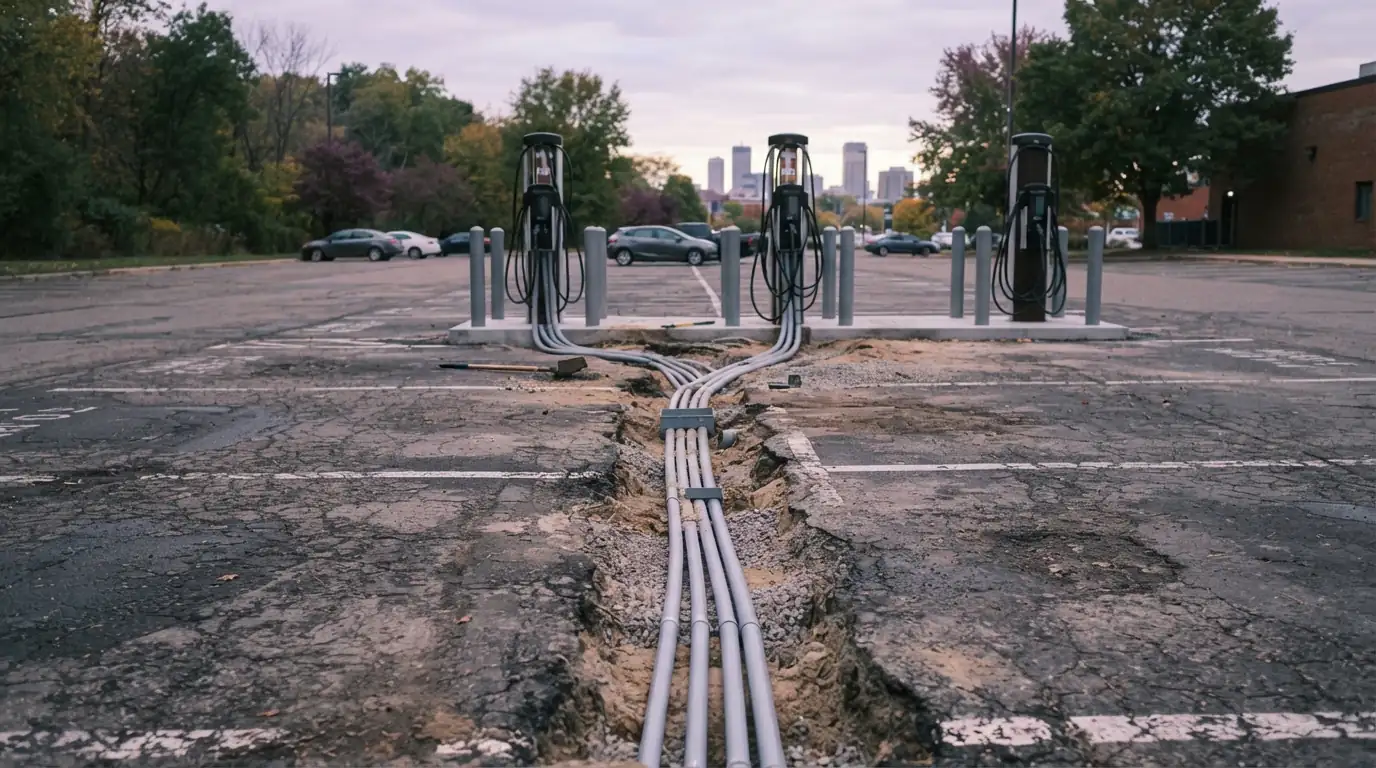
- Trenching, boring or surface conduit runs
- Bollards and wheel stops where needed
- Accessible space layout
- Permit, inspection and commissioning
- Network setup handed to the owner
Choosing between them
Which kind of commercial charging fits
| Setup | Best for | Trade-off |
|---|---|---|
| Level 2, non-networked | Small staff lots, free charging | No usage data or billing |
| Level 2, networked | Tenants, customers, paid charging | Ongoing network subscription |
| Level 2 with load management | More ports on a limited service | Slower when all ports are busy |
The versions of this job
Workplace charging
Staff charging usually means a row of Level 2 ports in an employee lot, where cars sit for a full shift. That long dwell time is the advantage: each car only needs modest power, so load management can spread a limited service across more ports. We plan the ports around where people actually park, keep conduit runs short, and leave spare capacity in the conduit so more ports can be added later without trenching the lot again. Ports near the building entrance get priority for accessible spaces.
Multifamily and condo chargers
Apartment and condo buildings bring two problems: shared electrical service and the question of who pays. Networked chargers solve the billing side by tracking each driver's use. On the electrical side we look at the house panel and the meter bank, since tenant chargers often need their own feed from the service. For garages, we plan conduit routes that avoid post-tensioned slabs and structural members, working with the property manager on access, parking closures and tenant notices so residents are not surprised by work in their spaces.
Networked chargers
Networked stations connect over cellular or Wi-Fi so the owner can set pricing, limit access to staff or tenants, and see usage. They cost more up front and carry a subscription, but they are the only practical way to charge drivers or share costs. We install the hardware, confirm each unit connects and reports, and hand the network account setup to the owner rather than holding it on our side. If the network provider changes later, the hardware and wiring stay put.
Service capacity study
Before any charger is ordered, we pull the building's utility demand history where the owner can provide it, measure load at the main service over a period, and calculate what can be added safely. The result is a port count and a choice between full-power chargers, load-managed chargers, or a service upgrade. On many older buildings the study is what saves the project, because it shows load management will do the job, and the owner avoids paying for a new service to carry chargers that rarely all run at once.
Local conditions
How Grand Rapids homes shape this job
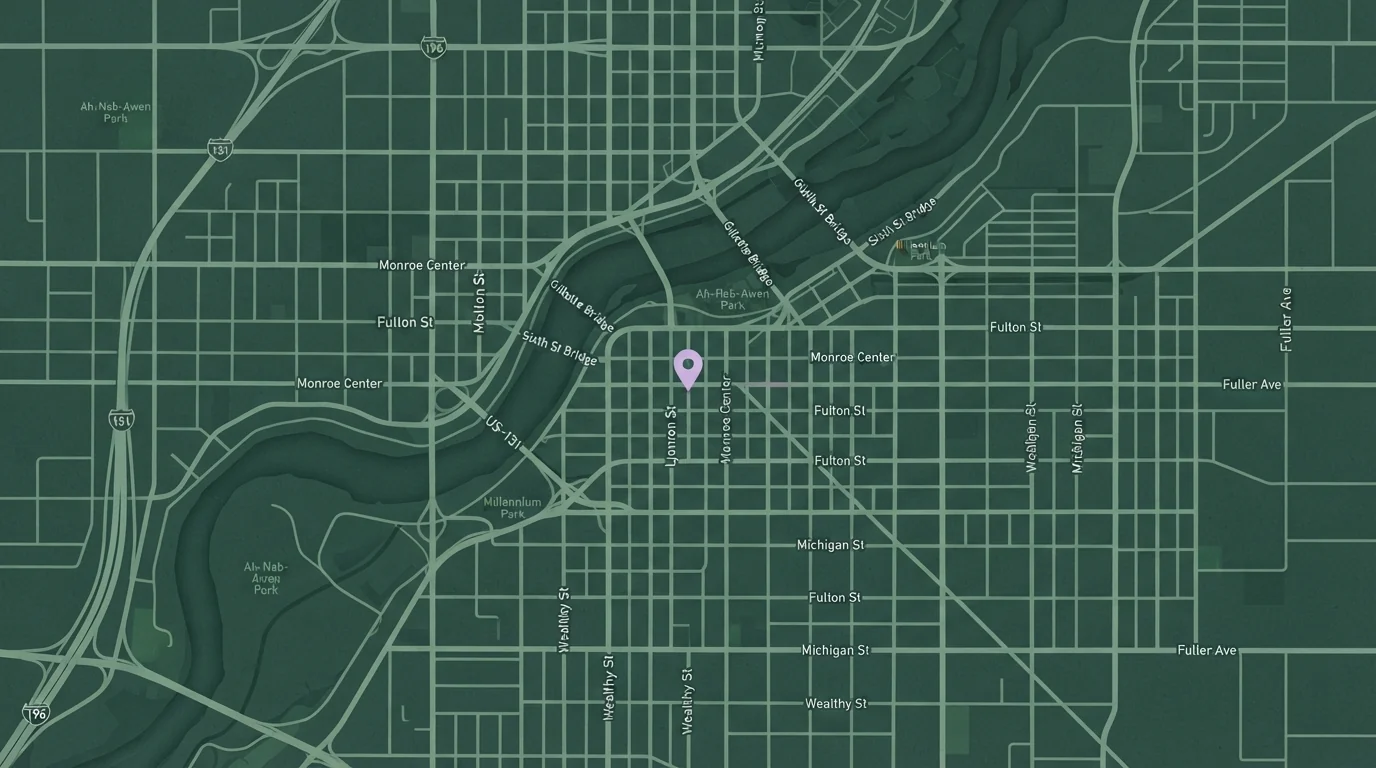
Grand Rapids has a strong commercial and light-industrial base downtown and along the highways, and many of those buildings were wired long before anyone parked an electric car outside. That is why capacity is the first question on almost every commercial charging job here: the lot has room for ten chargers, but the service often does not, and finding that out early saves a stalled project.
How the job runs
How a commercial charging project runs
Site walk
Lot, panel, service and parking pattern.
Capacity study
Demand history and measured load.
Plan and price
Port count, charger type, conduit route.
Permit
Filed with the city or township.
Install
Trenching, conduit, circuits and stations.
Commission
Every port tested and online.
Commercial stations we install include ChargePoint and Wallbox units.
Straight answers
Questions about commercial ev charging stations in Grand Rapids
Still unsure? Call (616) 699-4794 and ask a technician.
It depends on spare service capacity. A capacity study answers it before anything is ordered.
Only if you want to bill drivers, limit access or see usage. Free staff charging can run non-networked.
Often yes, with load management that shares the available capacity across ports.
Yes. We schedule around tenants, lots and garages and keep the manager updated.
Yes. We size conduit for future ports so the lot is not trenched twice.
Same category