EV Chargers, Generators and Backup
Level 2 EV charger installation for Grand Rapids homes and garages
A Level 2 charger turns an overnight park into a full battery. We check the panel's capacity first, then install a hardwired charger or a 14-50 outlet where you park, with load management if the house is already near its limit, and get it permitted and inspected before you plug in.
Updated September 2026
- Answered 24/7
- Load calculation first
- Hardwired or 14-50 outlet
- Permit and inspection
Quick answer
A Level 2 EV charger installation in Grand Rapids runs a 240 volt circuit from the panel to a hardwired charger or a NEMA 14-50 outlet in the garage or driveway. A load calculation comes first, because many older homes have 100 amp service. Typical regional installs run $800 to $2,500, more if the panel needs upgrading.
What this job is
The charger is easy; the panel is the question
Most chargers draw 32 to 48 amps for hours at a time, the heaviest continuous load in most houses. On a 200 amp service with room to spare, it is a simple circuit. On a full 100 amp panel, it may need load management that throttles charging when the dryer and range are running, or a panel upgrade. The load calculation tells you which, before any hardware is bought.
Cost factors
What moves the price on this job
Distance from the panel and the panel's capacity decide most of the price.
Typical regional ranges: home EV charger installed $800 to $2,500; professional installation labor $400 to $1,200; Level 2 installs $1,200 to $3,500. Planning figures, not our price.
- 01
Panel capacity
Load management or an upgrade changes the price most.
- 02
Distance from the panel
Longer runs need more wire and conduit.
- 03
Charger or outlet
Hardwired chargers cost more than an outlet.
- 04
Charger current
Higher amperage needs heavier wire.
- 05
Detached garage
Trenching and a subpanel add cost.
- 06
Wall and surface
Finished garages take more care.
- 07
Permit
Required and inspected.
What is included
What an EV charger install includes
- Load calculation on the existing service
- Charger or 14-50 outlet placement at the parking spot
- 240 volt circuit sized to the charger's setting
- GFCI protection as required
- Breaker matched to your panel brand
- Conduit where the run is exposed
- Load management setup where needed
- Permit and inspection
- Charger commissioned and tested with your car
Choosing between them
Hardwired charger, 14-50 outlet or load management
| Option | Best for | Trade-off |
|---|---|---|
| Hardwired Level 2 charger | Daily charging, highest power | Charger is fixed to the wall |
| NEMA 14-50 outlet | Plug-in mobile chargers | Outlet must be heavy-duty and GFCI protected |
| Load management device | 100 amp homes near capacity | Charging slows when the house is busy |
| Panel upgrade first | Homes adding several big loads | Higher cost, most capacity |
The versions of this job
Level 2 charger hardwire
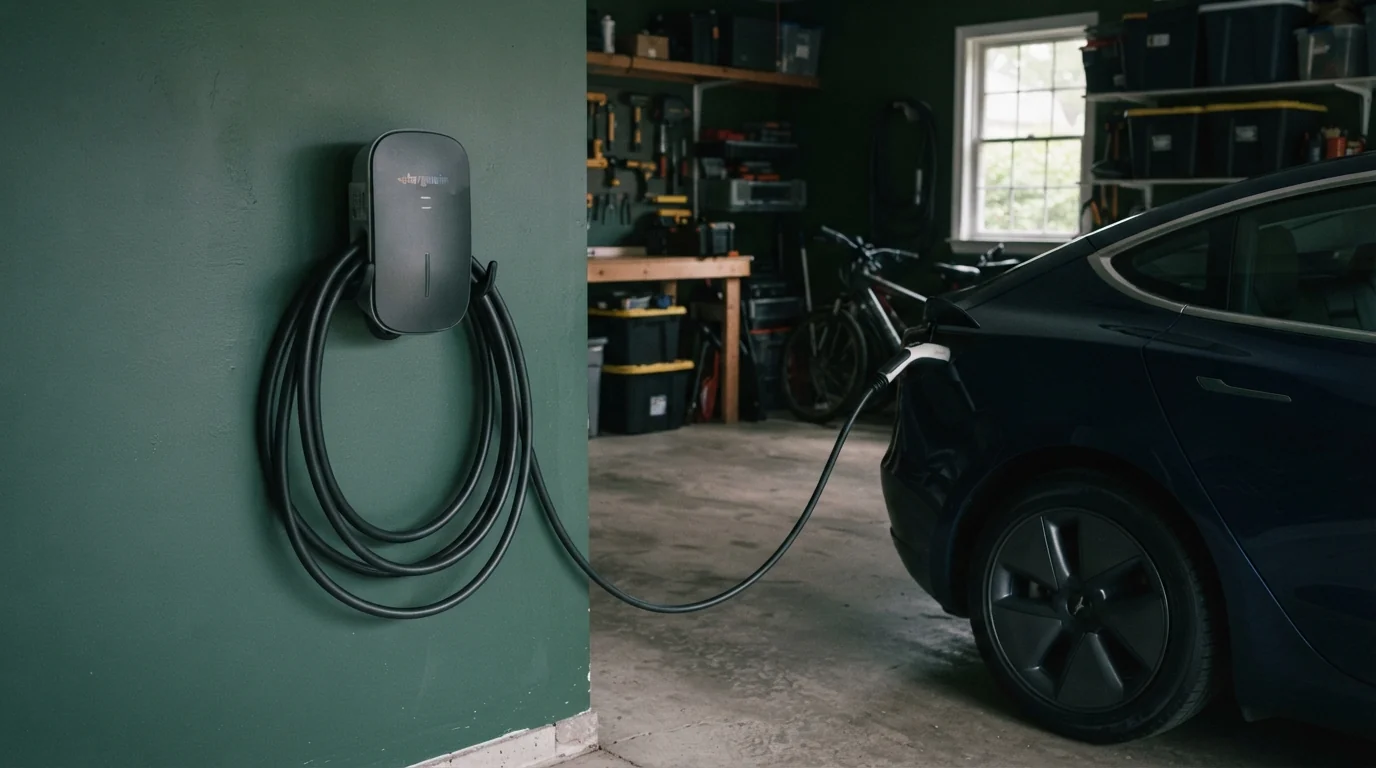
A hardwired charger connects directly to its circuit with no plug, which allows higher charging currents and avoids the wear a plug and outlet take from daily use. We mount it where the cable reaches the car's charge port without stretching across the garage, set the charger's current limit to match the circuit, and connect it to Wi-Fi if you want scheduling and usage data. Most hardwired installs on a panel with capacity are finished in a single visit, including a test charge with your car.
NEMA 14-50 outlet
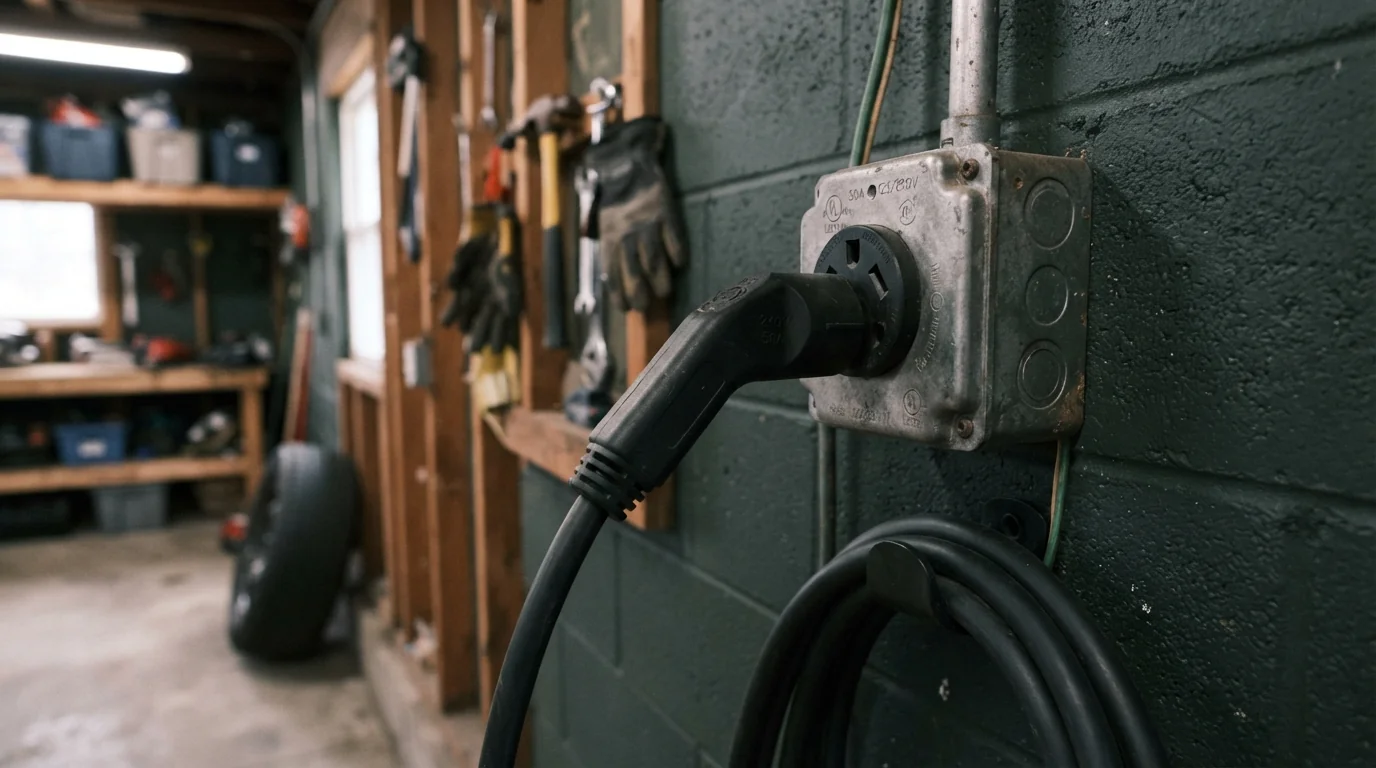
A 14-50 outlet suits the mobile chargers many carmakers supply. Because it carries a heavy load for hours every night, it needs an industrial-grade receptacle rather than a cheap one, the correct wire size, and GFCI protection under current code. We install it at the right height and position for the cable, and explain the trade-off: a plug-in setup is portable, but a hardwired charger is the more robust choice for daily charging. Cheap receptacles are the most common failure we see on EV circuits.
Load management for 100 amp homes
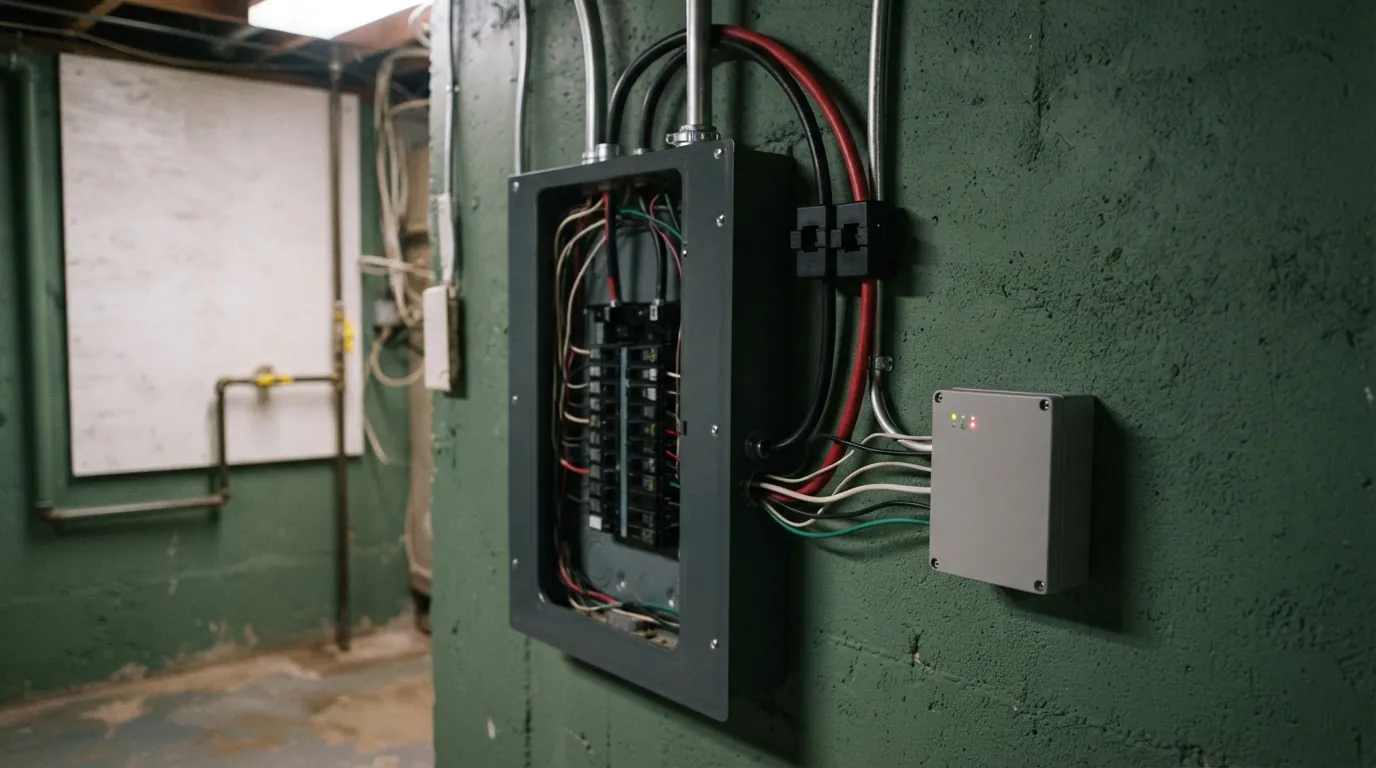
Many Grand Rapids homes still have 100 amp service. A load management device watches the whole-house current and turns the charger down when the dryer, range or air conditioning pushes the service near its limit, then turns it back up. For most drivers the car is still full by morning. It often avoids a panel upgrade entirely, and we show you the load calculation that supports the choice rather than just recommending more amps. If you later add a heat pump too, the same device and calculation are revisited.
Detached garage charger run
Charging in a detached garage or at a driveway post means running the circuit outside, usually underground in conduit. We plan the route to avoid utilities and hardscape, size the wire for the distance so the charger is not starved of voltage, and if the garage also needs lights and outlets, add a small subpanel out there instead of a single long circuit. That leaves room for a second charger later without another trench across the yard or driveway, and the trench is inspected before it is closed.
Local conditions
How Grand Rapids homes shape this job
New construction across the northeast side of Grand Rapids is often built with a garage circuit ready for a charger, while older homes elsewhere in the city rarely are. Michigan's 2023 electrical code also carries forward the 2023 NEC's expanded requirements for EV charging equipment, so every install here is planned against those rules, permitted and inspected before you plug in.
How the job runs
How an EV charger install runs
Car and charger details
Charge rate, charger model, where you park.
Load calculation
Can the service carry it as-is?
Plan the route
Panel to parking spot, shortest clean path.
Permit filed
Before work starts.
Install and set
Circuit, charger or outlet, current limit.
Test with the car
Charging confirmed, then inspection.
Chargers we install include Tesla, ChargePoint, Wallbox and Emporia units.
Straight answers
Questions about ev charger installation in Grand Rapids
Still unsure? Call (616) 699-4794 and ask a technician.
Often yes, with load management. A load calculation tells you for sure.
Hardwired is sturdier and allows more power; an outlet suits plug-in mobile chargers.
Typical regional installs run $800 to $2,500; more if the panel needs an upgrade.
Yes. It is a new 240 volt circuit and is inspected.
Yes, with an underground circuit or a small subpanel in the garage.
Same category