Wiring, Outlets and Remodels
Whole-house rewiring for older Grand Rapids homes, done in stages
Rewiring an occupied house is mostly a planning job. We map every circuit, decide which walls actually need opening, and work floor by floor so you can keep living there, finishing with a new panel and an inspection at each stage.
Updated September 2026
- Answered 24/7
- Staged, floor by floor
- Minimal wall openings
- Permit and inspection
Quick answer
Whole-house rewiring in Grand Rapids replaces the branch circuits, outlets, switches and usually the panel in an older home. It is typically done in stages while the family lives there, with wire fished through walls and ceilings where possible. Regional costs commonly run $8,000 to $20,000, depending on size and access.
What this job is
When a rewire is the right answer, and when it is not
Not every old house needs a full rewire. Some need a knob-and-tube replacement in the attic and a panel, and the rest of the wiring is sound. Others have brittle cloth insulation, ungrounded circuits everywhere and additions spliced in without boxes, and patching only moves the problem. We inspect first and tell you which house you have before pricing anything.
Cost factors
What moves the price on this job
House size, wall access and the panel decide most of the price.
Typical regional ranges: whole-house rewiring $8,000 to $20,000; a 1,500 sq ft home $10,000 to $18,000; drywall repair and repainting after a rewire $3,000 to $8,000. Planning figures, not our price.
- 01
House size and circuit count
More rooms mean more circuits and devices.
- 02
Wall and ceiling access
Open attics and basements keep costs down.
- 03
Plaster versus drywall
Plaster takes more care to open and patch.
- 04
Panel and service
A new panel or service upgrade is usually included.
- 05
Knob-and-tube removal
Active knob-and-tube adds removal work.
- 06
Stage count
More stages mean more inspections and setup.
- 07
Wall repair
Patching and repainting after the rewire.
Choosing between them
How the rewire can be approached
| Approach | Best for | Trade-off |
|---|---|---|
| Staged, floor by floor | Occupied homes | Takes longer overall |
| All at once | Vacant homes or full renovations | House unusable during the work |
| Fish through walls | Plaster worth keeping | Slower, more skilled labor |
| Open walls | Walls coming down anyway | Drywall and paint repair after |
The versions of this job
Rewiring without opening every wall
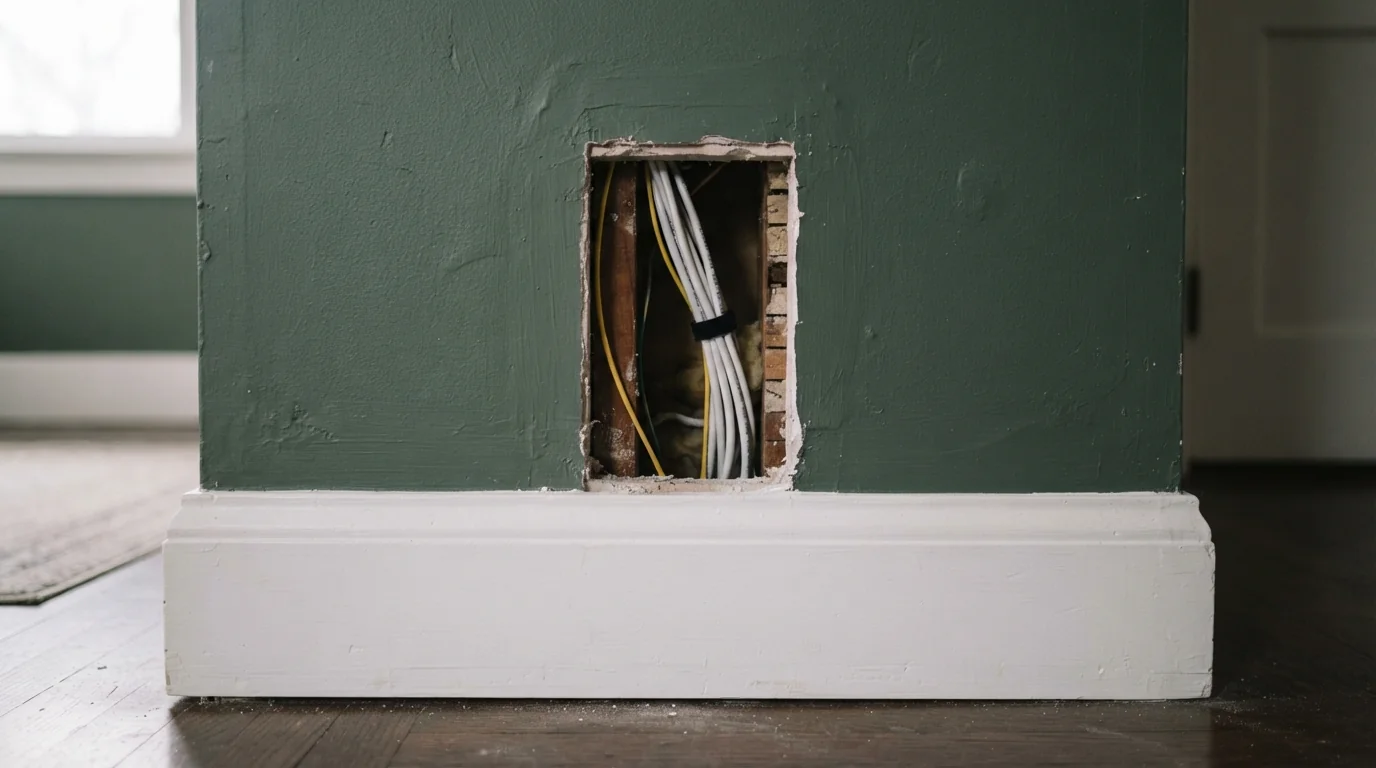
Most of a rewire can be done by fishing new cable through existing wall and ceiling cavities from the attic and basement, using small access holes at outlets, switches and a few strategic points. That keeps the plaster and trim intact and limits patching to small, predictable spots. Where a run cannot be fished, such as across a finished ceiling between floors, we tell you in advance where the opening will be and how big, rather than finding out halfway through.
Staged rewiring by floor
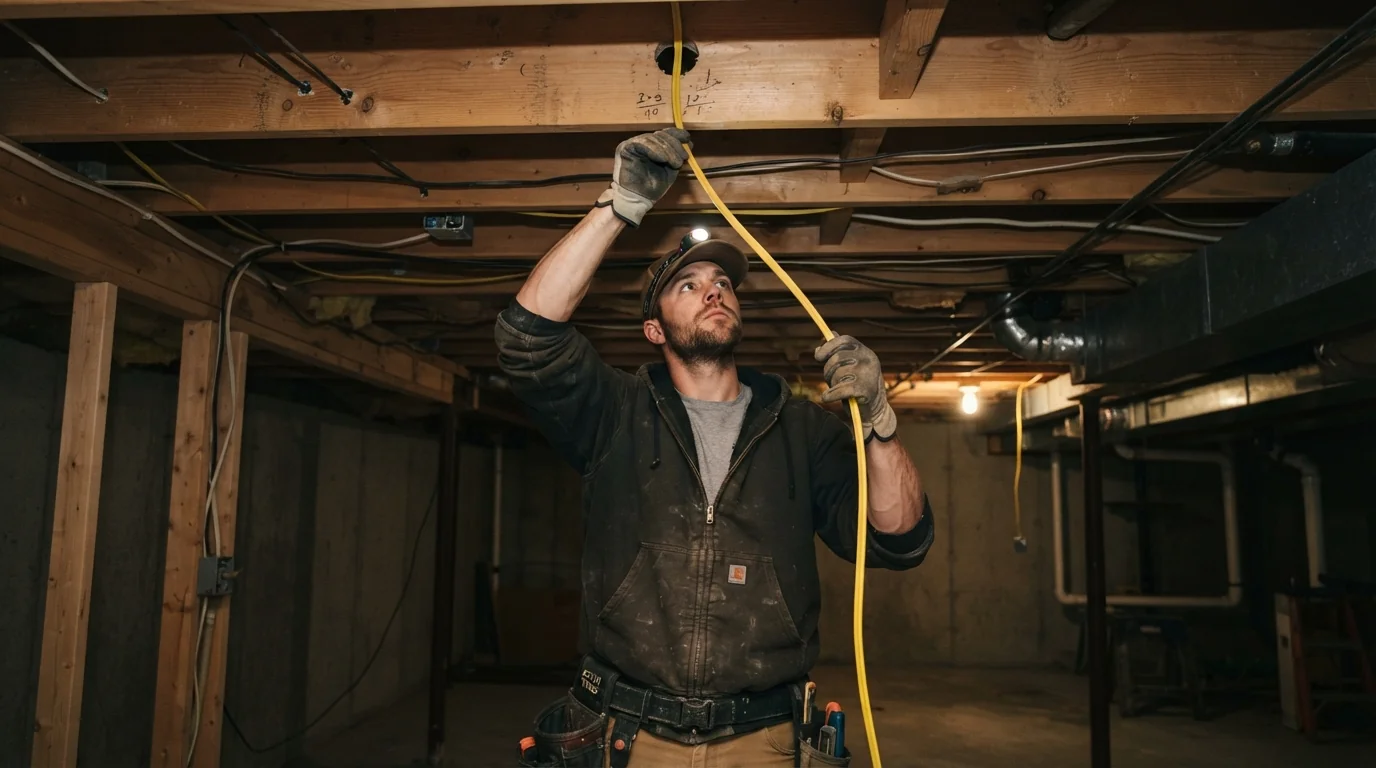
Working one floor or zone at a time keeps the rest of the house powered and livable. We usually start with the basement and first floor, where the panel and the heaviest kitchen loads are, then move to the upper floors and attic. Each stage is inspected before the walls are closed. New circuits are connected to the new panel as they are finished, and old circuits are disconnected and removed so nothing abandoned is left energized in the walls.
Panel replacement during the rewire
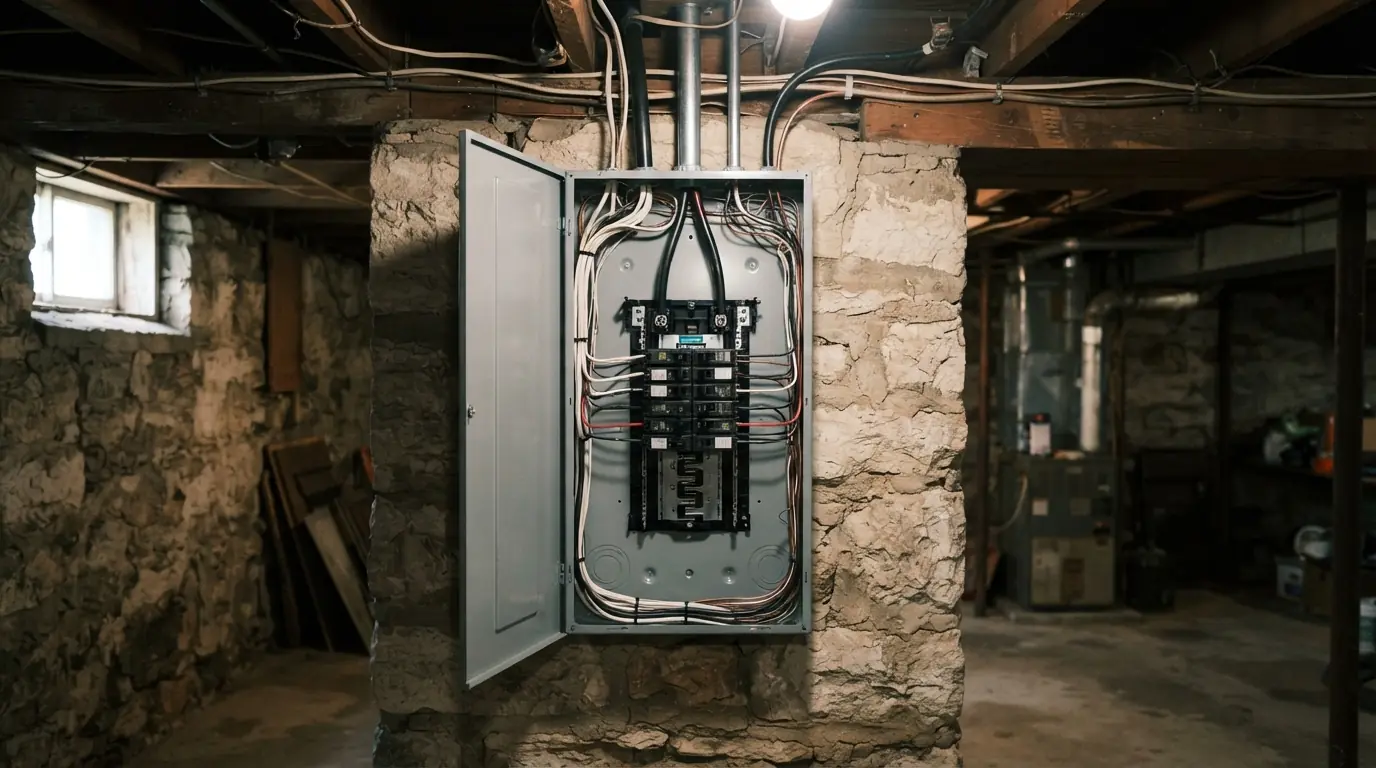
An older 60 or 100 amp panel rarely makes sense to keep once the circuits behind it are new. Replacing it as part of the rewire gives the house the space and capacity for modern kitchens, heat pumps and a future charger, and it is cheaper than coming back later. We schedule the utility disconnect so the service change happens once, and the new panel is labeled circuit by circuit as the rewire progresses, so the directory matches the house on the day the job is finished.
Drywall and plaster repair coordination
Even a careful rewire leaves some openings. We keep them tidy and square so they patch cleanly, and we can coordinate the plaster or drywall repair so you are not left finding a separate trade for a dozen small holes. For houses with historic plaster, we plan access points behind furniture, inside closets and along baseboards wherever possible, so the finished rooms need as little repair and repainting as we can manage, and we leave every opening clean, square and ready for the plasterer.
Local conditions
Why this looks different across Grand Rapids
Heritage Hill, just east of downtown, is a historic district of Victorian-era houses, and homes built before 1960 often came with 60 amp service, which is where rewiring costs climb because the service and the circuits usually have to change together. We plan those jobs around keeping original plaster, trim and woodwork wherever possible, and we say up front where openings cannot be avoided.
Time on site
How long a staged rewire takes
A typical rewire runs over several weeks rather than days, because each stage is roughed in, inspected and then closed up before the next begins. Power is kept on to the rest of the house while one floor or zone is worked on, so you are rarely without the kitchen or a bathroom for long. We give you the stage plan and dates before work starts.
How the job runs
How a staged rewire runs
Inspect the house
What can stay, what must go.
Map every circuit
Room by room, with a new circuit plan.
Stage plan and price
Floors, dates and access points.
Permit and panel
Filed, with the service change scheduled.
Rewire each stage
Rough-in, inspection, close-up.
Final inspection
Old wiring removed, panel labeled.
Straight answers
Questions about whole-house rewiring in Grand Rapids
Still unsure? Call (616) 699-4794 and ask a technician.
Two-prong outlets throughout, cloth-insulated wiring, knob-and-tube, frequent trips or an insurer's request are the usual signs. An inspection tells you for sure.
Yes. Staging it floor by floor keeps most of the house powered and usable.
No. Most wire is fished through existing cavities; openings are limited and planned in advance.
Regional ranges commonly run $8,000 to $20,000, depending on size, access and the panel.
Usually yes, because the new circuits need the space and capacity an old panel lacks.
Same category