Wiring, Outlets and Remodels
Sump pump circuits and backup power for Grand Rapids basements
A sump pump only matters on the nights it has to run, which are often the nights the power goes out. We put the pump on its own dependable circuit, add battery or generator backup power, and fit a high-water alarm so you hear about a problem before the carpet does.
Updated September 2026
- Answered 24/7
- Dedicated sump circuit
- Battery or generator backup
- High-water alarm
Quick answer
Sump pump electrical work in Grand Rapids means giving the pump a dedicated circuit that other loads cannot trip, adding backup power through a battery backup pump or a generator circuit, and installing a high-water alarm. It matters most during spring snowmelt and storms, when power outages and high water tend to arrive together.
What this job is
Power the pump on the nights it matters
Many sump pumps share a basement circuit with the freezer, laundry or a dehumidifier, so a trip anywhere on that circuit silently stops the pump. Others are on a GFCI that trips and never gets noticed. The fix is simple: a dedicated circuit arranged so a nuisance trip is unlikely and obvious, backup power for outages, and an alarm that sounds when the water rises.
What is included
What a sump pump electrical upgrade covers
- Dedicated circuit for the primary pump
- Single receptacle so nothing else plugs in
- Protection arranged so a trip is noticed
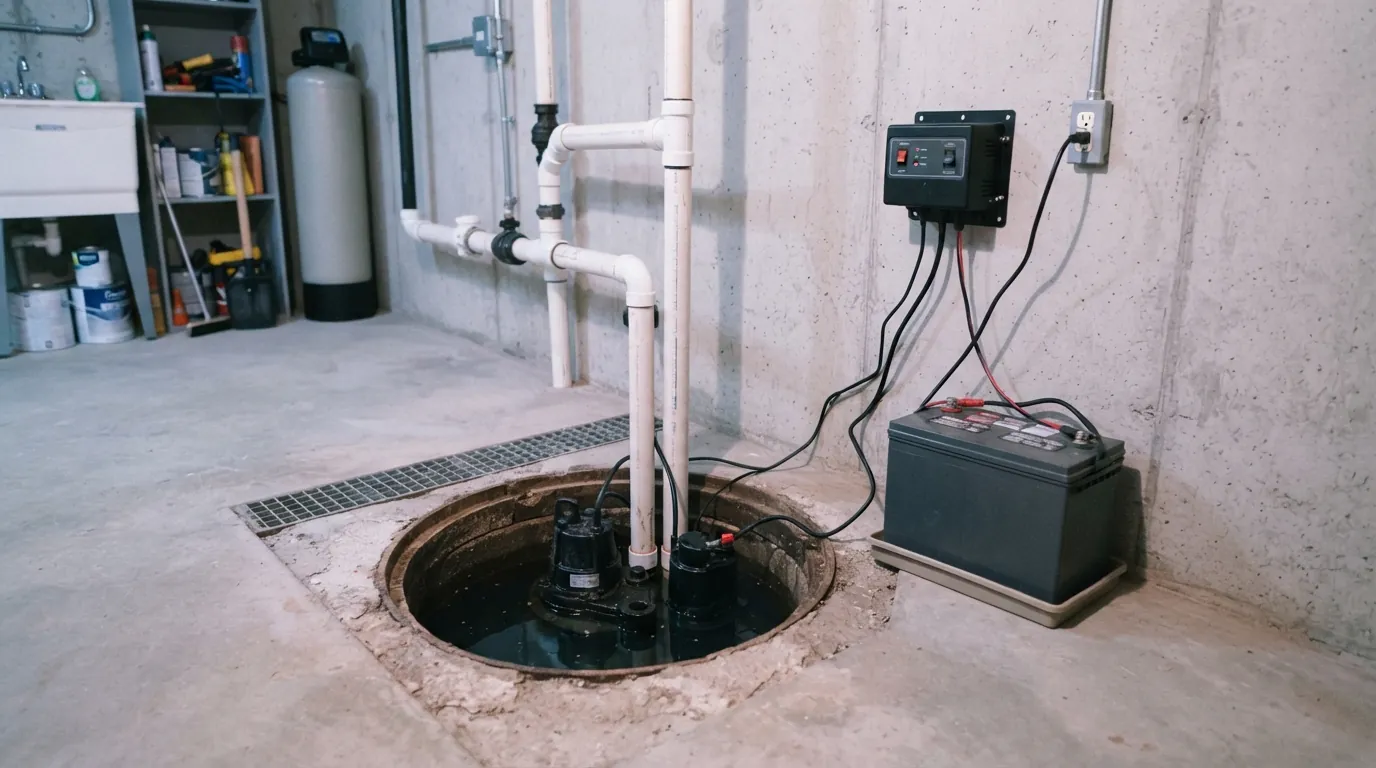
- Battery backup pump power connection
- High-water alarm at the pit
- Pump circuit included in generator plans
- Ejector pump circuits where present
- Check-valve side and pit cover clearances
- Test run with water in the pit
The versions of this job
Dedicated sump circuit
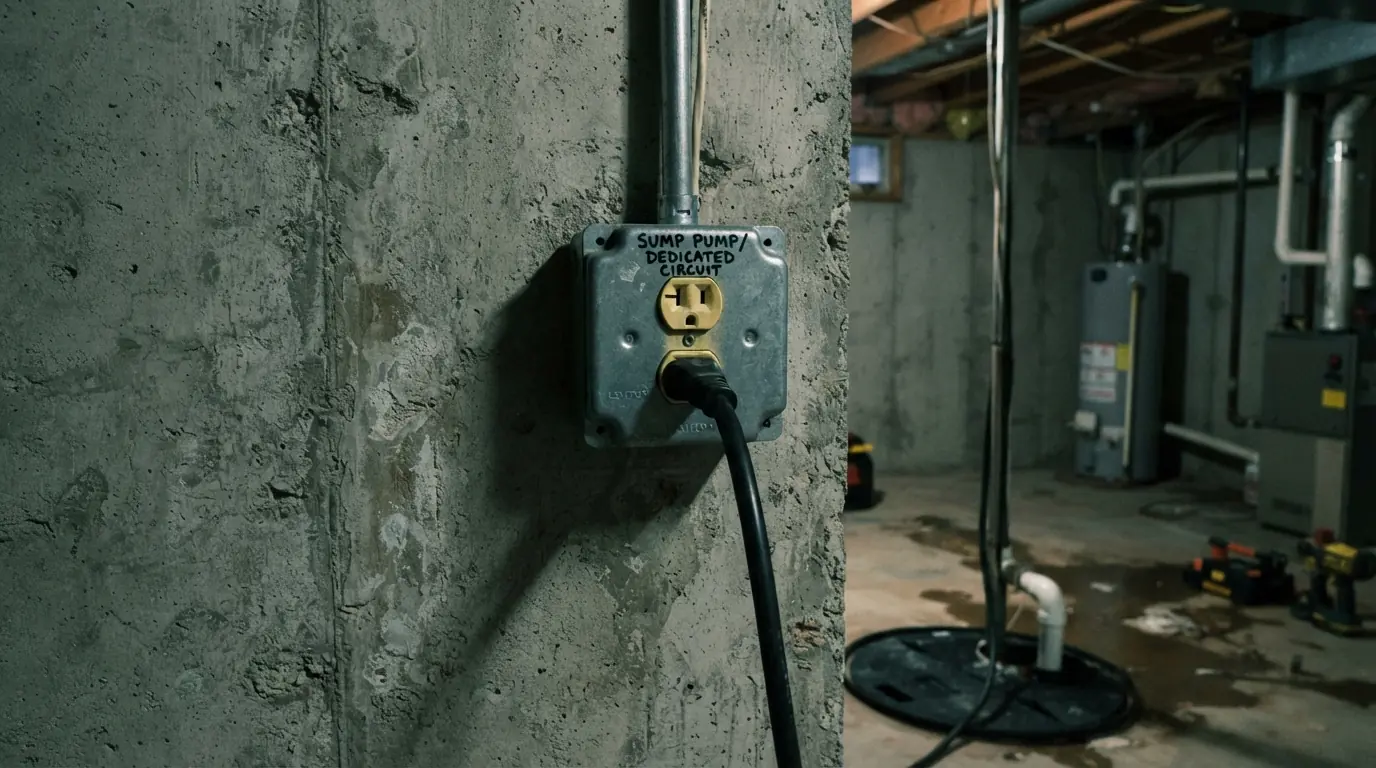
A dedicated circuit means the sump pump is the only load on that breaker, with a single receptacle so nothing else gets plugged in beside it. We run it from the panel with the fewest connections possible and label it clearly. Where current code calls for GFCI protection, we arrange it so a trip is easy to spot and the alarm tells you if the pump stops, rather than leaving a quiet trip to be discovered after the basement floods.
Battery backup pump power
A battery backup pump sits in the pit alongside the main pump and runs from a deep-cycle battery when the power fails or the main pump quits. We provide the charger circuit and receptacle, place the battery where it stays dry and ventilated, and test the switchover. Batteries lose capacity with age, so we show you how to test the system and note when the battery should be replaced, usually every few years depending on use and how often it has had to run.
High-water alarm
A high-water alarm sounds when water rises above the pump's normal level, which is the only warning you get if the pump, the float or the power fails. Alarms can be battery-powered, hardwired or connected to your phone. We mount the sensor at the right height in the pit, place the sounder where it can be heard from the bedrooms, and test it with water, not just the test button. Smart alarms can text you and a neighbor when you are away, which is when a failure does the most damage.
Sump on generator circuits
If you have a standby generator or a portable generator with a transfer switch or interlock, the sump pump must be on a circuit the generator actually feeds. We check that it is, confirm the generator can handle the pump's starting surge together with the furnace, and label the circuit in the transfer switch. It is the most common gap we find when homeowners assume the generator covers the basement. A quick test with the utility power off proves it before the next storm does.
Local conditions
Why this looks different across Grand Rapids
Grand Rapids averages about 73 inches of snow a season, and when that snow melts in spring, groundwater rises and sump pumps run hard. That is also storm season, when outages are most likely, so a pump on a shared circuit with no backup is most likely to fail exactly when the basement needs it most and nobody is watching.
Cost factors
What moves the price on this job
Distance to the panel and the backup type decide most of the cost.
Typical regional ranges: outlet installation $120 to $350 and electrician labor $75 to $150 per hour, as planning figures rather than our price.
- 01
Distance from the panel
Longer runs mean more wire.
- 02
Panel space
A full panel may need rework.
- 03
Backup type
Battery systems and generator circuits differ.
- 04
Alarm type
Hardwired and smart alarms cost more.
- 05
Ejector pumps
Basement bathrooms add a second pump circuit.
- 06
Finished walls
Fishing through finished basements takes longer.
- 07
Permit
New circuits are permitted and inspected.
Choosing between them
Backup options for the sump pump
| Backup | Best for | Trade-off |
|---|---|---|
| Battery backup pump | Most homes, short to medium outages | Batteries need testing and replacing |
| Generator circuit | Homes with standby or portable generators | Only runs if the generator does |
| Water-powered backup pump | Homes on municipal water | Plumbing work, not electrical |
How the job runs
How a sump upgrade runs
Check the current setup
Circuit, receptacle, pump and pit.
Plan the circuit
Dedicated, labeled, protected.
Choose backup
Battery pump or generator circuit.
Install
Circuit, receptacle, charger, alarm.
Test with water
Primary, backup and alarm.
Label and explain
What to test and when.
Straight answers
Questions about sump pump circuit and backup power in Grand Rapids
Still unsure? Call (616) 699-4794 and ask a technician.
Yes. A dedicated circuit prevents other loads from tripping it.
Current code often requires it; we arrange it so a trip is noticed.
It depends on the battery and how often the pump cycles; test it regularly.
Only if the pump circuit is included in the generator's transfer setup.
In the pit above the normal water level, with the sounder audible from bedrooms.
Same category