Lighting and Fans
Ceiling fan installation on fan-rated boxes in Grand Rapids homes
A ceiling fan hangs a spinning weight from your ceiling, so the box behind it matters more than the fan. We replace light boxes with fan-rated ones, add fans where there has never been a fixture, handle vaulted ceilings, and wire wall controls so the light and fan work separately.
Updated September 2026
- Answered 24/7
- Fan-rated box every time
- Balanced before we leave
- Vaulted ceilings handled
Quick answer
Ceiling fan installation in Grand Rapids means mounting the fan to a fan-rated box secured to framing or a brace, wiring the fan and light to wall or remote controls, and balancing the blades. Replacing an existing light with a fan is usually straightforward; adding a fan where there is no fixture needs a new box and a switch run.
What this job is
Why the box matters more than the fan
Standard light boxes are not designed to hold the weight and constant motion of a ceiling fan, and plastic ones can crack or pull loose over time. A fan-rated box, or a brace between joists, carries the load properly. We replace the box whenever it is not rated, whatever the fan costs, and we balance the blades so the fan runs quietly without the wobble that loosens everything above it.
Cost factors
What moves the price on this job
The box, the ceiling height and the controls decide the price.
Typical regional range: ceiling fan installation $150 to $600, as a planning figure rather than our price.
- 01
Replacing or adding
A fan on an existing light costs less than a new location.
- 02
Box replacement
A fan-rated box or brace adds time.
- 03
Ceiling height
Tall and vaulted ceilings need longer downrods and ladders.
- 04
Controls
Extra conductors or receivers add cost.
- 05
Attic access
Easy access keeps new locations cheaper.
- 06
Assembly
Large or complex fans take longer.
- 07
Number of fans
Several fans in one visit save time.
Choosing between them
Controls for the fan and light
| Control | Best for | Trade-off |
|---|---|---|
| Two wall switches | Separate fan and light control | Needs an extra conductor to the ceiling |
| Wall fan-speed control | Bedrooms and living rooms | Must be rated for fan motors |
| Remote or app | Rooms with one switch leg | Remotes get lost; batteries wear |
The versions of this job
Fan-rated box replacement
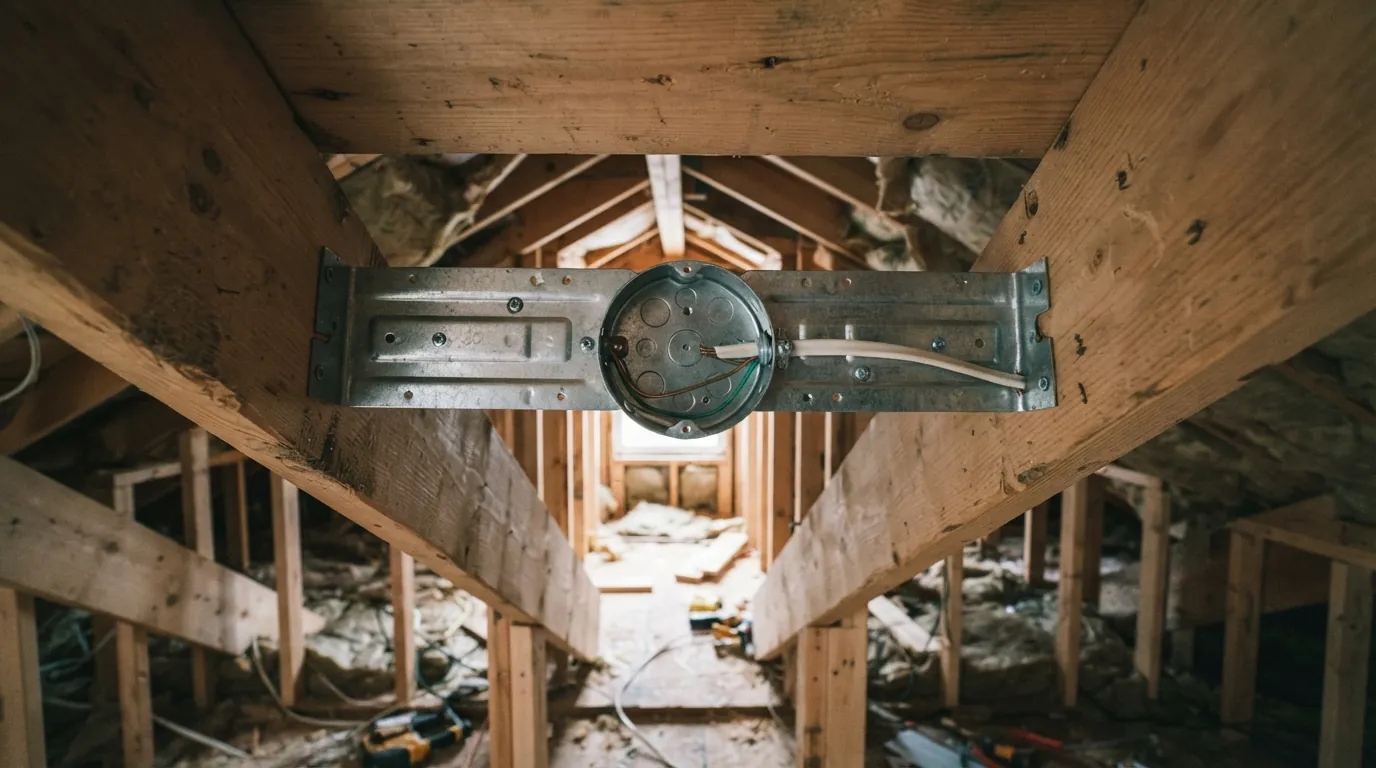
When a fan replaces a light, the first job is the box. If it is not marked as fan-rated, or it is plastic or loosely mounted, we remove it and install a fan-rated box fixed directly to a joist, or a brace that spans between joists where the fan must sit in the middle of a bay. That is quick work from below in most homes. It is the difference between a fan that runs quietly for years and one that slowly works itself loose from the ceiling above.
Fan where no fixture exists
Adding a fan to a room with no ceiling light means cutting in a new fan-rated box, running cable from a nearby circuit, and adding a wall switch or two. We fish the cable from the attic where possible, which avoids opening the ceiling, and place the switch at the room's entry. If the attic is not accessible, we plan the smallest possible openings and tell you where they will be before we cut, so there are no surprises in a finished room.
High ceiling and vaulted fans
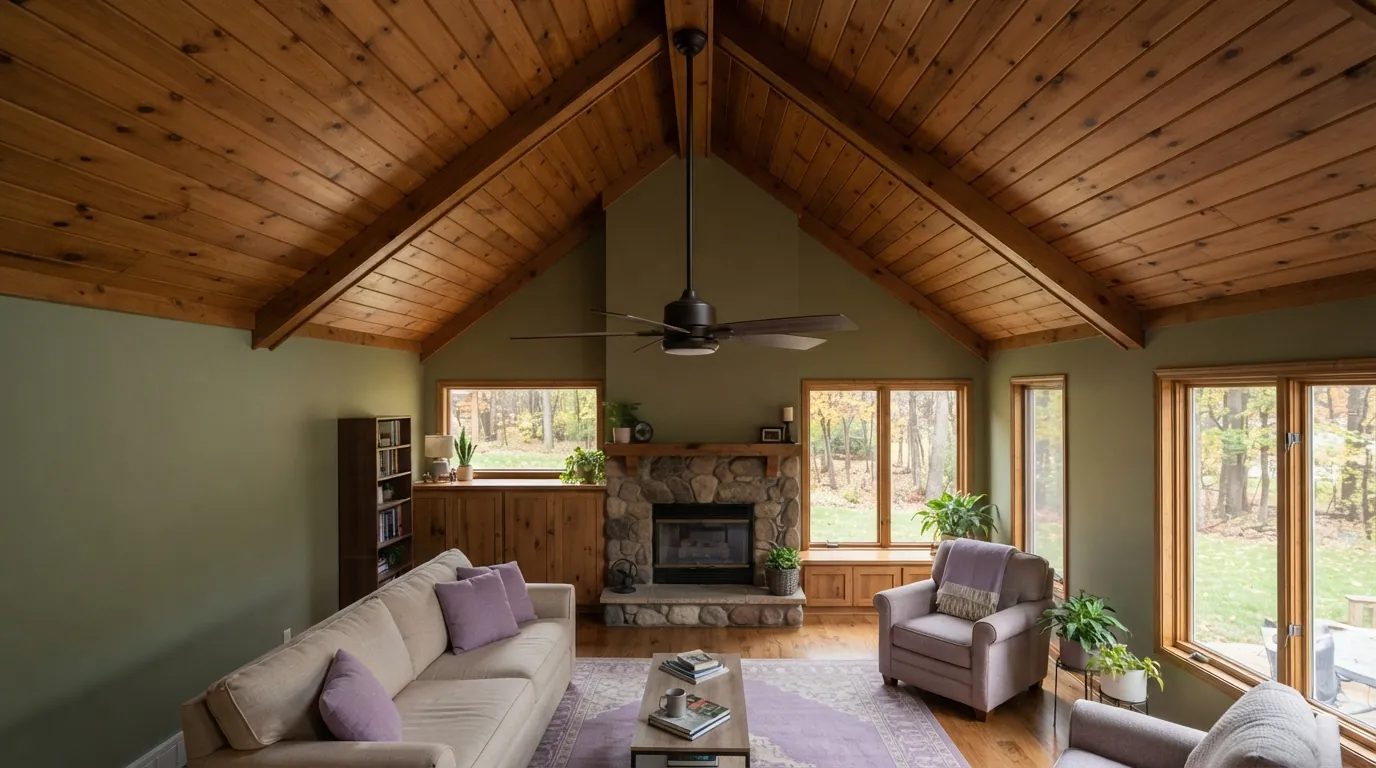
Vaulted and sloped ceilings need an angled mount and a downrod long enough to keep the blades at a comfortable height and clear of the slope. High ceilings need scaffolding or a tall ladder and a second pair of hands. We measure the ceiling angle and height first, choose the right downrod and mount, and pair the fan with a remote or wall control so nobody has to reach a pull chain far overhead, which is the usual complaint with tall rooms.
Remote and wall control wiring
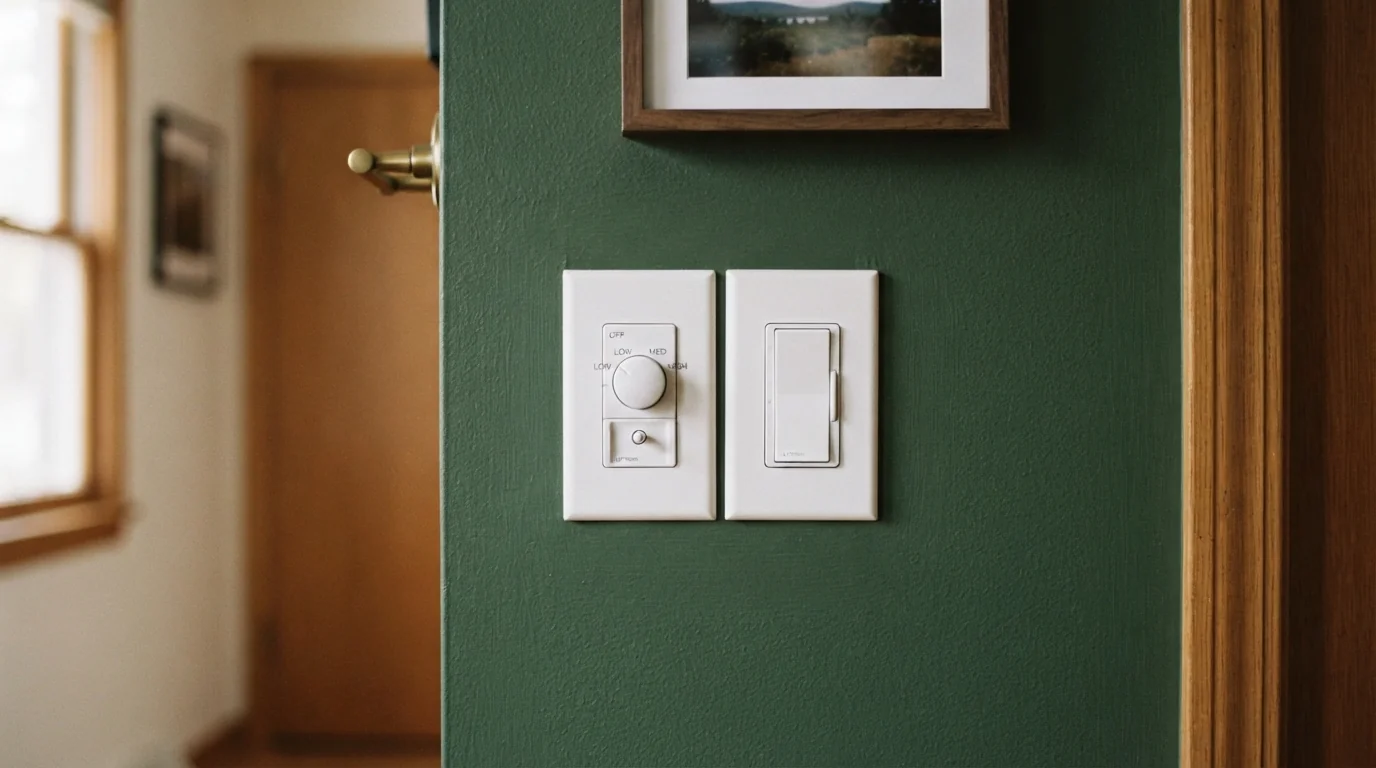
Many fans arrive with a remote, but a wall control is more reliable and cannot get lost. With the right wiring to the ceiling, the fan and its light can have separate wall switches, or a combined fan-speed and dimmer control. Where the existing switch loop only has one switched conductor, we either run an additional one or set up a receiver in the canopy. Wall speed controls must be rated for fan motors; ordinary light dimmers make fans hum and overheat.
Local conditions
Why this looks different across Grand Rapids
Fan installs and other small jobs in Grand Rapids are scheduled from our service office on Richmond St NW on the west side of the city, and they pair well with other visits. If you are adding fans to several rooms, doing them in one visit lets us check the attic access, the switch wiring and the boxes for every room at once.
Before you call
What you can check yourself and what needs an electrician
| Situation | Safe to do yourself | Leave to us |
|---|---|---|
| Fan wobbles | Tighten blade screws, use the balance kit | Check the box and bracket |
| Fan hums at low speed | Check the wall control is fan-rated | Replace with a fan speed control |
| Want a fan where there is no light | Pick the location | New box, brace and switch run |
How the job runs
How a ceiling fan install runs
Check the box
Rating and mounting behind the old light.
Plan the controls
Wall switches, speed control or remote.
Install the box
Fan-rated, fixed to framing or a brace.
Assemble and hang
Downrod and mount for the ceiling.
Wire and test
Fan speeds and light checked.
Balance
Blades balanced so it runs quietly.
Fans from Hunter and controls from Lutron and Leviton.
Straight answers
Questions about ceiling fan installation in Grand Rapids
Still unsure? Call (616) 699-4794 and ask a technician.
Only if the box is fan-rated and secured to framing; otherwise it must be replaced.
Yes, with an angled mount and the right downrod.
Often a light dimmer used as a fan control; fans need a fan-rated speed control.
Yes, if there is an extra conductor to the ceiling or we run one.
A typical regional range is $150 to $600, depending on box and ceiling.
Same category