Inspections and Commercial
Three-phase power and motor wiring for Grand Rapids shops and plants
Shop machinery arrives with a nameplate and a deadline. We check the building's service and panel against it, wire three-phase feeds, starters and disconnects to suit, and commission the equipment so it runs the right direction on day one.
Updated September 2026
- Answered 24/7
- Wired to the nameplate
- Starters and disconnects
- Shops, plants and garages
Quick answer
Three-phase and motor wiring in Grand Rapids covers three-phase service and panels, motor starters and controls, and feeds to shop machinery such as compressors, lathes, mills and dust collectors. Each circuit is sized from the equipment nameplate, protected to code, fitted with a local disconnect, and checked for correct rotation at startup.
What this job is
Start with the service, then the nameplate
The first question is whether the building has three-phase power at all, and at what voltage. Many small shops have single-phase service and need either a utility three-phase upgrade or a phase converter for one machine. Where three-phase exists, we check the panel's capacity and spaces, then size each feed, starter and overload from the nameplate rather than from the last machine that sat in that spot.
Cost factors
What moves the price on this job
The service, the distance to the machine and the controls decide most of the price.
Typical regional electrician labor runs $75 to $150 per hour, as a planning figure rather than our price.
- 01
Service capacity
A utility upgrade is the biggest swing.
- 02
Distance to the machine
Longer conduit runs cost more.
- 03
Motor size
Larger motors need heavier feeds and starters.
- 04
Controls
Interlocks and remote stations add labor.
- 05
Phase converter
Adds equipment where there is no three-phase.
- 06
Downtime limits
After-hours work to keep production running.
- 07
Permits
Filed and inspected per stage.
What is included
What an equipment hookup includes
- Nameplate voltage, phase and current checked
- Service and panel capacity confirmed
- Feeder or branch circuit sized to the load
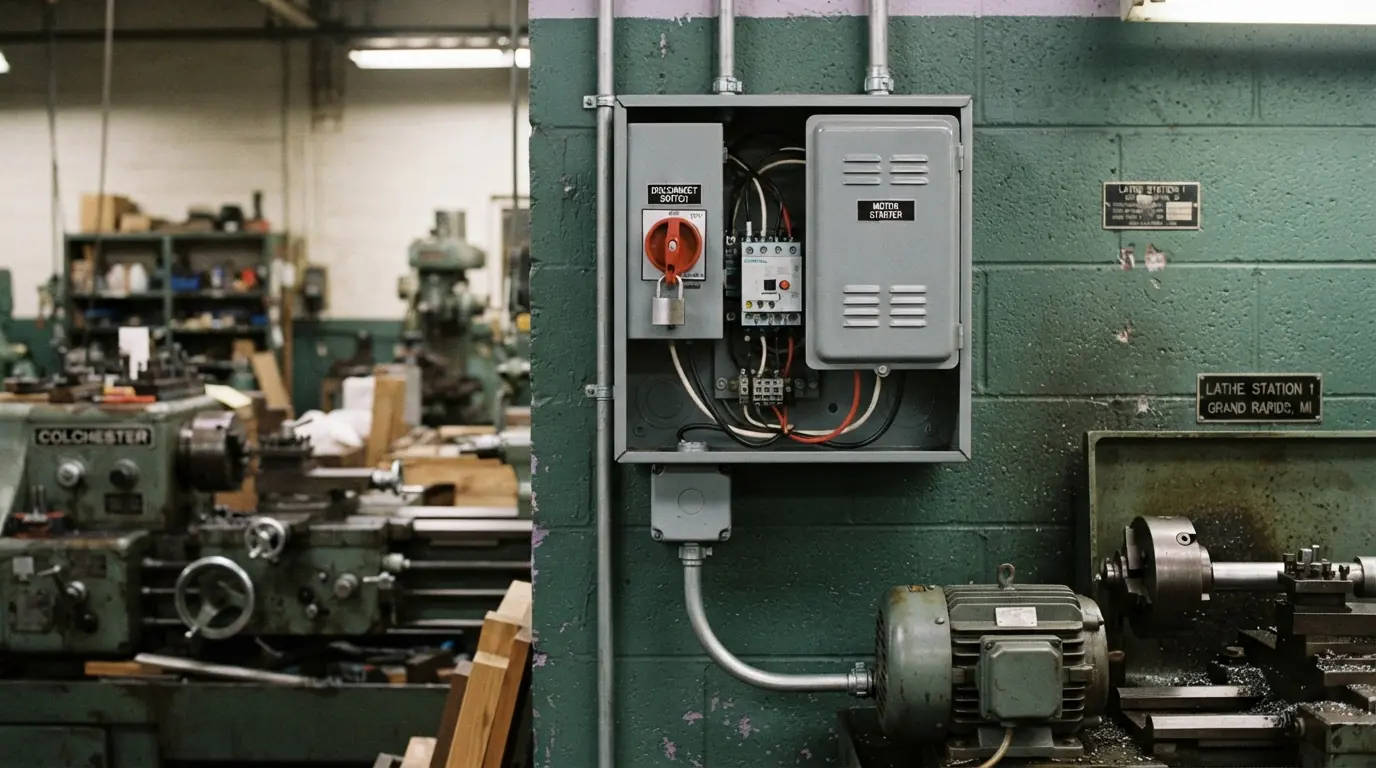
- Local disconnect within sight of the machine
- Motor starter and overloads matched to the motor
- Controls, stop buttons and interlocks wired
- Conduit and flexible whips protected from damage
- Rotation checked at first start
- Panel schedule updated
Choosing between them
Getting three-phase power to a machine
| Option | Best for | Trade-off |
|---|---|---|
| Existing three-phase service | Buildings already served | Panel capacity still needs checking |
| Utility three-phase upgrade | Shops adding several machines | Utility lead time and cost |
| Phase converter | One machine in a single-phase shop | Efficiency and sizing limits |
The versions of this job
Three-phase service and panels
Three-phase panels and switchboards feed most commercial and light-industrial equipment. We install new three-phase panels, add capacity with distribution panels, and balance loads across the phases so one leg is not overloaded while the others idle. Where a building needs three-phase for the first time, we work with the utility on the service request, which usually has the longest lead time of the whole project, and plan the interior work so it is ready when the utility is, not weeks behind it.
Motor starters and controls
Larger motors need starters that bring them up to speed safely and overloads that protect them from overheating. We size starters and overload settings from the motor nameplate, wire start and stop stations where operators actually stand, and add interlocks where one machine should not run without another, such as a dust collector with a saw. Existing starters that trip, chatter or run hot are tested and replaced with correctly rated parts, and the settings are written inside the enclosure door.
Equipment hookups
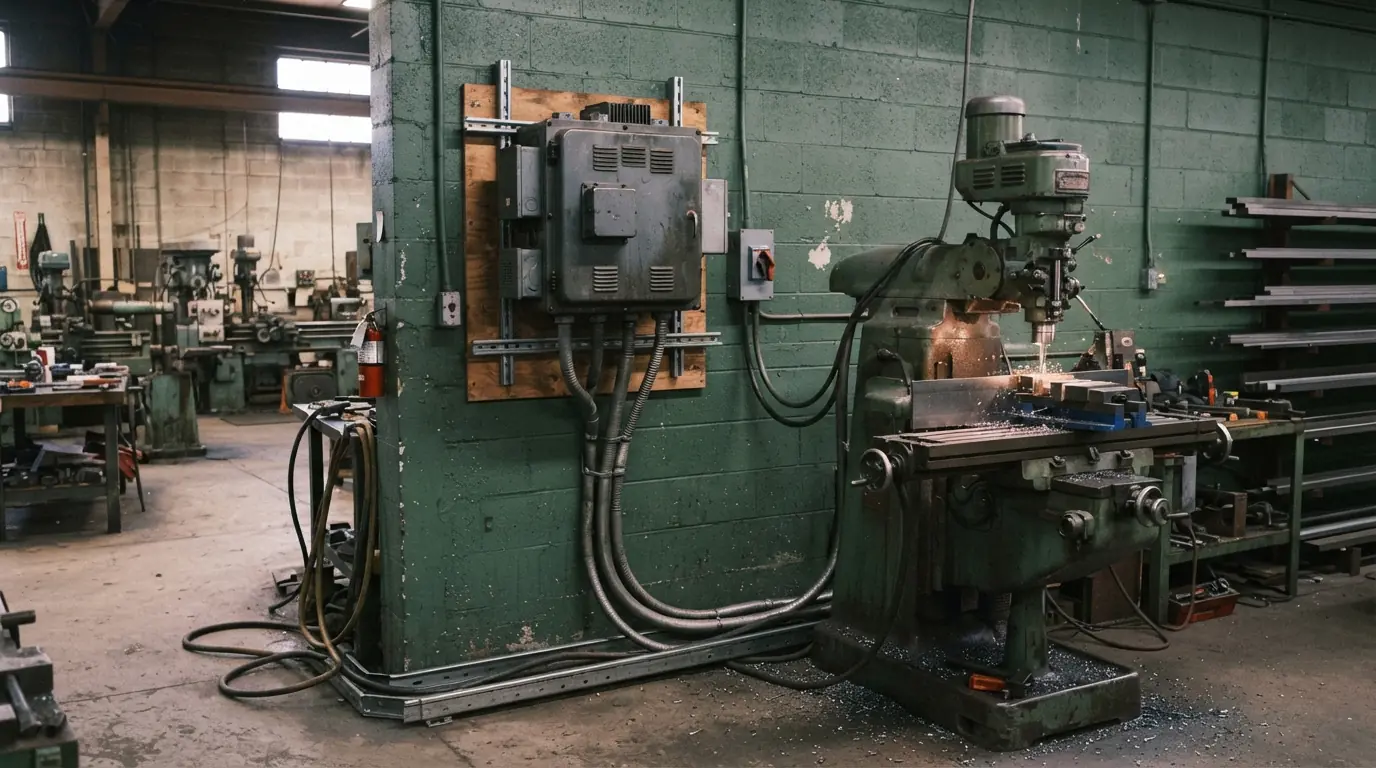
New or relocated machines, such as compressors, lathes, mills, saws and kilns, each need a feed matched to the nameplate and a lockable disconnect within sight. We run conduit to the machine's location, finish with liquid-tight flexible conduit where it vibrates, and check rotation on the first start so pumps and fans run the right way. When a machine moves across the shop, we reuse what we can and remove the old feed so nothing abandoned is left live on the shop floor.
Shop machinery circuits
Small shops and serious home workshops often run 240 volt single-phase tools alongside a phase converter for one or two three-phase machines. We plan the converter size, the circuits it feeds and its placement so the machines start reliably, and put general shop receptacles and lighting on separate circuits so a motor start does not dim the lights or trip the bench outlets. Where the panel is full, a dedicated shop subpanel gives room to grow as the tool list gets longer.
Local conditions
What we see around Grand Rapids
Commercial and equipment work is scheduled from our head office on Lamoreaux Dr NW in Comstock Park, north along the Alpine corridor, where larger jobs are staged. Because a Michigan electrical permit may not last longer than 180 days, we plan phased equipment installs so each permitted stage is inspected and closed before the next machine arrives on the floor.
How the job runs
How an equipment hookup runs
Send the nameplates
Voltage, phase, current for each machine.
Check the service
Three-phase available and capacity.
Plan feeds and controls
Routes, starters, disconnects.
Permit filed
Before work begins.
Install and connect
Feeds, starters, whips, controls.
Start and verify
Rotation, currents and overloads checked.
Panels, disconnects and starters from Square D, Eaton and Siemens.
Straight answers
Questions about three-phase and motor wiring in Grand Rapids
Still unsure? Call (616) 699-4794 and ask a technician.
Yes, including panels, starters, disconnects and machine feeds.
A phase converter for one or two machines, or a utility three-phase upgrade for more.
Yes. We rerun the feed and remove the old one.
Yes, on the first start of every motor we wire.
Yes. We schedule around shifts to keep downtime short.
Same category