EV Chargers, Generators and Backup
Home battery backup installation for Grand Rapids homes
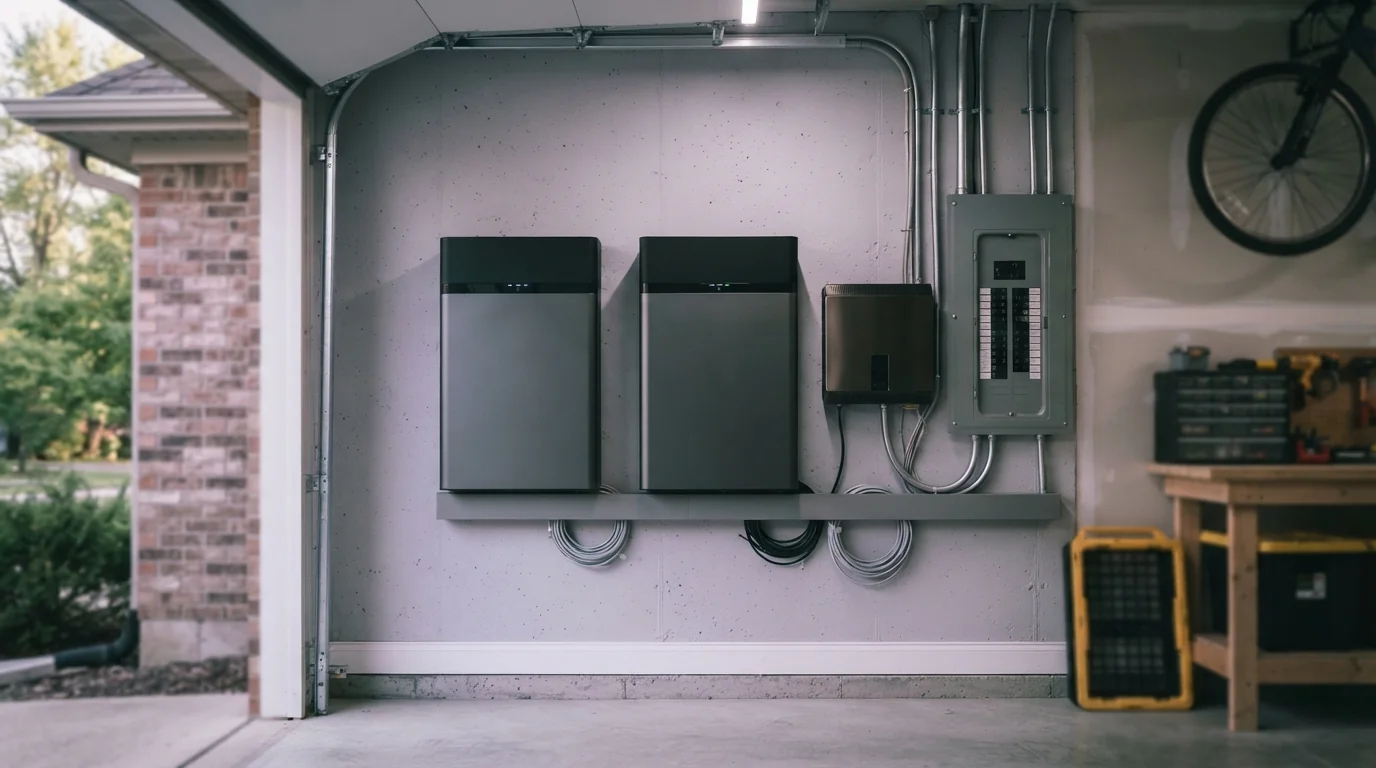
A home battery switches over in an instant when the grid drops, with no fuel, noise or exhaust. We size it to the loads that matter, install the critical-load panel and disconnects, and coordinate with Consumers Energy where the battery works alongside solar.
Updated September 2026
- Answered 24/7
- Sized to your must-run loads
- Critical-load panels
- Solar or standalone
Quick answer
Home battery backup installation in Grand Rapids means sizing a battery system to the loads that must run in an outage, installing it with a gateway or transfer device and often a critical-load subpanel, and connecting it with or without solar. Battery systems fall under the 2023 code's expanded energy storage requirements and are permitted and inspected.
What this job is
Batteries cover hours well; plan for the long outages too
A battery is excellent for the common outage: a few hours after a storm, with the furnace blower, sump pump, fridge, lights and internet kept on silently. Multi-day outages are different, because a battery only lasts as long as its stored energy unless solar recharges it. We size the battery to realistic outage lengths and your must-run list, and tell you plainly when a generator, or a battery and generator together, is the better fit.
Cost factors
What moves the price on this job
Battery capacity and how much of the house it backs up decide most of the price.
Typical regional ranges: subpanel installation $500 to $1,500 and an electrical permit $50 to $300, as planning figures rather than our price.
- 01
Battery capacity
More storage means more cost.
- 02
Whole-home or critical loads
Whole-home needs more equipment.
- 03
Critical-load panel
Moving circuits adds labor.
- 04
Solar integration
Coordination with an existing system.
- 05
Panel condition
An old panel may need replacing first.
- 06
Location
Garage, basement or outdoor mounting.
- 07
Permit
Energy storage installs are inspected.
What is included
What a battery backup install includes
- Load list and outage-length planning
- Battery sizing and placement
- Critical-load subpanel where used
- Backup gateway or transfer equipment
- Disconnects and labeling to code
- Panel capacity and breaker space check
- Solar and utility coordination where required
- Permit and inspection
- Outage test and app setup
Choosing between them
Battery setups compared
| Setup | Best for | Trade-off |
|---|---|---|
| Critical-load battery | Heat, sump, fridge, lights, internet | Some circuits stay off |
| Whole-home battery | Homes wanting no change in an outage | More batteries, higher cost |
| Battery with solar | Recharging through multi-day outages | Solar output drops in winter |
| Battery plus generator | Long winter outages | Two systems to maintain |
The versions of this job
Whole-home battery backup
Whole-home backup puts the entire panel behind the battery system through a backup gateway at the service. In an outage, the house keeps running normally, within the battery's power and energy limits. Large loads like central air, an electric range or an EV charger can drain a battery quickly, so whole-home systems usually pair multiple batteries with load controls that hold back the heaviest loads. We model how long your household would actually last before recommending the size, using your real usage rather than a brochure figure.
Battery with solar
Paired with solar panels, a battery can store daytime production for evening use and recharge during a long outage. In a Grand Rapids winter, solar output is lower and snow can cover panels, so we are honest about how much recharging to expect in January. The electrical side, which covers panel capacity, disconnects, the backup gateway and the utility paperwork, is where we come in, working alongside your solar installer or on a system you already own, and we check that the inverter and battery are listed to work together.
Critical-load panels
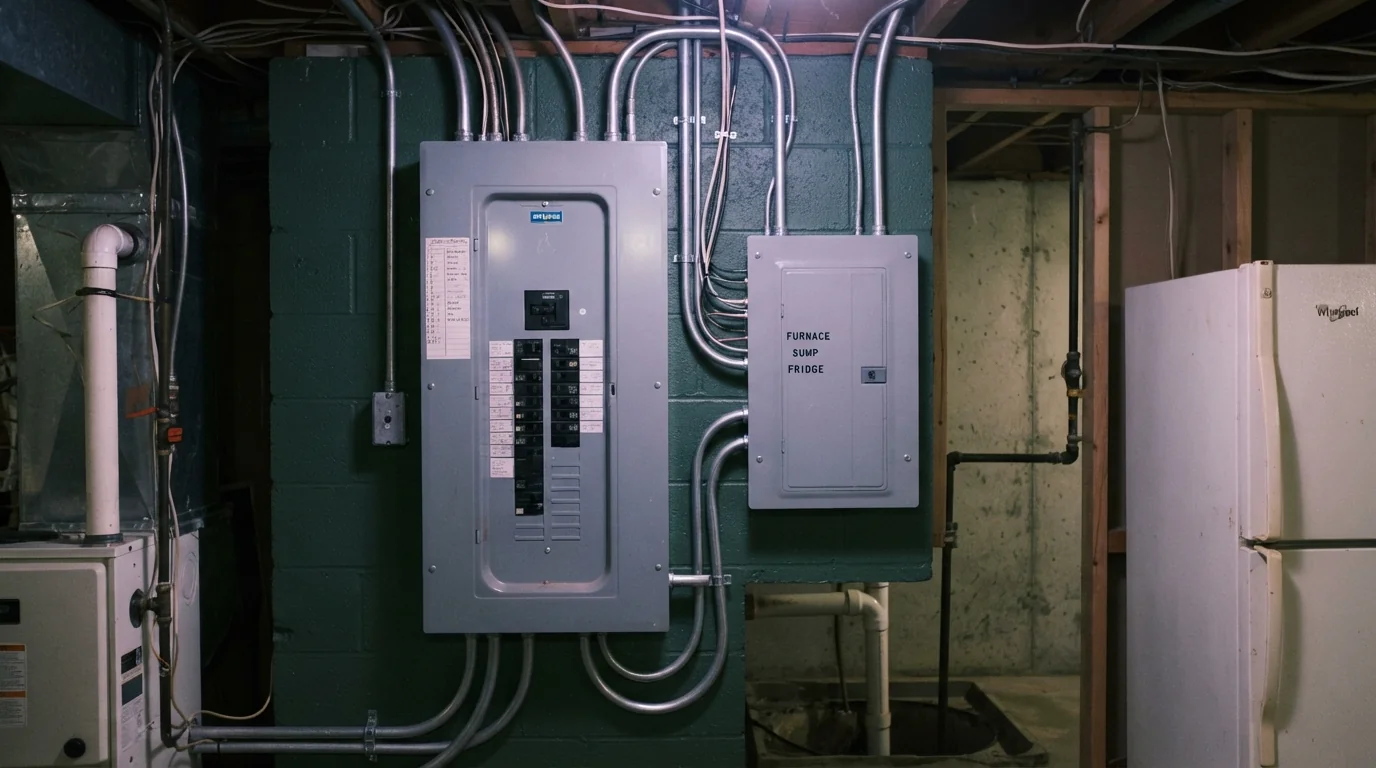
A critical-load panel is a small subpanel holding only the circuits that must run in an outage: furnace, sump, refrigerator, some lights and receptacles, internet. The battery backs up only that panel, so a smaller battery lasts much longer. We choose the circuits with you, move them into the new panel, and label everything, so during an outage it is obvious what is on backup and what is not. Circuits can be added later if the battery is expanded, without rewiring the main panel again.
Battery and generator together
Some homes want both: a battery for instant, silent switchover and a generator to recharge it or carry the house through a multi-day winter outage. That needs careful design so the two systems do not fight each other and the transfer equipment is listed for the combination. We plan the sequence, confirm compatibility, and test a real outage with both running, so you know exactly what happens when the power goes out on a winter night and which system takes over first.
Local conditions
Local conditions that change the work
Since February 27, 2024, Consumers Energy applies Distributed Generation credits to all electric charges on participating customers' bills, and Michigan's PA 235 lets customers size distributed generation up to 110% of their previous 12 months of use. A battery paired with solar can take advantage of both, so we size the two together rather than separately for Grand Rapids homes.
How the job runs
How a battery install runs
List must-run loads
And how long outages usually last.
Size the system
Power, energy and number of batteries.
Plan placement
Clearances, location and conduit.
Permit and coordination
Utility paperwork where required.
Install and connect
Batteries, gateway, critical-load panel.
Outage test
Grid off, house on battery, then back.
Battery systems we install include Tesla and Generac units.
Straight answers
Questions about home battery backup installation in Grand Rapids
Still unsure? Call (616) 699-4794 and ask a technician.
It depends on its capacity and your loads; critical-load setups last much longer than whole-home.
No. A battery can charge from the grid and back up the house on its own.
Batteries are silent and instant; generators run as long as they have fuel. Some homes use both.
Yes. Energy storage systems are permitted and inspected.
Yes, if the sump circuit is included and the battery can handle its starting surge.
Same category