Emergency and Troubleshooting
Flickering or dimming lights in a Grand Rapids home, diagnosed
A little flicker when a big motor starts can be normal. Lights that dim across the house, flicker in more than one room, or get worse over weeks are not. We measure voltage at the panel and the meter to tell a harmless dimmer mismatch from a loose service neutral that needs fixing now.
Updated September 2026
- Answered 24/7
- Voltage tested under load
- Panel and meter checked
- Grand Rapids and Kent County
Quick answer
Flickering lights in a Grand Rapids home usually come from one of four causes: an LED bulb on an incompatible dimmer, a loose connection on one circuit, heavy loads sharing a circuit, or a loose service neutral at the meter or panel. Flicker across the whole house, or lights that get brighter as others dim, needs a call right away.
What you notice first
Flicker patterns that need a call now
Lights brighten while others dim
Classic sign of a loose service neutral.
Flicker in several rooms
The problem is in the panel or service.
Getting worse over weeks
A connection deteriorating under load.
Burning smell with flicker
Arcing somewhere; turn off and call.
Electronics failing early
Voltage swinging outside normal limits.
Flicker after a storm
Damage to the drop, mast or meter socket.
What this job is
One room flickering is a nuisance; the whole house is a warning
Flicker confined to one fixture is usually the bulb, the dimmer or a loose connection at that fixture. Flicker in several rooms at once points further upstream: a shared circuit struggling under load, a loose connection in the panel, or a failing neutral in the service. That last one is the dangerous version, because it lets voltage swing high on one side of the house while it sags on the other.
The versions of this job
Loose service neutral
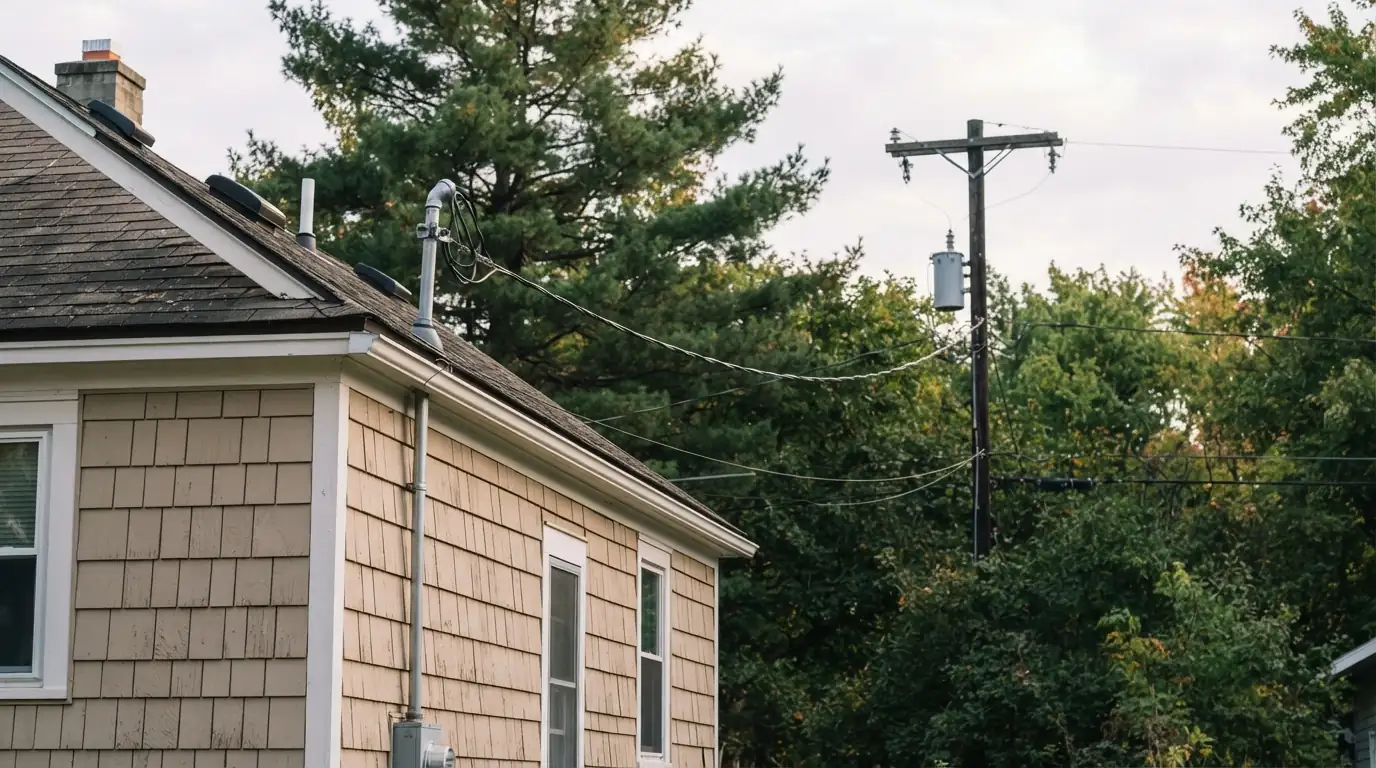
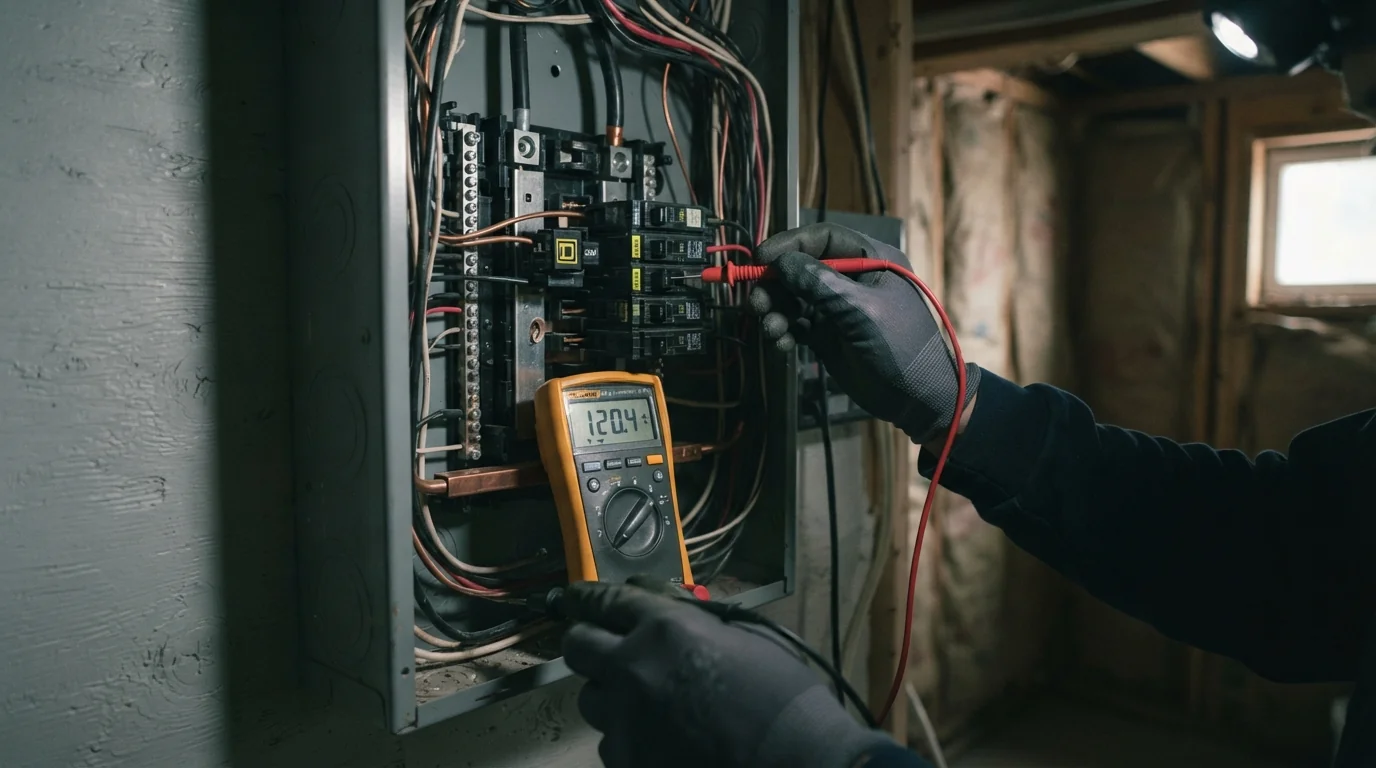
The neutral carries current back from both halves of the house's 240 volt service. If it loosens at the meter, the weatherhead or the panel, voltage stops being shared evenly: lights on one side dim while the other side brightens, and appliances can be damaged by the high side. We measure both legs under load at the panel and the meter. If the fault is on the utility side, we call Consumers Energy; if it is at the mast, socket or panel, we repair it the same visit.
Dimmer and LED mismatch
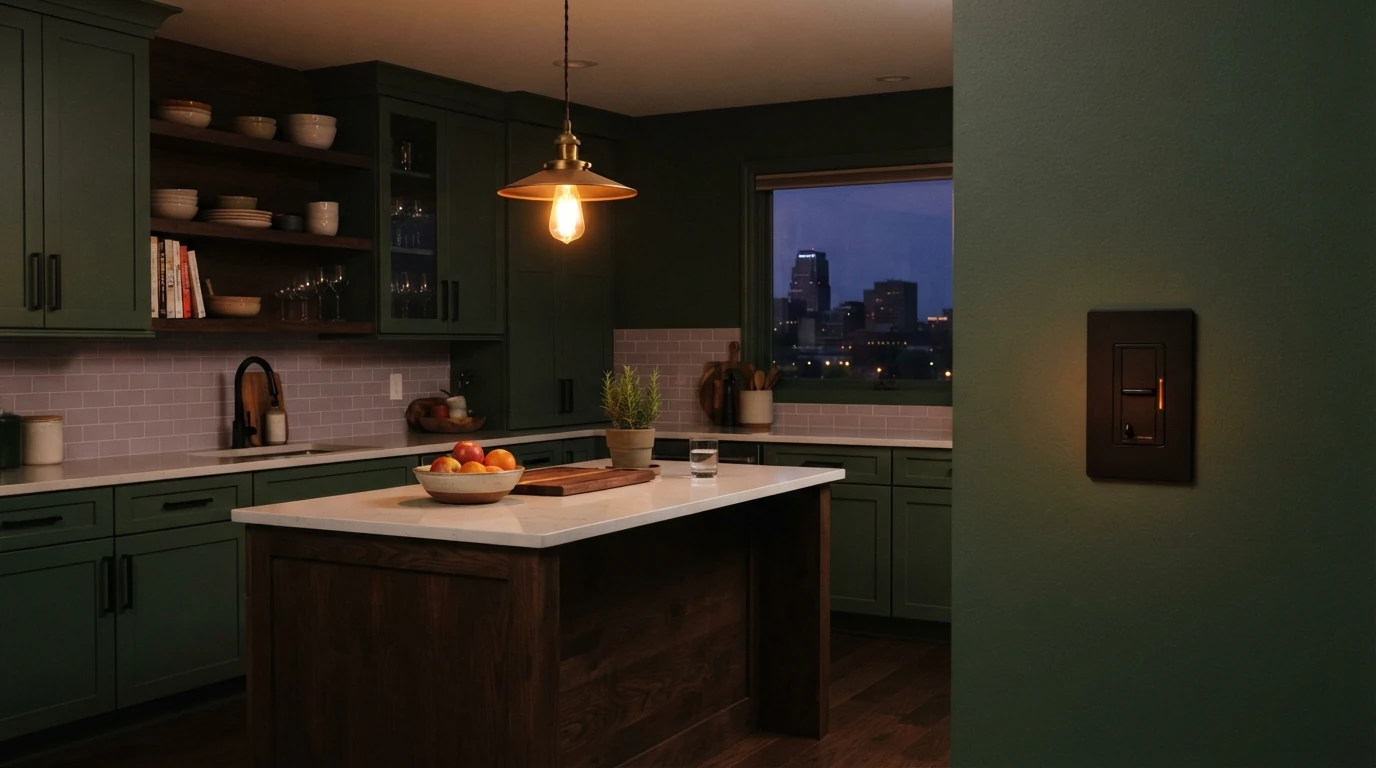
The most common and least dangerous flicker is an LED bulb on a dimmer designed for incandescent loads. It shows up as shimmer at low settings, buzzing, or lights that never quite turn off. We confirm the bulbs are dimmable, check the dimmer's rating against the LED load on the circuit, and fit an LED-rated dimmer set to the fixture type, which usually ends the flicker for good without changing any of your fixtures. If one fixture still misbehaves, its driver is the culprit, and we say so.
Overloaded shared circuit
When the lights dip every time the microwave, vacuum or space heater starts, that circuit is carrying too much, often lighting and receptacles together in an older house. A brief dip is the heavy load pulling voltage down across the shared wiring. We measure the voltage drop under load, find what shares the circuit, and split it or add a dedicated circuit for the heavy appliance, which also stops the breaker trips that tend to come next as more appliances are added.
Utility-side voltage sag
Some flicker starts outside the house: a damaged service drop after a storm, a failing transformer, or heavy loads on neighboring homes sharing the same transformer. If our measurements show the voltage problem at the meter with the house's own load off, we document the readings and report it to the utility with them. That gets a faster response than a general complaint, and it rules out spending money on wiring inside the house that was never the problem in the first place.
How the job runs
How we track down flickering lights
Describe the pattern
Which rooms, when, and what else is running.
Measure at the panel
Both legs and the neutral under load.
Check the meter side
Voltage with the house load off.
Test the circuits
Connections and loads on affected circuits.
Repair the cause
Dimmer, connection, circuit or service.
Confirm stable voltage
Re-measured under the same loads.
Local conditions
What we see around Grand Rapids
East Grand Rapids homes around Reeds Lake and Gaslight Village were largely built in the early and mid 1900s, with electrical systems never designed for current loads. When a heat pump, induction range or EV charger is added to one of those houses, dimming as the new load starts is often the first symptom we are called about, well before any breaker trips.
Before you call
What you can check yourself and what needs an electrician
| Situation | Safe to do yourself | Leave to us |
|---|---|---|
| One LED on a dimmer flickers | Try a dimmable bulb or turn the dimmer up | Fit an LED-rated dimmer |
| Dims when the microwave runs | Move the microwave to another circuit | Add a dedicated circuit |
| Whole house flickers | Nothing; do not open the panel | Test the service neutral now |
Cost factors
What moves the price on this job
Most of the visit is measurement; the fix ranges from a dimmer to a service repair.
Typical regional ranges: $79 to $179 for a service call fee and $100 to $200 installed for a breaker replacement, as planning figures rather than our price.
- 01
Where the fault is
A fixture, a circuit, the panel or the service.
- 02
Time to reproduce
Intermittent flicker takes longer to catch.
- 03
Dimmer or device
LED-rated dimmers cost more than basic ones.
- 04
Circuit changes
Splitting a circuit means new wire.
- 05
Service repair
Neutral or socket work at the meter costs more.
- 06
Utility involvement
Utility-side faults are theirs to fix.
- 07
Timing
Night calls can cost more than booked visits.
LED-rated dimmers from Lutron and Leviton; breakers for Square D and Eaton panels.
Straight answers
Questions about flickering lights repair in Grand Rapids
Still unsure? Call (616) 699-4794 and ask a technician.
One flickering bulb usually is not. Whole-house flicker or lights brightening as others dim can be, and needs a call.
Large motors draw a brief surge. A small, quick dip can be normal; a deep or growing one is not.
Yes. Old dimmers and LED bulbs often do not work well together.
Measuring at the meter with the house load off tells us which.
Yes, especially if it is whole-house flicker or there is a burning smell.
Same category