Inspections and Commercial
Commercial LED lighting retrofits for Grand Rapids offices and warehouses
Swapping fluorescent and metal-halide lighting for LED cuts the power bill and the ladder time, but the right method depends on the fixtures you have. We survey the building, pick between tube swaps, retrofit kits and new fixtures, and schedule the work around your hours.
Updated September 2026
- Answered 24/7
- Survey before pricing
- After-hours scheduling
- Occupancy sensors
Quick answer
A commercial LED lighting retrofit in Grand Rapids replaces fluorescent troffers and metal-halide or fluorescent high bays with LED, using tube swaps, retrofit kits or new fixtures depending on the condition of the existing ones. Occupancy and daylight sensors add savings, and the work is usually phased or done after hours so the business keeps running.
What this job is
Pick the method before you pick the fixture
There are three ways to go LED. Plug-in tubes reuse the ballast and are quick but depend on it. Ballast-bypass tubes rewire the fixture to feed line voltage straight to the lamps, removing the ballast for good. Retrofit kits and new fixtures replace the guts or the whole light. The age and condition of the fixtures, and how long you plan to stay, decide which is best.
Cost factors
What moves the price on this job
Fixture count, method and ceiling height decide the price.
Typical regional electrician labor runs $75 to $150 per hour, as a planning figure rather than our price.
- 01
Number of fixtures
The biggest single factor.
- 02
Conversion method
Tubes cost least; new fixtures cost most.
- 03
Ceiling height
High bays need lifts.
- 04
Controls
Sensors add parts and setup.
- 05
After-hours work
Night and weekend phases can cost more.
- 06
Fixture condition
Damaged sockets and housings need replacing.
- 07
Disposal
Old lamps and ballasts recycled properly.
Choosing between them
Three ways to convert to LED
| Method | Best for | Trade-off |
|---|---|---|
| Plug-and-play LED tubes | Newer fixtures with healthy ballasts | Ballast failures still take the light out |
| Ballast-bypass tubes | Older fixtures, lower long-term cost | Fixture rewired and relabeled |
| Retrofit kits or new fixtures | Worn or yellowed fixtures | Higher upfront cost, best result |
The versions of this job
Fluorescent to LED tube swap
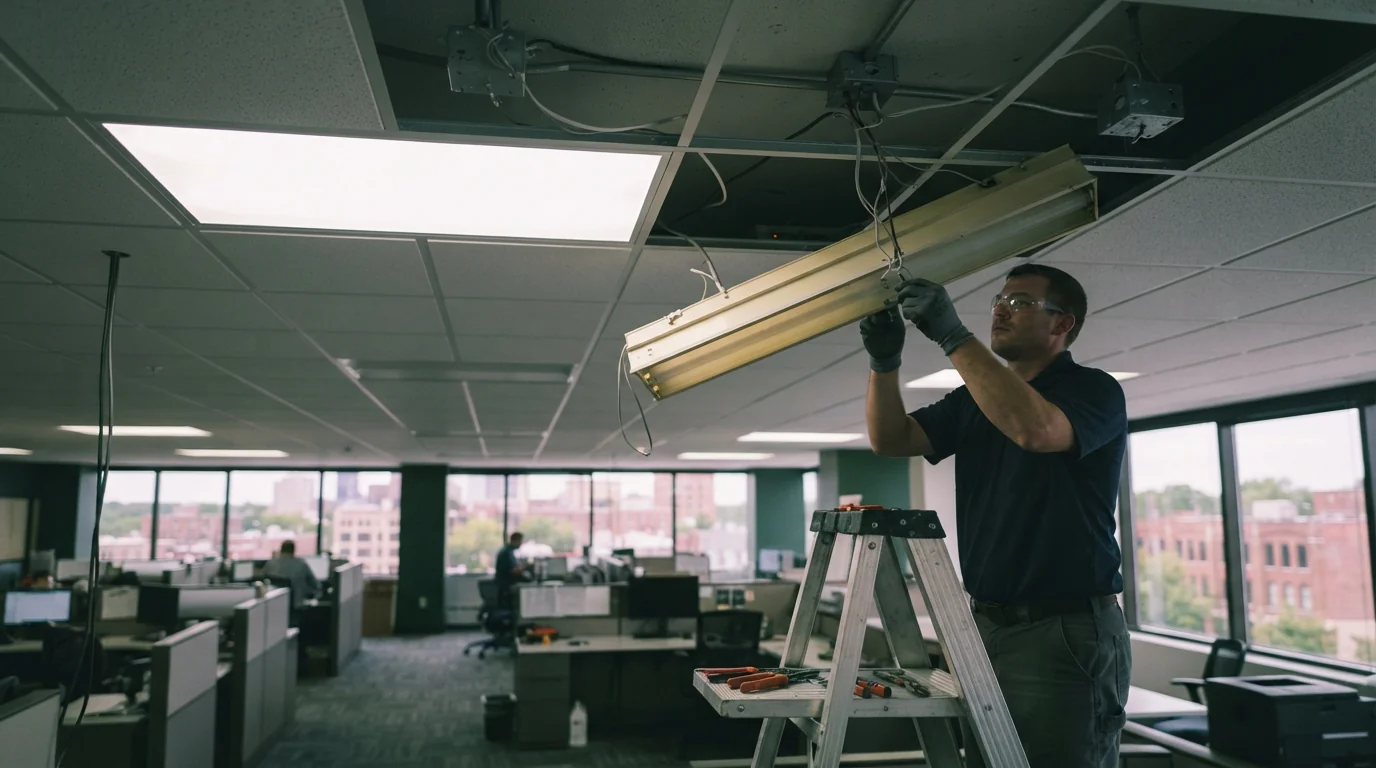
Most offices still run 4-foot fluorescent troffers. Replacing tubes with LED is the fastest conversion, but the method matters. Plug-in tubes keep the ballast, which will eventually fail and take the tube with it. Ballast-bypass tubes need the fixture rewired but remove that failure point permanently. We check a sample of ballasts and sockets first, and recommend the method that costs less over the years you expect to stay, not just this month, with the fixtures relabeled for whoever services them next.
Warehouse high-bay retrofit
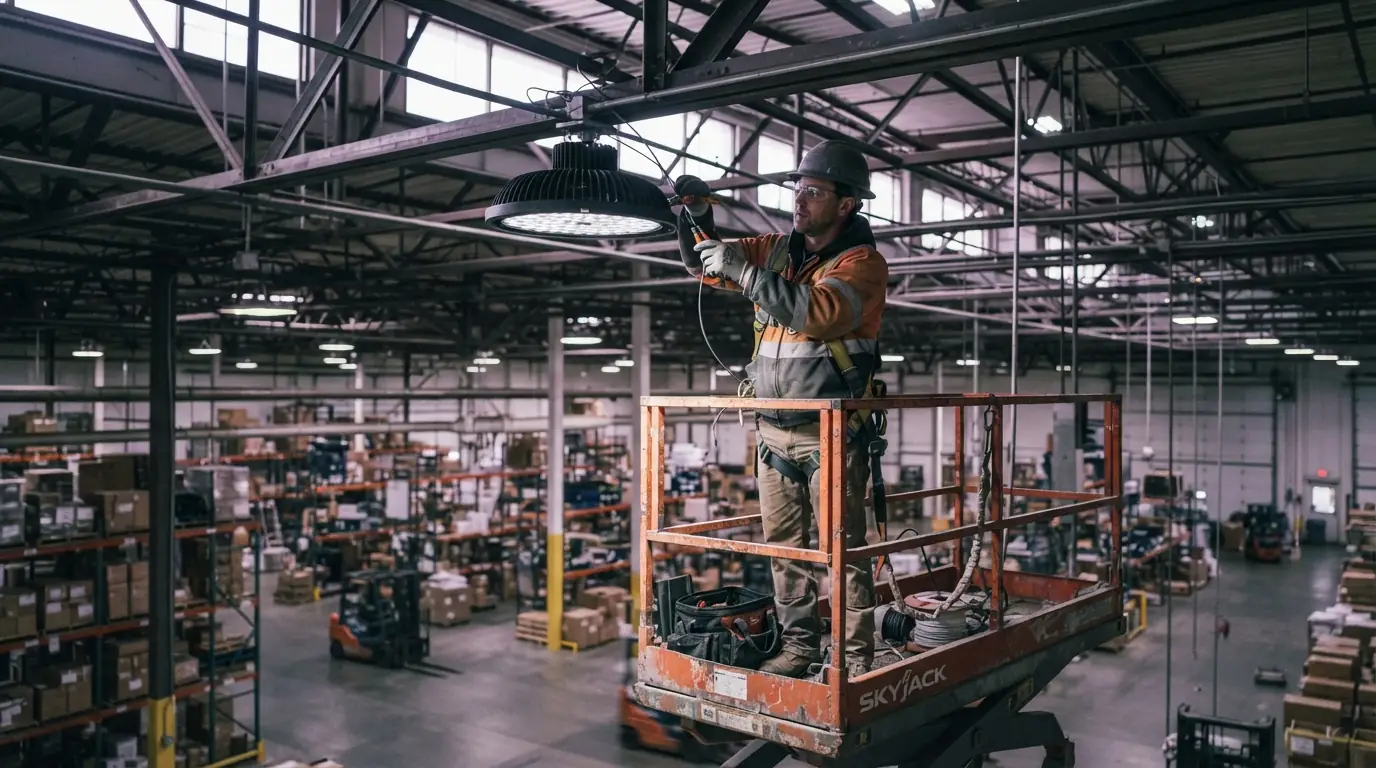
Metal-halide and fluorescent high bays in warehouses and shops draw heavy power and take minutes to restrike after a flicker. LED high bays start instantly, run cooler and last far longer between lift rentals. We lay out the new fixtures to light the aisles and pick faces evenly, choose optics that suit the ceiling height, and reuse circuits where they are sound. Work is done from a lift, usually during a slower shift, so forklifts and people stay clear of the area.
Occupancy sensors
Lights left on in empty storage rooms, restrooms and back offices are the easiest savings in any building. Occupancy sensors turn them off when nobody is there, and daylight sensors dim fixtures near windows on bright days. We place sensors where they see people moving rather than furniture, set sensible timeouts so nobody is left in the dark at a desk, and label the zones on the panel schedule. Restrooms and stairwells get sensors that fail on rather than off, so nobody is left in the dark if a sensor ever dies.
Utility rebate paperwork
Utilities often offer business rebates for qualifying LED fixtures and controls, and the rules usually require specific product listings and paperwork before or after the work. We gather the fixture specifications, counts and before-and-after details you need for the application, and choose qualifying products where the difference in price is small. The rebate application itself stays with you as the account holder, but you will not be missing a document when you file it, and the fixture records stay in your building file.
Local conditions
What we see around Grand Rapids
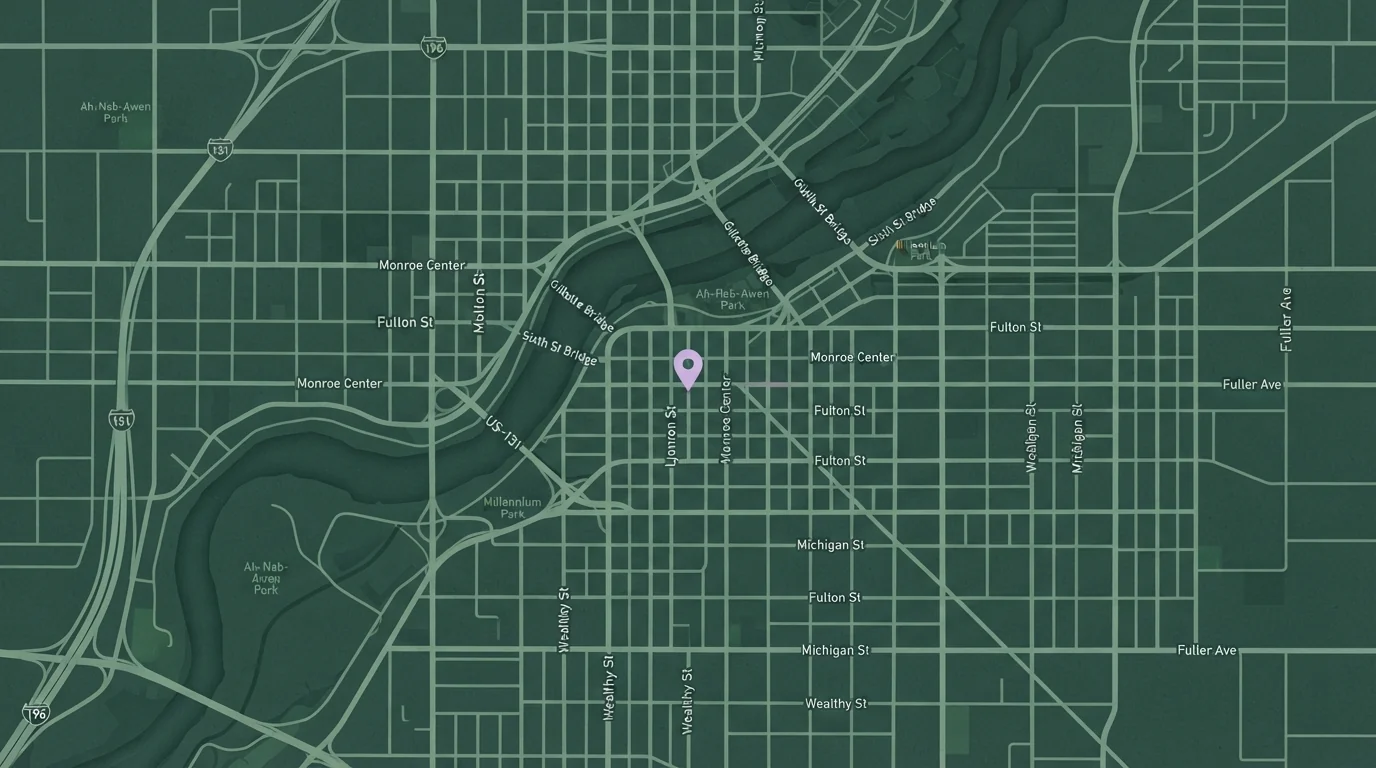
Commercial lighting work in Grand Rapids is permitted through the city's Citizen Access system, and a Michigan electrical permit may not last longer than 180 days. That matters on a retrofit phased across a large building: we plan the phases so the permitted work, inspections and close-out fit inside that window rather than lapsing halfway through a large building or campus.
Time on site
How a retrofit fits around your business
Most offices and shops are retrofitted in phases, a zone at a time, before opening or after close, so staff and customers never lose light where they are working. Warehouses with high bays are usually done from a lift during a quiet shift. We give you the phase plan and dates before the first fixture comes down.
How the job runs
How a lighting retrofit runs
Survey the building
Fixture counts, types, condition, hours.
Recommend a method
Tubes, kits or new fixtures by area.
Price and phase plan
Zones, dates and any rebate paperwork.
Permit where required
Filed before work starts.
Retrofit by zone
Around your hours, a zone at a time.
Sensors and schedule
Controls set, panel schedule updated.
Straight answers
Questions about commercial led lighting retrofit in Grand Rapids
Still unsure? Call (616) 699-4794 and ask a technician.
Plug-in tubes are quick on healthy ballasts; bypass removes the ballast as a future failure point.
Yes. Most retrofits are phased before opening or after close.
Yes. LEDs start instantly and run well in the cold.
We prepare the fixture documentation; the account holder submits the application.
Fluorescent lamps and ballasts are recycled rather than thrown away.
Same category