Inspections and Commercial
Infrared electrical scanning in Grand Rapids
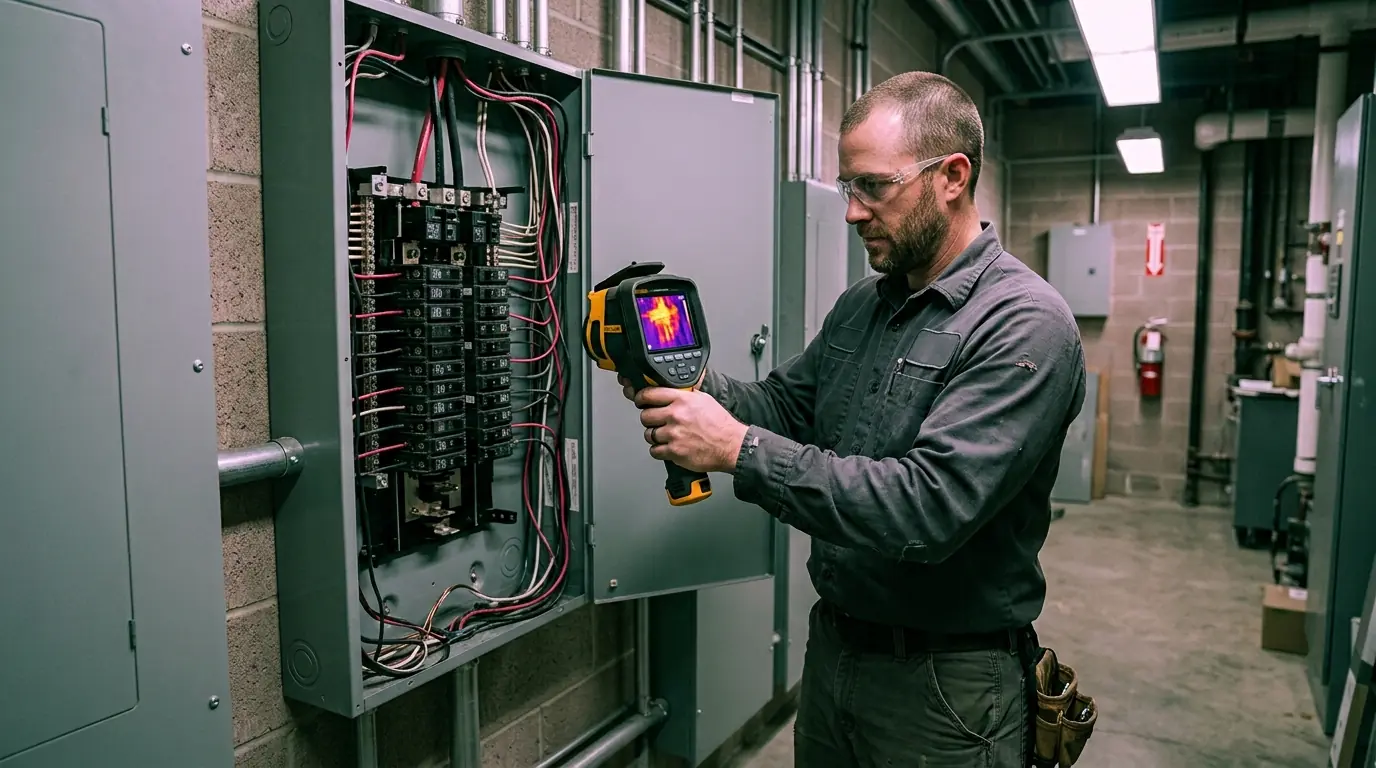
Loose connections and overloaded breakers run hot long before they fail, and heat shows up clearly on a thermal camera. We scan panels, switchgear and equipment while they carry their normal load, flag every hot spot by severity, repair what we find and leave a report your insurer or facility manager can file.
Updated September 2026
- Answered 24/7
- Scanned under real load
- Hot spots ranked by severity
- Report with images
Quick answer
Infrared electrical scanning in Grand Rapids uses a thermal camera to find connections, breakers and conductors running hotter than they should while the system is under normal load. Each hot spot is photographed, ranked by temperature rise, and repaired before it becomes a failure or a fire. Many insurers ask commercial properties for an annual scan.
What this job is
Find the heat before it finds you
Most electrical failures in panels and switchgear start as a connection that has worked loose or a breaker carrying more than it should. Both produce heat, and both look normal to the eye. A thermal camera sees the difference in seconds. Scanning only works when the equipment is carrying its usual load, so we schedule scans during normal operation, with covers removed safely and the work done by people trained for live equipment.
Scans are a natural fit for commercial maintenance and for older homes due an electrical safety inspection, where a quick scan answers questions a visual check cannot.
What is included
What an infrared scan covers
- Main and distribution panels
- Switchgear and disconnects
- Motor control and equipment connections
- Transfer switches and generator connections
- Temperature rise compared with similar loads
- Severity ranking for each finding
- Photo and thermal image of each hot spot
- Repair recommendations and re-scan
- Report ready for insurers
The versions of this job
Commercial and insurance scans
Many commercial insurers ask for an annual infrared scan of the electrical system, and some offer better terms when one is on file. We scan the service, distribution panels, disconnects and key equipment during business hours under normal load, then deliver a report listing each finding with a standard photo, a thermal image, the measured temperature rise and a priority. The report is written so a facility manager can schedule repairs and an insurer can see exactly what was inspected. Findings are also listed in plain language for owners.
Hot breakers and loose lugs
The most common findings are loose lugs where conductors land on breakers or bus bars, breakers that run hot because they are overloaded or worn, and corroded connections. Each one is a small repair now: tighten to the correct torque, replace a failing breaker, or rebalance loads across the panel. Left alone, the same connection keeps heating, oxidizing and loosening further until it fails, often taking the breaker, the bus and sometimes the whole panel with it. We record the torque and part used for every repair in the report.
Homes with older panels
A scan is a quick, non-invasive way to check an older home panel, especially one with a brand known for problems or a history of tripping. We open the panel cover safely, scan the breakers and connections while the house runs its normal loads, and show you the images. A clean scan is reassuring; a hot breaker or a scorched bus explains a nagging problem and points to a repair or a replacement before anything fails at night. Most home scans take well under an hour.
Repairs and re-scans
Finding a hot spot is only useful if it gets fixed. We can repair most findings during the same visit or schedule them for a planned shutdown when the equipment cannot be de-energized during business hours. After repairs, we re-scan the same points under load to confirm the temperature rise is gone and add the after-images to the report, so the file shows both the problem and its correction. Where a repair needs a shutdown, we plan it with you for the quietest time of the day or week so operations are interrupted as little as possible.
Local conditions
Local conditions that change the work
July is Grand Rapids' warmest month, with an average high of 83 degrees F. Summer cooling pushes electrical systems toward their heaviest loads, which is when weak connections run hottest. Scanning during warm months, under that real load, shows problems a cool-weather scan can miss. A follow-up scan in a cold month can confirm heating loads too, since electric heat and block heaters load different circuits in January than air conditioning does in July.
Cost factors
What moves the price on this job
The amount of equipment and the access to it drive the cost of a scan.
Electrician labor runs about $75 to $150 per hour in regional cost guides; this is a planning figure, not our price.
- 01
Number of panels
Each panel and disconnect is scanned.
- 02
Switchgear size
Larger gear takes longer to open safely.
- 03
Report detail
Insurance reports include images for every finding.
- 04
Access
Locked rooms and tight spaces add time.
- 05
Repairs found
Repairs are priced separately.
- 06
Re-scan
Confirms repairs under load.
- 07
Scheduling
Some equipment can only be opened at set times.
Choosing between them
How findings are ranked
| Rise over similar parts | Meaning | Usual action |
|---|---|---|
| Small rise | Early sign worth watching | Note and re-check at next scan |
| Moderate rise | Developing problem | Repair at the next convenient time |
| Large rise | Likely failure soon | Repair as soon as possible |
How the job runs
How an infrared scan runs
Schedule under load
Normal operating hours.
Open safely
Covers removed with proper protection.
Scan
Every panel and connection on the list.
Rank findings
By temperature rise and risk.
Report
Photos, thermal images and priorities.
Repair and re-scan
Confirm the heat is gone.
Straight answers
Questions about infrared electrical scanning in Grand Rapids
Still unsure? Call (616) 699-4794 and ask a technician.
Problem connections only heat up when current is flowing through them.
Many commercial insurers ask for an annual scan on file.
Yes, it is a quick way to spot hot breakers and connections.
Usually a loose connection, an overloaded breaker or corrosion.
Once a year is common, more often for critical equipment.
Same category