Wiring, Outlets and Remodels
Pool wiring and bonding for Grand Rapids backyards
Pool electrical work is judged on two things: the circuits that run the pump, heater and lights, and the bonding that keeps every metal part around the water at the same voltage. We do both to code, coordinate with your pool builder, and get the inspection passed before the pool is filled.
Updated September 2026
- Answered 24/7
- Equipotential bonding grid
- GFCI-protected circuits
- Inspected before fill
Quick answer
Pool wiring and bonding in Grand Rapids covers circuits for the pump, heater, lights and automation, usually from a pool subpanel at the equipment pad, GFCI protection where the code requires it, and an equipotential bonding grid connecting the pool shell, deck, ladders, rails and equipment. Bonding is inspected before the deck is poured and the pool is filled.
What this job is
Bonding matters as much as the circuits
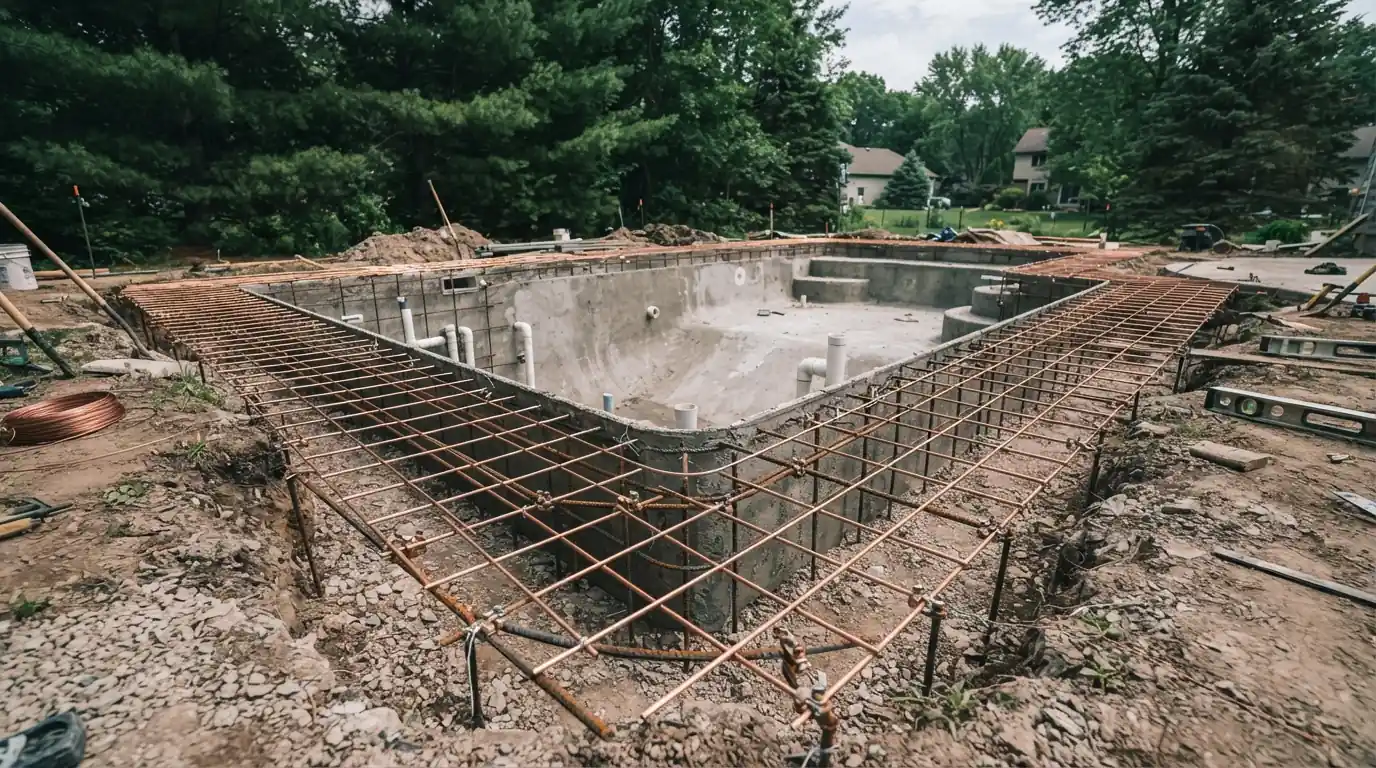
Bonding does not stop current from flowing; it makes sure there is no voltage difference between metal parts a swimmer could touch at the same time. That means a copper grid tied to the pool structure, the reinforcing in the deck, ladders, rails, pumps and heaters. It has to be installed at the right stage of construction, so we coordinate with the pool builder from the excavation onward.
Cost factors
What moves the price on this job
Distance from the house, the equipment and the bonding scope decide the price.
Typical regional ranges: subpanel installation $500 to $1,500 and an electrical permit $50 to $300, as planning figures rather than our price.
- 01
Distance to the equipment pad
Longer feeders and trenching.
- 02
Equipment
Heaters and heat pumps add circuits.
- 03
Bonding scope
In-ground pools need a full grid.
- 04
Lighting
Underwater and deck lighting.
- 05
Panel capacity
Large heaters may need a service check.
- 06
Automation
Controllers and timers.
- 07
Inspections
Bonding and final inspections.
What is included
What pool electrical work covers
- Load calculation for pump, heater and lights
- Pool subpanel at the equipment pad
- Pump and heater circuits sized to nameplates
- GFCI protection where the code requires it
- Underwater lighting and low-voltage transformers
- Equipotential bonding grid and pool water bond
- Receptacle placement at code distances
- Rough and final bonding inspections
- Automation and timer wiring
The versions of this job
Pool pump and heater circuits
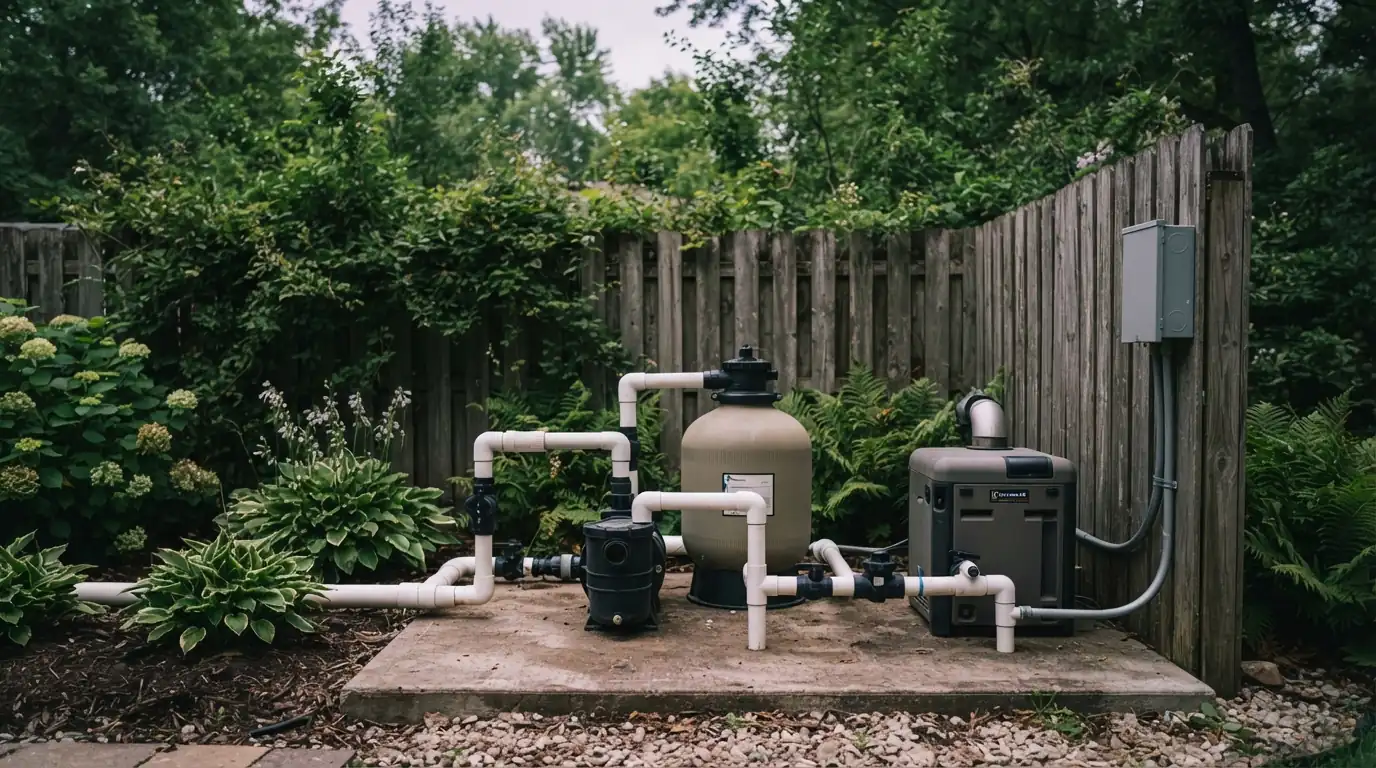
Pumps and heaters are sized from their nameplates, and variable-speed pumps and heat pumps have specific protection and wiring requirements. We usually install a pool subpanel at the equipment pad, fed from the house, so every pool circuit has its own breaker and disconnect within sight of the equipment. Circuits are run in conduit rated for burial and wet locations, and GFCI protection is provided where the code and the equipment maker call for it. Large heaters are checked against the house's service capacity first.
Equipotential bonding grid
The bonding grid ties together the pool structure, the perimeter surface within a set distance of the water, metal fittings, ladders, handrails, the pump and the heater, and the pool water itself. For in-ground pools we coordinate with the builder so the grid is in place and inspected before concrete is poured. For above-ground pools, the rules still apply to the pump, the pool wall and the surrounding surface, which is often overlooked when an above-ground pool goes up over a weekend and the pump is plugged into the nearest outlet.
Pool lighting
Underwater lights must be listed for the purpose, installed at the right depth and, for many fixtures, supplied through a low-voltage transformer or with GFCI protection. Niches, junction boxes and conduit have their own placement rules so water cannot reach the connections. We coordinate fixture choice with the pool builder and add landscape and deck lighting on separate, protected circuits so a lighting fault never disables the pump. Color and effect controllers are wired so they can be changed later without opening the niche.
Pool panel and GFCI
A pool subpanel keeps pool circuits separate, puts disconnects near the equipment and gives room for automation, heaters and future additions. GFCI protection is required on many pool circuits, and pumps in particular need devices suited to their motors to avoid nuisance tripping. We label every breaker, show you the GFCI test buttons, and leave spare spaces so a heater or salt system added later does not mean reworking the panel or running a second feeder across the finished yard.
Local conditions
How Grand Rapids homes shape this job
July is Grand Rapids' warmest month, with an average high of 83 degrees F, and a short, busy pool season means owners want the pool open the moment it is built. Because bonding has to be inspected before the deck is poured, we schedule that step early with the builder so inspections do not push the opening past the first warm weeks.
Time on site
How pool wiring fits the build
Bonding goes in early, before the deck is poured, and must be inspected at that stage. Circuits, the subpanel and equipment connections follow once the pad and equipment are set, with the final inspection before the pool is filled and started. We schedule each step against the pool builder's timeline so electrical work never holds up the pour or the fill.
How the job runs
How pool electrical work runs
Review the pool plan
Equipment, lighting and layout.
Load calculation
Can the service carry the pool?
Bonding grid
Installed and inspected before the pour.
Subpanel and feeder
From the house to the pad.
Circuits and lights
Pump, heater, lights, automation.
Final and startup
Inspected, tested, then filled.
Straight answers
Questions about pool wiring and bonding in Grand Rapids
Still unsure? Call (616) 699-4794 and ask a technician.
Yes. Pools require equipotential bonding of the structure, deck and metal parts.
Yes, including the pump, the pool wall and the surrounding surface.
Many pool circuits require GFCI protection under current code.
Before the deck is poured, then again at final.
Yes. We schedule each electrical step to the builder's timeline.
Same category