Wiring, Outlets and Remodels
Knob-and-tube wiring replacement for older Grand Rapids homes
Knob-and-tube wiring was built to shed heat into open air, which is why it struggles under attic insulation and alongside modern loads. We find every active run, replace it circuit by circuit with grounded wiring, and give you the documentation insurers and buyers ask for.
Updated September 2026
- Answered 24/7
- Every active run found
- Replaced circuit by circuit
- Documentation for insurers
Quick answer
Knob-and-tube replacement in Grand Rapids means identifying every active knob-and-tube circuit, then replacing each with modern grounded cable, usually fished through walls from the attic and basement, and disconnecting the old runs. Regional removal is often around $5,000 before any related panel work, and insurers usually want documentation that no active knob-and-tube remains.
What this job is
Find what is live before deciding what to replace
Many houses have knob-and-tube that was abandoned decades ago alongside runs that still carry power. The job starts by finding which is which: tracing circuits from the panel, testing runs in the attic and basement, and noting where old wiring was spliced to newer cable. That map decides whether you need a partial replacement or something closer to a whole-house rewire.
Cost factors
What moves the price on this job
The number of active runs and how they are reached decide the price.
Typical regional ranges: knob-and-tube removal before rewiring around $5,000; whole-house rewiring $8,000 to $20,000; drywall repair after a rewire $3,000 to $8,000. Planning figures, not our price.
- 01
Active circuits
More live runs mean more replacement.
- 02
Attic and basement access
Open access keeps walls closed.
- 03
Plaster walls
Plaster takes more care to open and patch.
- 04
Panel condition
Old panels often need replacing too.
- 05
Insulation
Attic insulation may need moving first.
- 06
Documentation
Records for insurers and buyers.
- 07
Wall repair
Patching where openings are needed.
Choosing between them
How much to replace
| Scope | Best for | Trade-off |
|---|---|---|
| Active runs only | Houses already partly rewired | Old abandoned runs stay in the walls, dead |
| All knob-and-tube circuits | Insurer or sale requirements | More walls reached from attic and basement |
| Full rewire with panel | Mostly original wiring throughout | Largest job, cleanest result |
The versions of this job
Active knob-and-tube identification
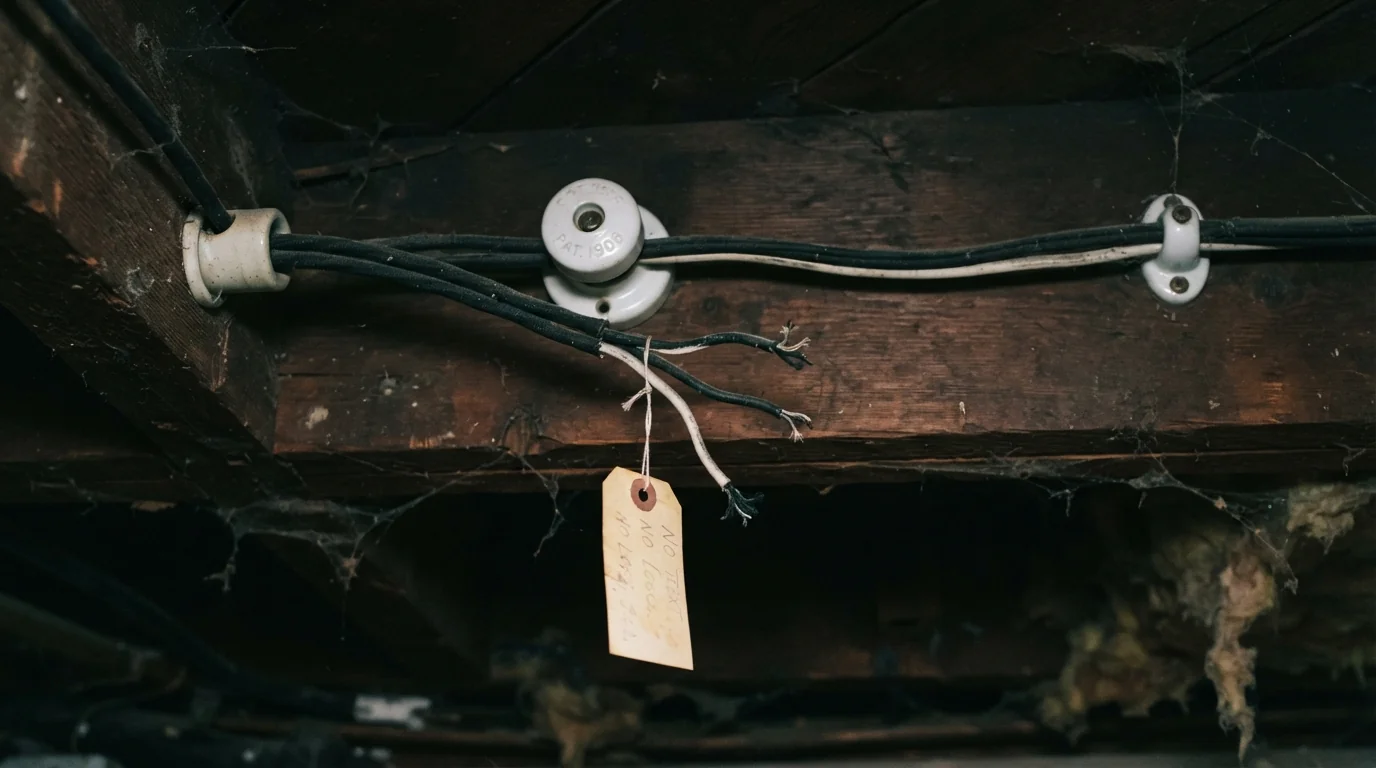
Identification is detective work. We trace each circuit from the panel, test the old runs in the attic and basement for voltage, and look for the places where knob-and-tube was extended with newer cable, often hidden in a ceiling box or behind a fixture. The result is a room-by-room map showing which runs are live, which are abandoned, and which are spliced into modern wiring. That map is what the price, the insurer and the inspector all work from, so nothing is guessed.
Insurance and inspection requirements
Insurers often decline or surcharge homes with active knob-and-tube, and buyers' inspectors flag it routinely. What they usually want is simple: confirmation that no active knob-and-tube remains, backed by a permit and inspection. We replace the active circuits, disconnect and label the old runs, and give you a written record of each circuit replaced along with the inspection sign-off, in a form an underwriter or buyer's agent can read quickly. If the insurer set a deadline, we plan the stages to meet it and tell you honestly if it cannot be met.
Attic insulation contact
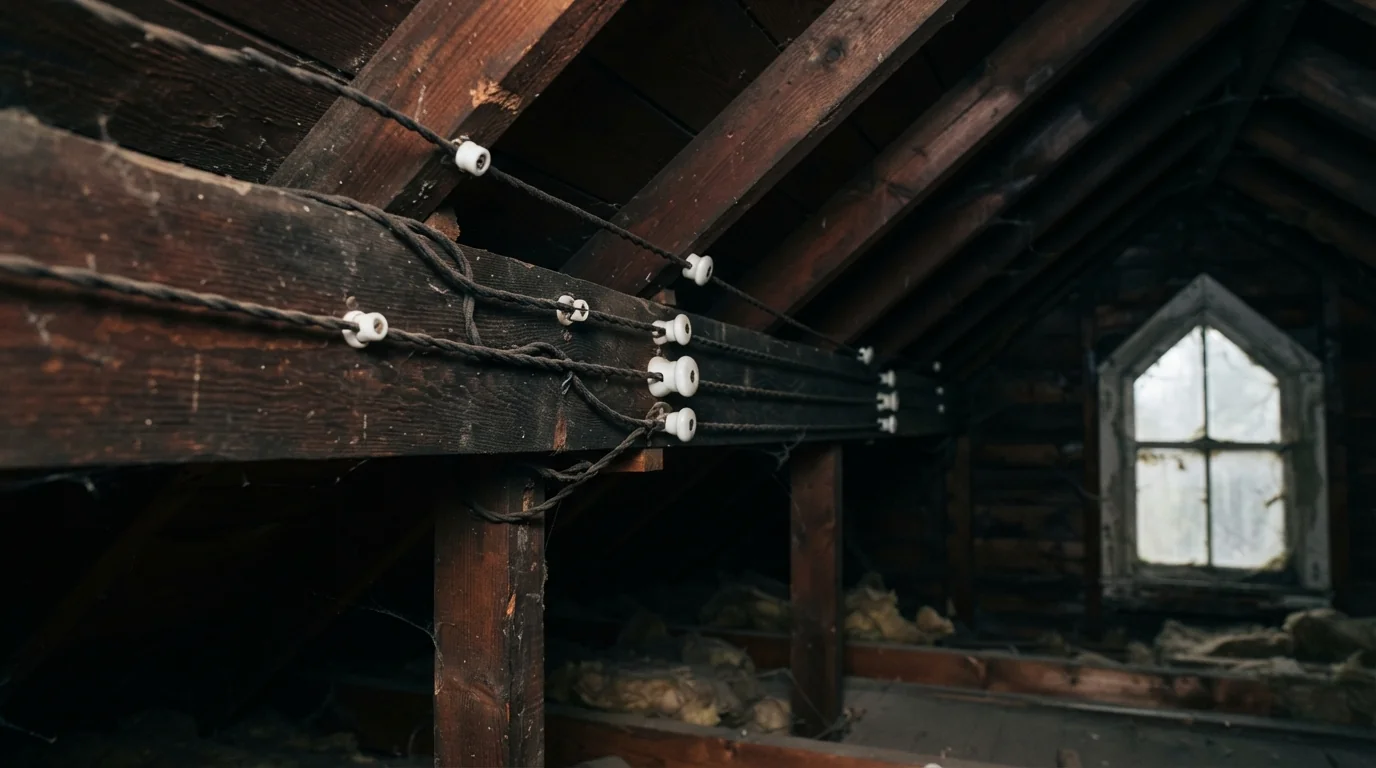
Knob-and-tube was designed to cool in open air. When loose-fill or batt insulation is packed around it, the wire can overheat, and the code does not allow insulation in contact with active knob-and-tube. This is why the wiring often has to go before an attic can be insulated. We replace the attic runs first, confirm nothing live remains, and then the insulation contractor can blow in the attic without the fire risk sitting under it. That order also lets the attic be used for fishing new cable before it fills with insulation.
Partial knob-and-tube removal
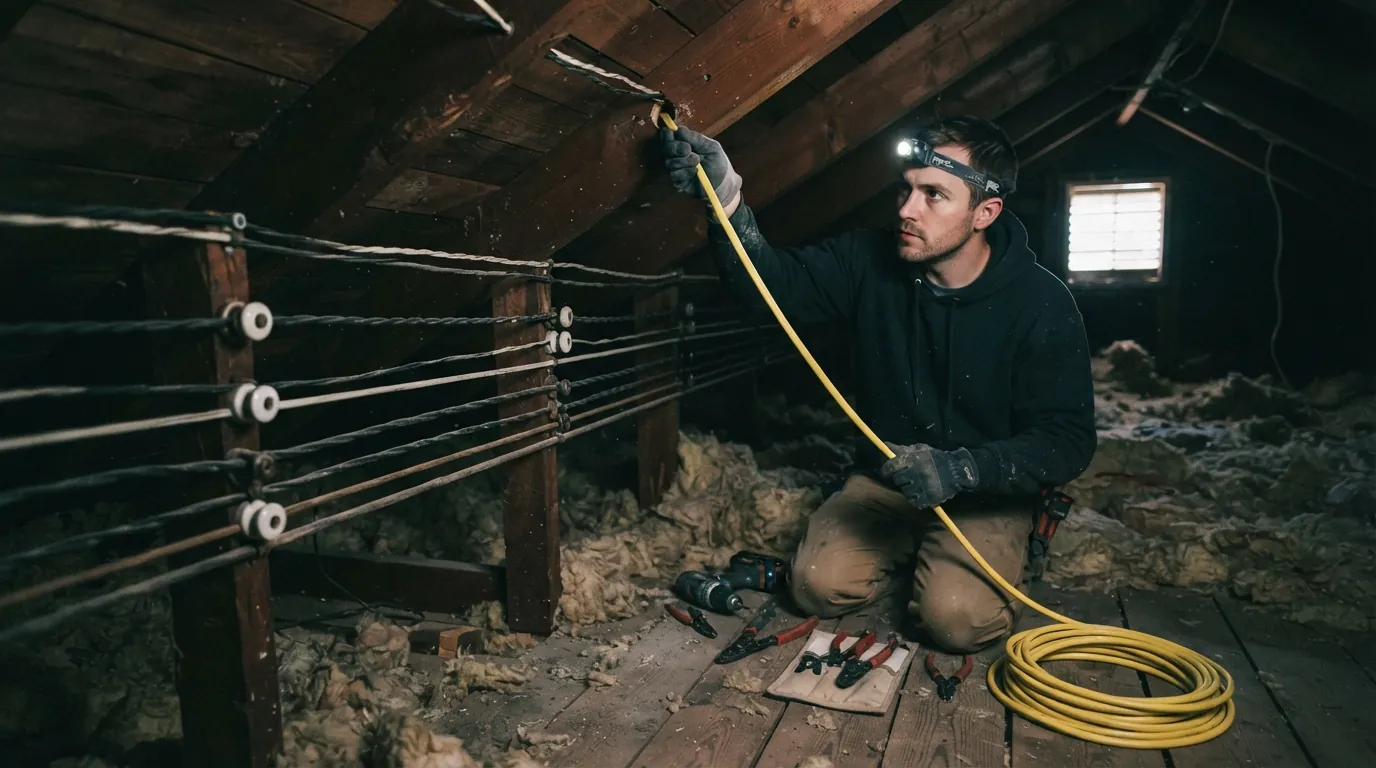
Some houses only have a few remaining knob-and-tube circuits, often a bedroom or two and some ceiling lights, after earlier partial updates. Replacing just those is quicker and cheaper than a full rewire and can satisfy an insurer. We make sure every live run is found, not just the obvious ones, because one missed circuit feeding a hallway light is enough to fail the documentation an insurer asks for and send you back for another round of calls, inspections and paperwork.
Local conditions
How Grand Rapids homes shape this job
Homes built before 1960 with 60 amp service face the highest upgrade costs because safety-driven rewiring usually comes with the service change, and much of Grand Rapids housing dates from before then. When we replace knob-and-tube, we check the panel and service at the same time, since the new grounded circuits often need a panel that can actually hold them.
Time on site
How long the replacement takes
A few circuits can be replaced in a couple of days; a whole house is done in stages over longer, with each stage inspected before walls are patched. Power stays on to the rest of the house while one area is worked on. We give you the stage plan up front so you know which rooms are affected each day.
How the job runs
How knob-and-tube replacement runs
Map the circuits
Live, abandoned and spliced runs.
Scope and price
Active only, all, or full rewire.
Permit filed
Before walls are opened.
Replace circuit by circuit
Grounded cable fished through walls.
Disconnect the old
Old runs cut dead and labeled.
Inspect and document
Sign-off and a written record.
Straight answers
Questions about knob-and-tube wiring replacement in Grand Rapids
Still unsure? Call (616) 699-4794 and ask a technician.
It can be, especially under insulation or when spliced to modern wiring; insurers often treat it as a risk.
Not with active knob-and-tube in contact with the insulation; replace the runs first.
Active runs must be replaced; abandoned runs are disconnected and can stay in the walls.
Usually, with the permit, inspection and a record showing no active knob-and-tube.
Regional removal is often around $5,000, more for a full rewire.
Same category