Emergency and Troubleshooting
Half the house without power in Grand Rapids? Partial outage repair
When some rooms go dark while the rest keep working, the problem is almost never the light bulbs. It is usually one half of the service, the neutral, or the main breaker. We test at the panel and the meter to find which, and call Consumers Energy if it is on their side.
Updated September 2026
- Answered 24/7
- Panel and meter tested
- Utility-side faults reported
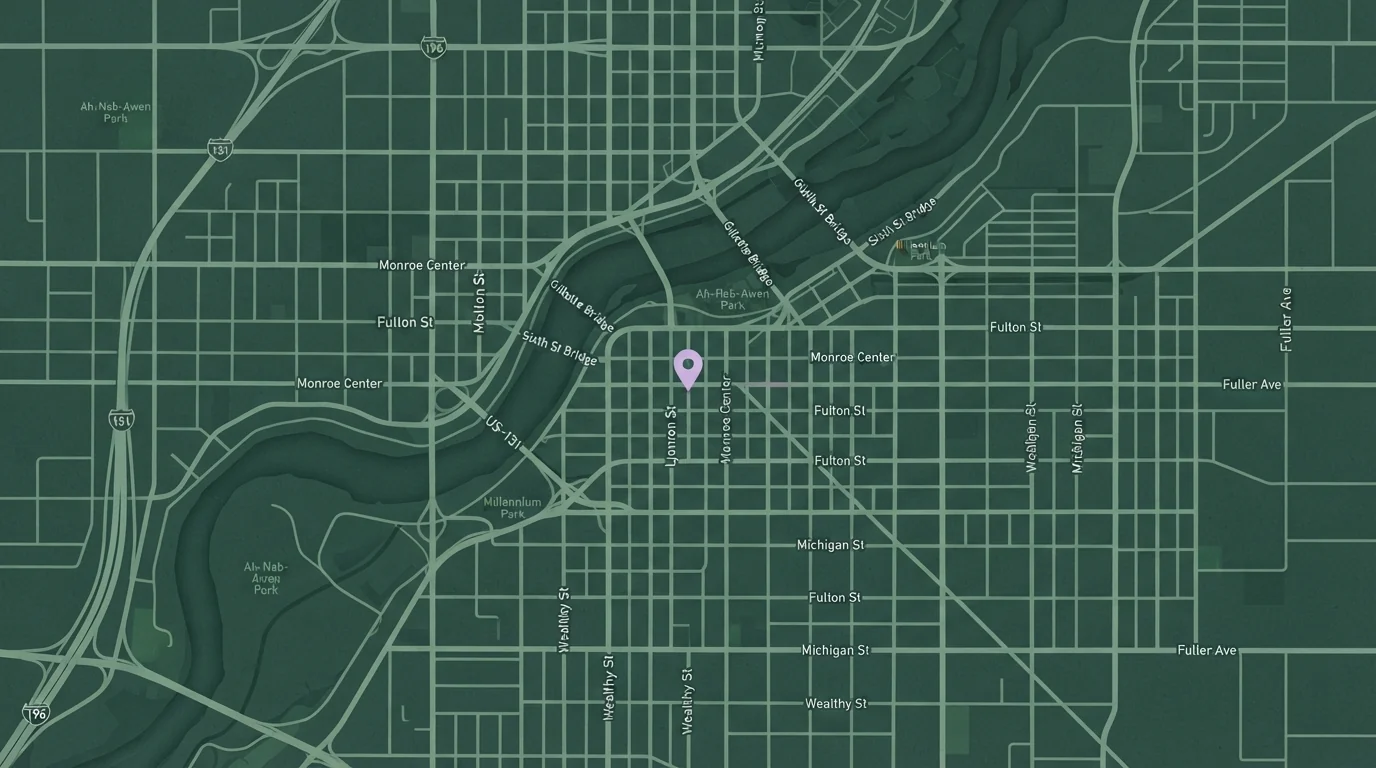
- Grand Rapids and Kent County
Quick answer
A partial power outage in a Grand Rapids home, where some circuits work and others do not, is usually caused by the loss of one of the two incoming legs of the service, a failing main breaker, or an open neutral. An open neutral can push voltage high on some circuits and damage appliances, so it should be treated as urgent.
What you notice first
Treat these partial outages as urgent
Lights brighten while others dim
Classic open-neutral symptom.
Dryer or range will not heat
One leg of the 240 volt supply is missing.
Electronics failing
Voltage swinging high on some circuits.
Burning smell at the panel or meter
A connection overheating.
Main breaker warm or buzzing
The main itself may be failing.
Neighbors also partly out
Likely a utility-side problem.
What this job is
Why half the house fails at once
Homes get power on two legs, and each breaker in the panel takes its power from one or both. If one leg is lost at the utility, the meter, the service entrance or the main breaker, every circuit on that leg goes dead together, and 240 volt appliances like the dryer or range stop working. An open neutral is different and worse: lights may brighten on one side and dim on the other.
The versions of this job
Lost leg of service
When one of the two incoming legs fails, roughly half the circuits in the panel go dead and 240 volt appliances stop. The cause can be at the utility's transformer or drop, at a burned meter socket jaw, a damaged service entrance cable, or the main breaker itself. We measure voltage on each leg at the meter and at the panel. That tells us where the break is, and whether it is ours to repair or a call to Consumers Energy.
Open neutral
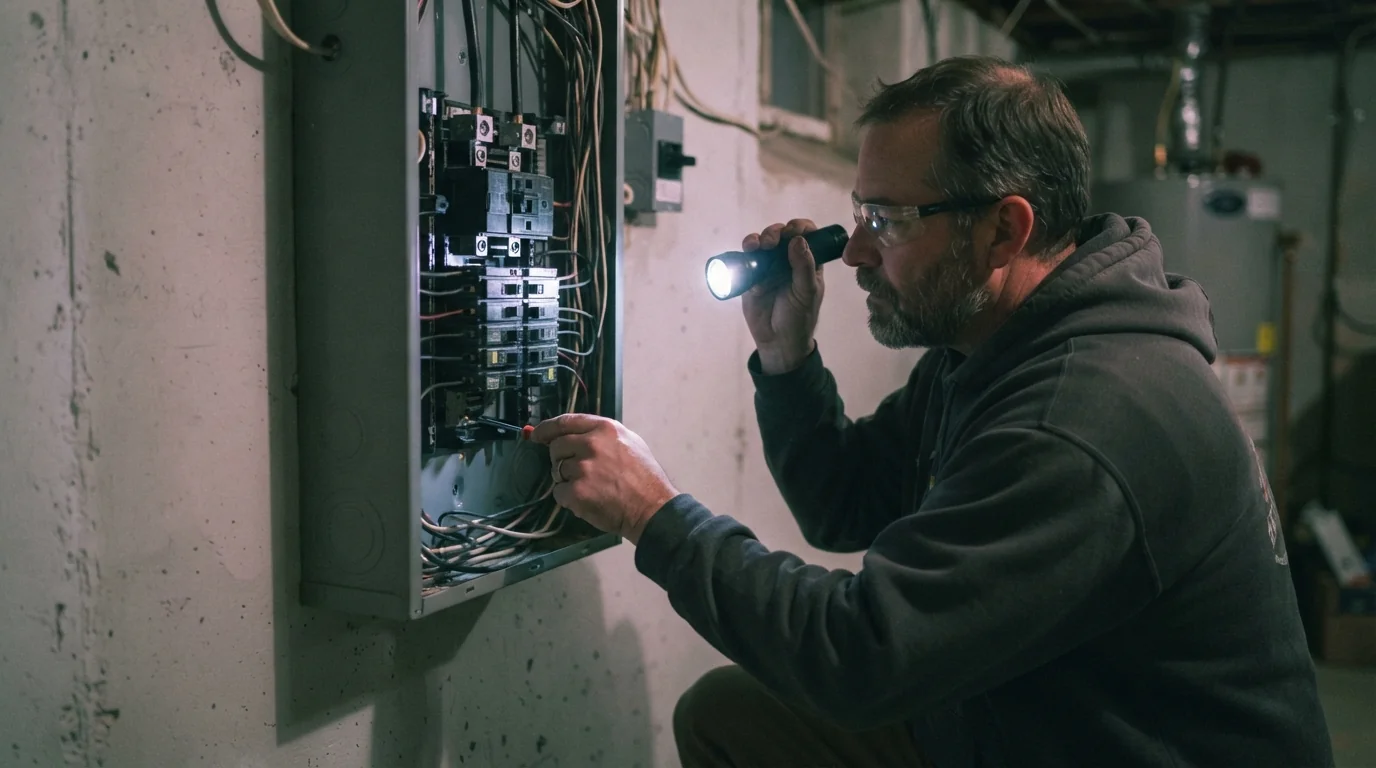
The neutral balances the two legs. When it loosens or breaks, voltage stops splitting evenly: some circuits run high enough to damage electronics while others sag. It can happen at the utility connection, the weatherhead, the meter or the panel's neutral bar. Unplug sensitive electronics and call. We find the loose or broken neutral, repair it, and check the appliances that were running during the fault, since high voltage can quietly damage their boards without any visible sign until they fail weeks later.
Tripped main breaker
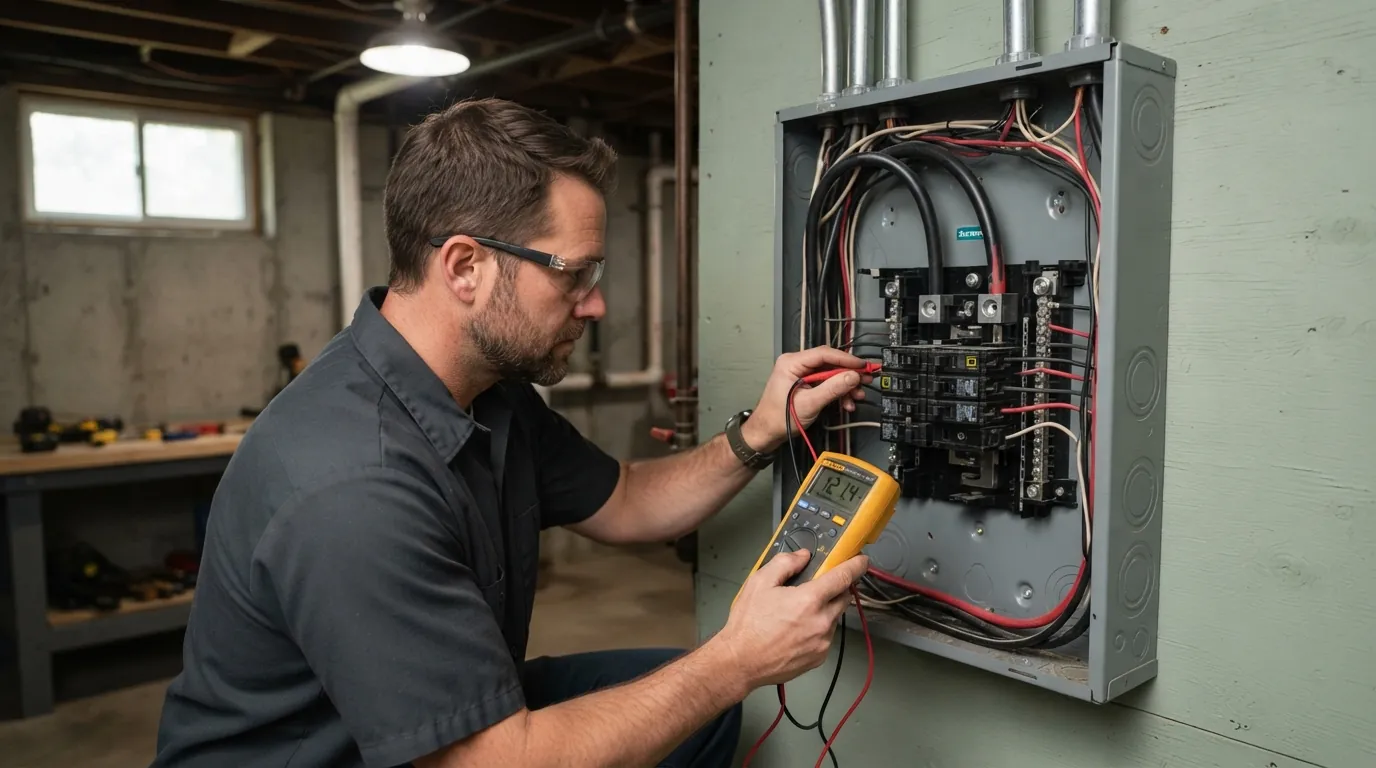
A main breaker that has tripped, or is failing internally, can drop one leg while the other stays live, or cut power to the whole house. Mains wear out like any breaker, especially after years of heavy load or a nearby lightning strike. We test the main under load, check its connections to the bus, and replace it, or the panel if the main is not available for that panel brand, restoring both legs with the power off only as long as the swap takes.
Meter socket failure
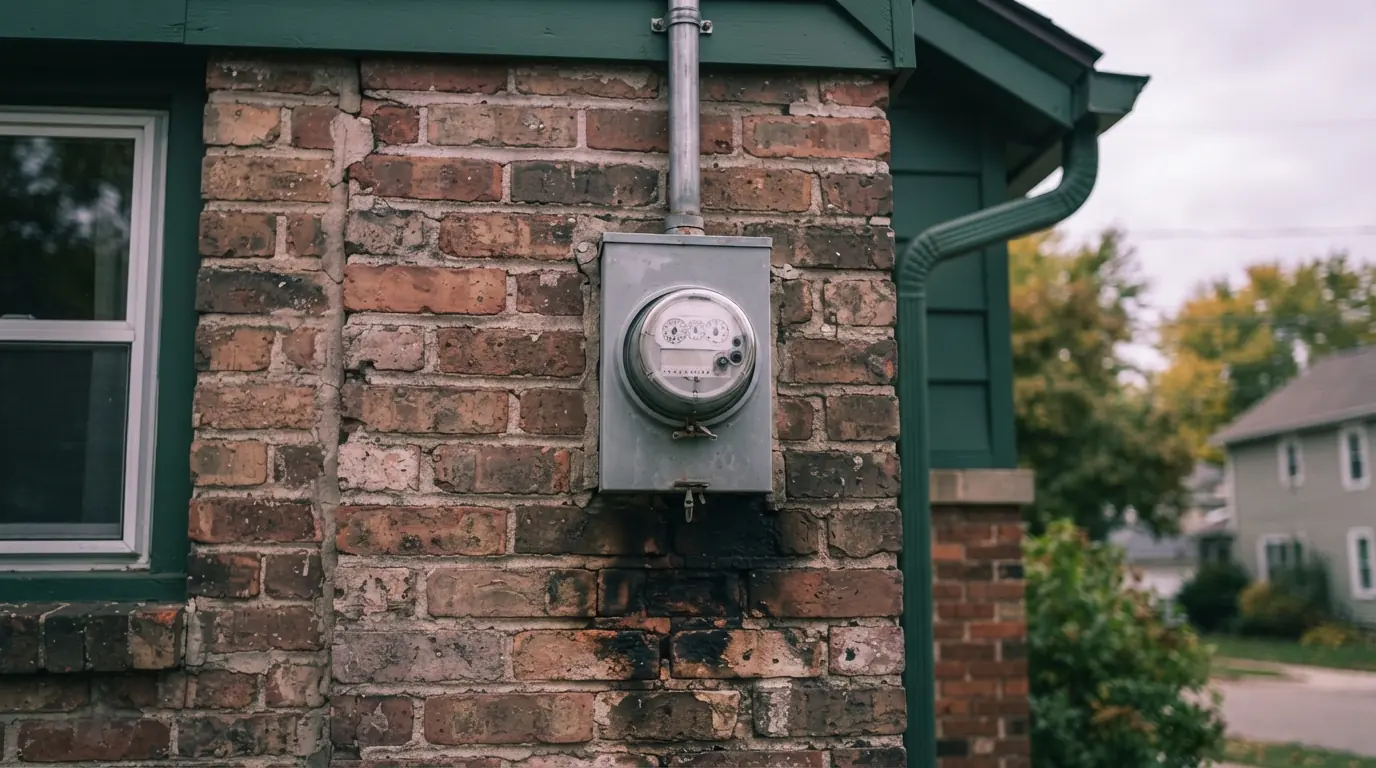
Meter socket jaws that loosen or corrode heat up under load and can burn through, dropping one leg or both. Signs include a hot meter, a burned smell outside, or flicker across the house before the outage. The utility pulls the meter and we replace the socket and entrance connections behind it, then book the inspection so the utility can reconnect. Our meter base repair page covers what that job involves, including the outdoor emergency disconnect current code may require.
How the job runs
How we trace a partial outage
Ask what is out
Which rooms, which appliances, since when.
Test at the panel
Both legs and the neutral.
Test at the meter
Utility side versus house side.
Isolate the fault
Main, socket, entrance or neutral.
Repair or report
Fix ours, report the utility's.
Confirm balanced voltage
Both legs steady under load.
Local conditions
What we see around Grand Rapids
After the June 2026 storms, Consumers Energy ran about 700 crews to restore power, many of them from out of state. When a partial outage around Grand Rapids turns out to be on the utility's side, we document the readings and report it, so their crew arrives knowing it is a leg or neutral problem at the transformer or drop, not a general outage.
Before you call
What to check before we arrive
| Situation | Safe to do yourself | Leave to us |
|---|---|---|
| Some rooms dead | Check for any tripped breakers and reset once | Test both legs at the panel and meter |
| Lights too bright or dim | Unplug sensitive electronics | Find and repair the open neutral |
| Neighbors out too | Report it to the utility | Check your side once they restore |
Cost factors
What moves the price on this job
Most of the visit is testing; the repair depends on where the break is.
Typical regional ranges: service call fees $79 to $179 and breaker replacements $100 to $200 installed, as planning figures rather than our price.
- 01
Where the fault is
Utility, meter socket, entrance or panel.
- 02
Main breaker
Replacing a main costs more than a branch breaker.
- 03
Meter socket
Socket replacement needs utility coordination.
- 04
Neutral repair
Location decides the effort.
- 05
Appliance checks
Checking equipment exposed to high voltage.
- 06
Permit
Service repairs need one.
- 07
Timing
Night calls can cost more.
Straight answers
Questions about partial power outage repair in Grand Rapids
Still unsure? Call (616) 699-4794 and ask a technician.
Usually a lost leg of the service, a failing main breaker or an open neutral.
An open neutral can damage appliances and overheat connections; call right away.
Testing at the meter tells us; we report utility-side faults to Consumers Energy.
Yes, unplug sensitive electronics until the cause is found.
Yes. Partial outages are dispatched any hour.
Same category