Emergency and Troubleshooting
Storm damage electrical repair for Grand Rapids homes and businesses
After a storm, the first job is making the house safe; the second is getting power back as soon as the utility can reconnect. We repair masts and meter sockets, replace water-damaged panels and surge-damaged breakers, and coordinate with Consumers Energy so the reconnect is not waiting on paperwork.
Updated September 2026
- Answered 24/7
- Made safe first
- Utility coordination
- Homes and businesses
Quick answer
Storm damage electrical repair in Grand Rapids covers service masts and meter sockets pulled by falling limbs or ice, panels and wiring exposed to water, and breakers and devices damaged by surges. Anything the utility owns is reported to Consumers Energy; the homeowner's side is repaired, inspected and made ready for reconnect.
What you notice first
Storm damage that needs an electrician
Service mast bent or pulled loose
The drop was pulled by a limb or ice.
Water in or near the panel
Leave it off until it is checked.
Power partly out after the storm
A lost leg or damaged connection.
Burning smell after a lightning strike
Surge damage inside wiring or devices.
Breakers that will not reset
Surge or water damage at the panel.
Outdoor outlets or lights dead
Water in boxes or damaged GFCIs.
What this job is
Safe first, then back on
Storm calls are triaged by safety. Wires down or sagging mean keeping everyone well clear and calling the utility. Water in the panel or basement wiring means the power stays off until it is checked. Once the house is safe, we sort what is ours to repair from what is the utility's, fix our side, and get the inspection so the reconnect is not held up.
The versions of this job
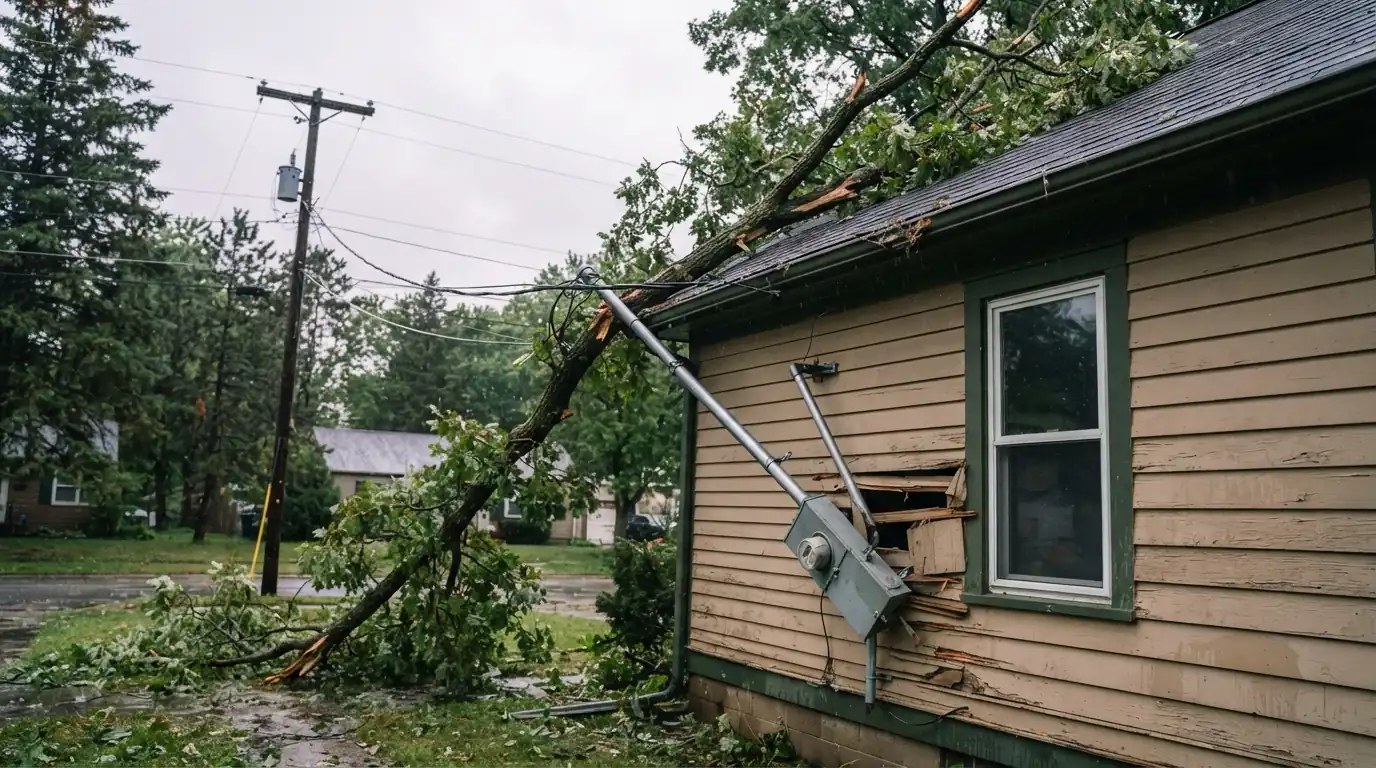
Service mast pulled off the house
When a limb or ice load pulls the service drop, the mast, weatherhead and meter socket take the damage, and often the roof flashing around them. The utility handles the drop and meter; we handle the rest. We replace the mast, reflash the roof penetration, repair or replace the socket, and get the inspection done so the utility can reattach the drop. After big storms, having the repair ready and inspected is what gets you into the reconnect queue sooner.
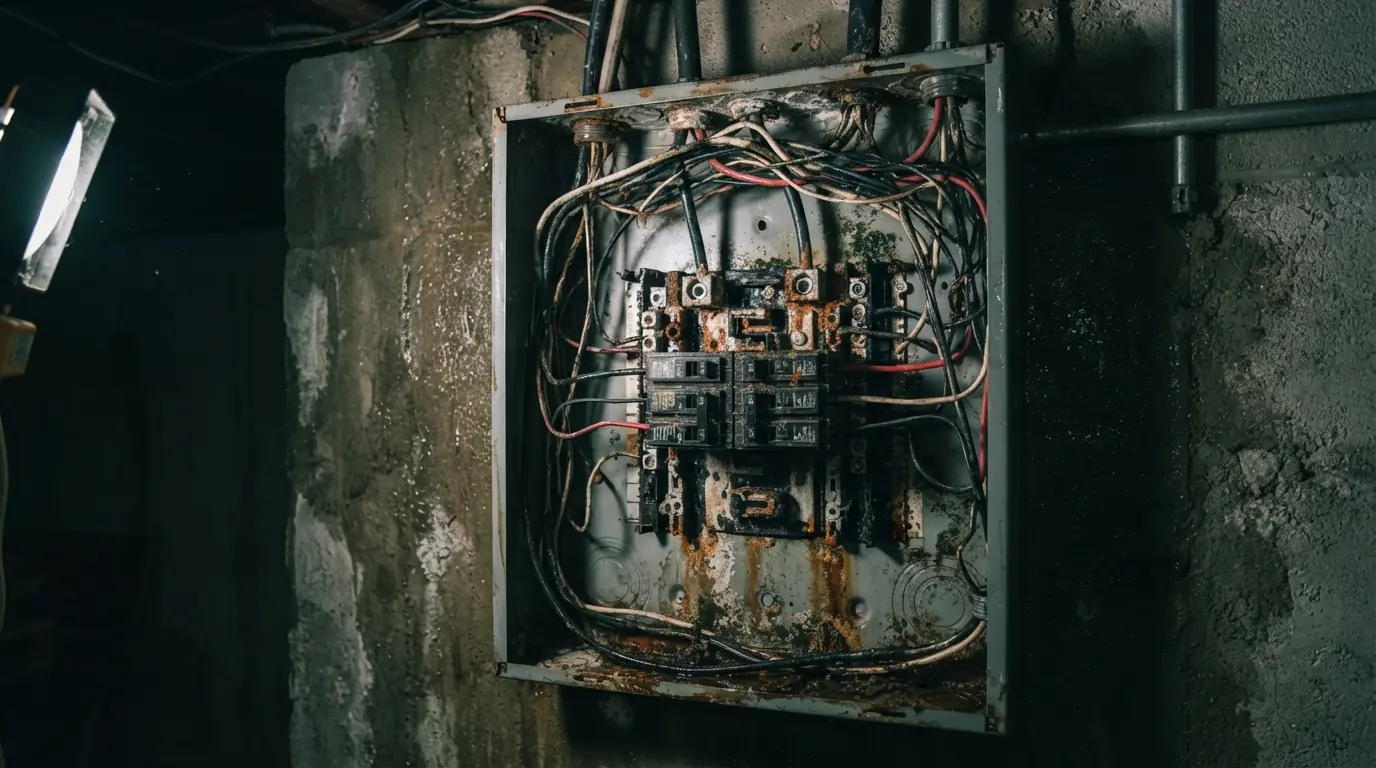
Water in the panel
Water that reaches a panel, through a failed weatherhead, a leaking window above it or basement flooding, corrodes breakers and bus bars and can make them unsafe to energize. We inspect the panel with power off, replace wet breakers and damaged components, and replace the whole panel where corrosion has reached the bus. We also find how the water got in, because a panel replaced under the same leak will fail the same way, usually within a season or two. Wet wiring in the basement is tested before any circuit is turned back on.
Surge-damaged breakers
Nearby lightning strikes and the utility's switching as it restores power can send surges through the house. The damage shows up as breakers that will not reset, dead circuits, failed GFCIs, and electronics or appliance boards that no longer work. We test the panel and affected circuits, replace damaged breakers and devices, and recommend a panel surge device so the next storm does less damage than this one did. We also list the damaged items for your insurance claim, with photos taken before anything is replaced.
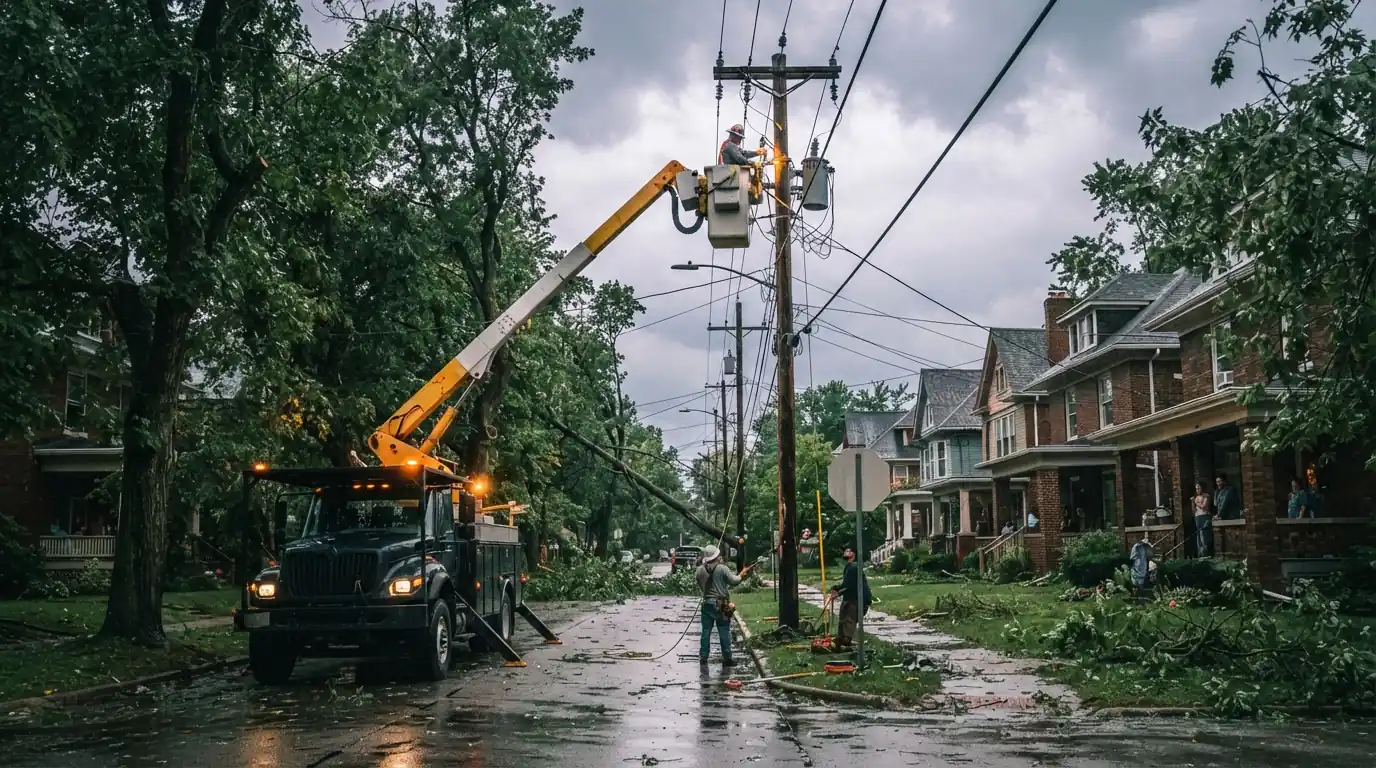
Downed service drop coordination
A downed or sagging drop is the utility's to repair, but it rarely stands alone: the mast, socket or panel usually took damage too. We report the drop to Consumers Energy, repair everything on the house side, and schedule the inspection so the utility finds the house ready when its crew arrives. During widespread outages that coordination is the difference between being reconnected in the first pass or waiting for a second trip, which during a big storm can mean several extra days without heat or power.
How the job runs
How a storm damage call runs
Make it safe
Keep clear of wires; utility called.
Assess the damage
Entrance, panel, circuits, devices.
Photograph for insurance
Before-and-after record.
Repair the house side
Mast, socket, panel, breakers.
Inspection
Signed off for reconnect.
Utility reconnect
Coordinated with Consumers Energy.
Local conditions
How Grand Rapids homes shape this job
After the June 2026 wind storms, Consumers Energy had more than 100,000 customers out statewide, staged out-of-state crews along Alpine Avenue in Walker, and ran about 700 crews in all across its territory. With that many crews in the field, a house whose mast and socket are already repaired and inspected is ready the moment a line crew finally reaches your street.
Before you call
What you can do and what to leave alone
| Situation | Safe to do yourself | Leave to us |
|---|---|---|
| Wires down in the yard | Stay far away and call the utility | Repair the house side once safe |
| Basement flooded near the panel | Do not enter standing water | Check and replace wet equipment |
| Half the house out | Check the main breaker | Test the service and panel |
Cost factors
What moves the price on this job
What was damaged, and how much of it, decides the price.
Typical regional ranges: full 200 amp service upgrades with meter base and mast $3,000 to $6,000 and breaker replacements $100 to $200 installed, as planning figures rather than our price.
- 01
Mast and socket
Entrance repairs are the most common storm job.
- 02
Panel damage
Wet or corroded panels may need replacing.
- 03
Surge damage
Breakers, GFCIs and devices replaced.
- 04
Roof repair
Flashing around the mast penetration.
- 05
Insurance documentation
Photos and a written scope for your claim.
- 06
Permit and inspection
Needed before reconnect.
- 07
Timing
Storm-night calls can cost more.
Straight answers
Questions about storm damage electrical repair in Grand Rapids
Still unsure? Call (616) 699-4794 and ask a technician.
The utility fixes the drop and meter; the mast, socket, panel and wiring are the homeowner's.
Not until wet equipment has been checked; water in a panel can make it unsafe.
Yes. We photograph the damage and provide a written scope.
Call any hour; storm calls are triaged by safety.
Yes. Breakers, GFCIs and connected electronics are common surge victims.
Same category