Wiring, Outlets and Remodels
Hot tub, spa and sauna wiring in Grand Rapids, inspected before first fill
A hot tub needs its own 240 volt circuit, a GFCI-protected disconnect placed where the code says, and a bonding grid that keeps everything metal at the same potential. We plan the route from the panel, trench or run it, and have it inspected before the tub is filled.
Updated September 2026
- Answered 24/7
- GFCI disconnect to code
- Bonding done right
- Inspected before first fill
Quick answer
Hot tub wiring in Grand Rapids usually means a dedicated 240 volt, 50 or 60 amp circuit from the panel to a GFCI-protected spa disconnect mounted within sight of the tub but at the minimum distance the code sets, then to the tub's control pack, with equipment bonding. The work is permitted and inspected before the tub is filled.
What this job is
Water, electricity and the distances in between
Spa wiring is mostly about distance and protection. The disconnect has to be close enough to see the tub and far enough that nobody can reach it from the water. Everything is GFCI protected, and metal within reach is bonded together so no voltage difference can build up. The panel also has to carry a large continuous load, so we check its capacity first.
Cost factors
What moves the price on this job
Distance from the panel and the tub's circuit size decide most of the price.
Typical regional ranges: subpanel installation $500 to $1,500 and an electrical permit $50 to $300, as planning figures rather than our price.
- 01
Distance to the tub
Longer runs need more wire and conduit.
- 02
Circuit size
60 amp circuits need heavier wire than 50.
- 03
Trenching
Buried runs through lawn or around patios.
- 04
Panel capacity
An undersized panel may need an upgrade.
- 05
Deck mounting
Posts and brackets for the disconnect.
- 06
Bonding
Nearby metal fences, rails and equipment.
- 07
Permit
Required and inspected.
What is included
What the hot tub wiring covers
- Panel capacity and breaker space checked
- Circuit sized to the tub's nameplate
- GFCI spa disconnect at the code distance
- Buried or surface conduit to the tub
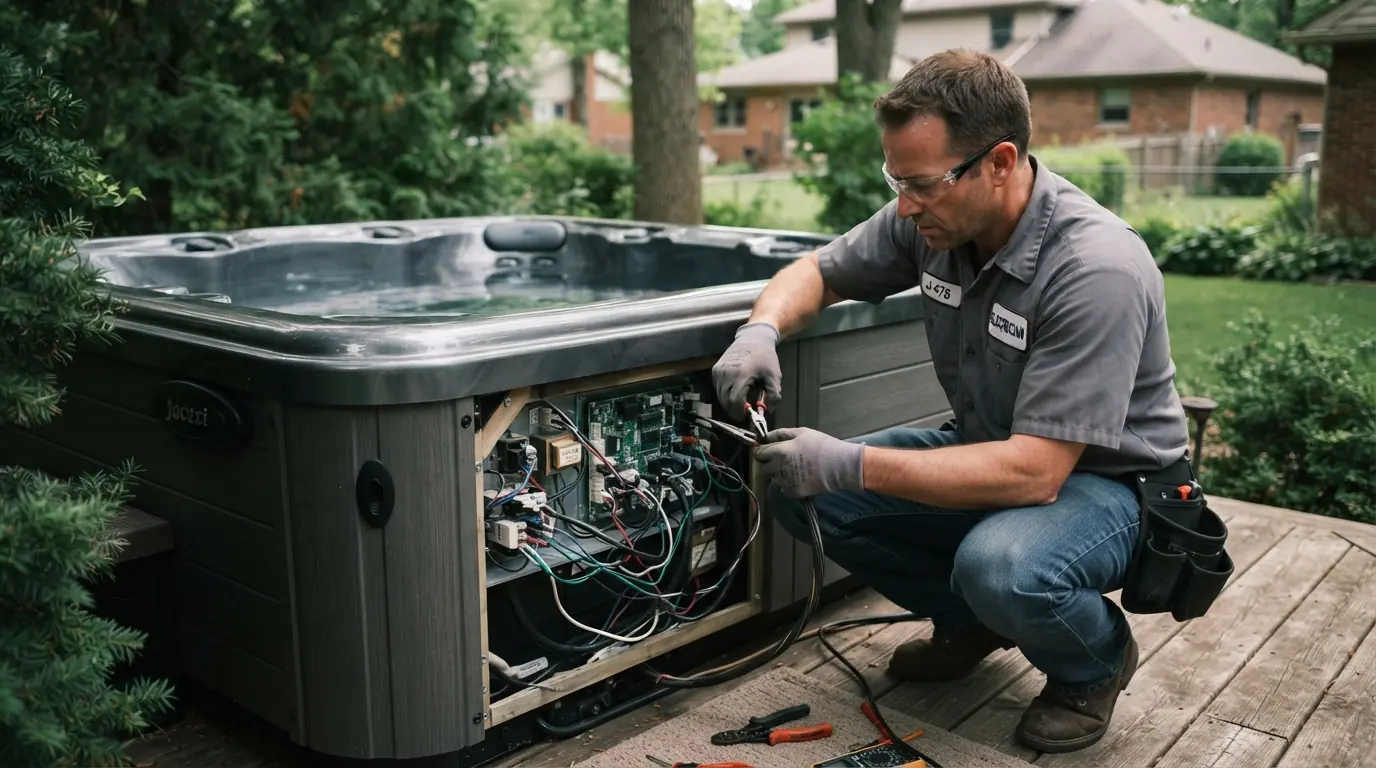
- Connection to the tub's control pack
- Bonding of the tub frame and nearby metal
- Outdoor receptacle placed to code, if wanted
- Permit and inspection before filling
- GFCI tested with you before handover
The versions of this job
50 or 60 amp GFCI disconnect
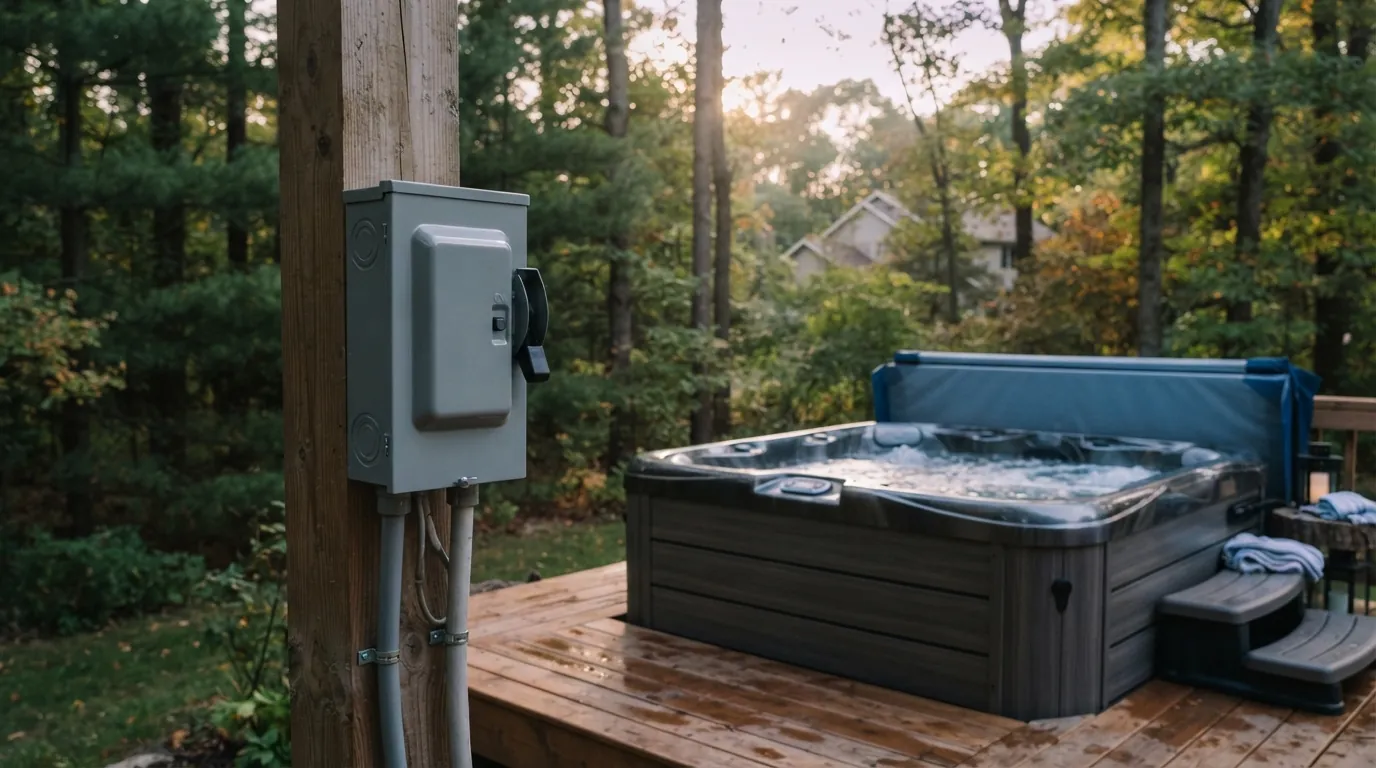
Most hot tubs need a 50 or 60 amp, 240 volt circuit, set by the tub's nameplate. The spa disconnect, usually a small panel with a GFCI breaker, mounts within sight of the tub but at least the minimum distance the code requires from the water's edge. We mount it where it is easy to reach for service yet never within reach of someone sitting in the tub, and show you how to test the GFCI each month, which takes seconds.
Trenching and conduit
The run from the house to the tub is usually buried in conduit at the depth the code sets for the wiring method, or run on the surface in protected conduit where it follows the house wall. We call for utility locates before digging, route around irrigation lines and patios, and size the conduit a step larger than needed in case the tub is ever upgraded. The trench is inspected before backfill, and the yard is restored as close to original as the ground allows.
Spa panel placement
The disconnect has to satisfy two rules at once: in sight of the tub and far enough from the water. On a deck that often means a post or the house wall; on a patio, a spot where it will not end up behind a privacy screen or furniture. We plan the location before the tub is delivered, so the spa pad, deck and disconnect all line up and the maintenance panel on the tub stays reachable for the service technician later.
Sauna wiring
Electric sauna heaters draw heavy, continuous loads, often needing their own 240 volt circuit and a separate control. They also need wiring and fixtures rated for the heat inside the room. We size the circuit from the heater's nameplate, place the control outside the sauna where the manufacturer specifies, and use heat-rated cable and lighting inside. As with hot tubs, the panel's capacity is the first thing we check before any sauna work is quoted, since a heater and a hot tub together can exceed an older service.
Local conditions
What we see around Grand Rapids
In the City of Grand Rapids a homeowner may pull an electrical permit for their own single-family home, but spa wiring combines water, GFCI protection and bonding in a way inspectors look at closely, and city inspectors have worked under a No Live Work policy since January 30, 2025. We handle the permit and schedule the inspection before the tub is filled.
Time on site
How long spa wiring takes
Most hot tub circuits are finished in a day once the pad is ready and the tub is on site or its spec sheet is in hand. Buried runs have their trench inspected before backfilling, and the final inspection happens before the tub is filled. We schedule around the delivery date so the tub is not sitting empty waiting for power.
How the job runs
How a hot tub hookup runs
Get the tub's specs
Nameplate amperage and connection type.
Check the panel
Capacity and breaker space.
Plan the disconnect
In sight, at the code distance.
Permit and locates
Filed, utilities marked.
Run and connect
Circuit, disconnect, control pack, bonding.
Inspect, then fill
Inspection before first fill, GFCI tested.
Straight answers
Questions about hot tub and spa wiring in Grand Rapids
Still unsure? Call (616) 699-4794 and ask a technician.
Most need a 240 volt 50 or 60 amp circuit; the tub's nameplate decides.
At least the minimum distance the code sets, while still in sight of the tub.
Some small 120 volt tubs can, on a GFCI-protected dedicated circuit.
Yes, and it should be inspected before the tub is filled.
Yes, sized to the heater's nameplate with heat-rated wiring inside.
Same category