Wiring, Outlets and Remodels
Data and low-voltage cabling for Grand Rapids homes and offices
Wi-Fi is only as good as the cable behind it. We run Cat6 data lines, power and network drops for access points, TVs and desks, and a tidy structured wiring panel, planned alongside any electrical work so the walls are opened once and every run is labeled and tested.
Updated September 2026
- Answered 24/7
- Cat6 runs tested
- Labeled at both ends
- Planned with the power
Quick answer
Data and low-voltage cabling in Grand Rapids means running Cat6 network cable from a central panel to the rooms, desks, access points and TVs that need a wired connection, terminating and testing each run, and keeping low-voltage cable separated from power wiring. It is easiest during a remodel or alongside other electrical work, when walls are already open.
What this job is
Wired connections where they matter
Home offices, streaming TVs and security systems all work better on a cable than on a crowded wireless signal, and modern access points take their power over the same cable. Running data lines is careful work rather than heavy work: clean pulls, proper separation from electrical circuits, correct terminations and a test on every run so you are not chasing a bad jack later.
We plan cabling with any remodel wiring or basement wiring you already have scheduled, which is when it costs least.
Cost factors
What moves the price on this job
The number of drops and how easy the walls are to reach drive most of the cost.
- 01
Number of drops
Each run is pulled, terminated and tested.
- 02
Wall type
Plaster and finished basements take longer to fish.
- 03
Panel or rack
A structured panel and switch add equipment.
- 04
Access points
Ceiling runs and PoE switches add parts.
- 05
Cable type
Cat6A and plenum cable cost more.
- 06
Timing
Open walls during a remodel cost least.
- 07
Testing and labels
Every run is tested and labeled at both ends.
What is included
What a cabling job includes
- Room-by-room plan for data drops
- Cat6 runs from a central location
- Structured wiring panel or small rack
- Power over Ethernet for access points and cameras
- TV and entertainment wall drops
- Separation from power circuits
- Terminated jacks and patch panel
- Every run tested and labeled
- Room-by-room map left behind
Choosing between them
Cable choices
| Cable | Good for | Note |
|---|---|---|
| Cat6 | Most homes and offices | Handles current gigabit and multi-gig speeds |
| Cat6A | Longer runs and future speeds | Thicker and stiffer to pull |
| Coax | Cable internet entry and some TV setups | Still needed where the provider enters |
The versions of this job
Home office and desk drops
A wired desk connection beats Wi-Fi for video calls and large uploads, and it frees the wireless network for everything else. We run a Cat6 line from your router or structured panel to the desk, terminate it in a wall jack, and test it for a clean connection at full speed. If the office needs a dedicated circuit for equipment or a UPS, we run that at the same time so the desk has both power and data where the furniture actually sits instead of extension cords and adapters across the floor.
Access points and PoE
Large homes and houses with plaster walls often have dead spots that no single router can reach. Ceiling-mounted access points fix that, and they draw their power over the same Cat6 cable using Power over Ethernet, so no outlet is needed at the ceiling. We plan access point locations with you, run the cable to each one, and land the runs at a PoE switch in the structured panel. The same approach powers wired security cameras and video doorbells that need a reliable connection. Each access point run is tested before the ceiling plate goes on, so a bad termination never hides above the drywall.
Structured wiring panels
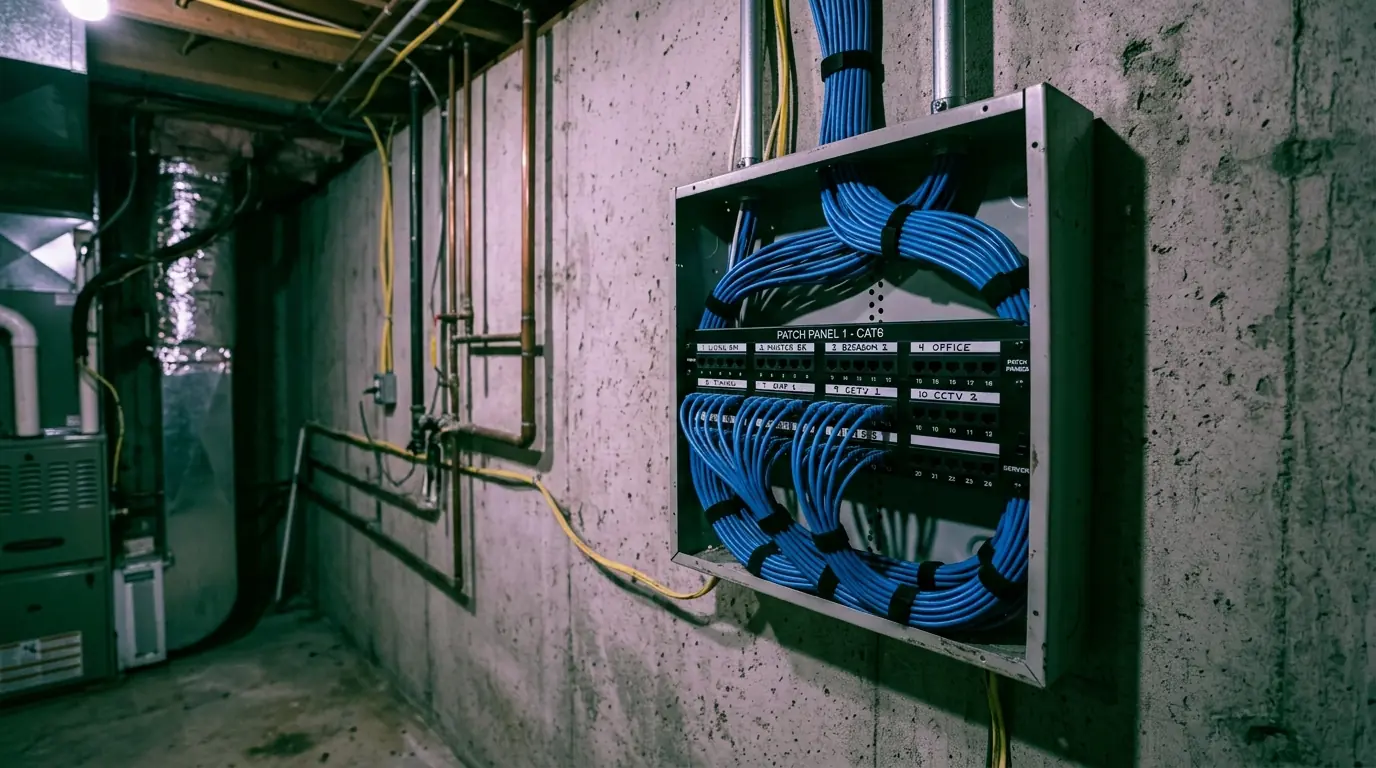
A structured wiring panel is a single place where the internet service enters, the router and switch live, and every data run is landed and labeled. It replaces the tangle behind a desk or in a closet corner. We mount the panel in a basement, utility room or closet with a nearby outlet, terminate runs on a patch panel and label each one by room. Anyone who works on the network later can see exactly which cable goes where, which saves time and guesswork. A small UPS on the panel outlet keeps the router and switch running through brief power blips.
Office and small business cabling
Small offices, clinics and retail spaces need data at desks, printers, point-of-sale stations and cameras, usually during a tenant buildout. We run and test the cabling with the power so both are ready on the same schedule, keep low-voltage cable separated from line voltage, and leave a labeled patch panel and a simple map. For larger buildings with fire-rated walls and plenum spaces, we use the cable types and firestopping those spaces call for. Spare runs to likely future desk spots cost little during the buildout and save opening finished walls a year later when the office grows.
Local conditions
How Grand Rapids homes shape this job
July is Grand Rapids' warmest month, with an average high of 83 degrees F, and attics above that get far hotter. When a data run has to cross an attic, we route it away from hot roof decking and recessed light housings and keep it off power cables, so the connection stays reliable through the hottest weeks of the year. Basement routes are the first choice where the layout allows it.
How the job runs
How a cabling job runs
Walk the rooms
Where you need wired connections.
Plan runs
Central panel, routes and separation.
Pull cable
Clean pulls, no tight bends.
Terminate
Jacks and patch panel.
Test
Every run checked end to end.
Label and map
Room-by-room labels left behind.
Straight answers
Questions about data and low-voltage cabling in Grand Rapids
Still unsure? Call (616) 699-4794 and ask a technician.
Yes, it handles current speeds and is the practical standard for new runs.
It should be separated from power wiring to avoid interference and meet code.
Not with Power over Ethernet, which powers them over the data cable.
A basement, utility room or closet with a nearby outlet and good access.
Usually, by fishing cable through walls and ceilings with small openings.
Same category