Emergency and Troubleshooting
Dead outlet repair for Grand Rapids homes, traced to the real cause
An outlet that goes dead is rarely the outlet alone. It is usually a tripped GFCI in another room, a loose connection upstream, or a worn device that finally let go. We trace the circuit, fix the failure point, and check the rest of that run while we are there.
Updated September 2026
- Answered 24/7
- Upstream connections checked
- GFCI and AFCI aware
- Grand Rapids and Kent County
Quick answer
A dead outlet in a Grand Rapids home is most often caused by a tripped GFCI outlet elsewhere on the circuit, a loose or burned connection at an upstream outlet, or a worn receptacle. If resetting the breaker and every GFCI does not bring it back, the circuit needs tracing with a tester.
What you notice first
When a dead outlet is more than an annoyance
Outlet or cover plate is warm
Heat at a device means a failing connection.
Brown or black marks on the face
Arcing has already happened inside the box.
Smell of hot plastic
Turn off the breaker for that room and call.
Several rooms died at once
A shared neutral or a failed splice upstream.
Lights on the same circuit flicker
A loose connection that is still arcing.
Outlet works only when wiggled
Worn contacts; stop using it.
What this job is
Why the fault is usually somewhere else
Outlets are wired in a chain, and power passes through each one to reach the next. When a connection loosens or burns at one outlet, every outlet after it goes dead while the breaker stays on. Older homes often use push-in backstab connections that loosen over decades. The fix is finding the break in the chain, not replacing the outlet that stopped working.
The versions of this job
Tripped GFCI upstream
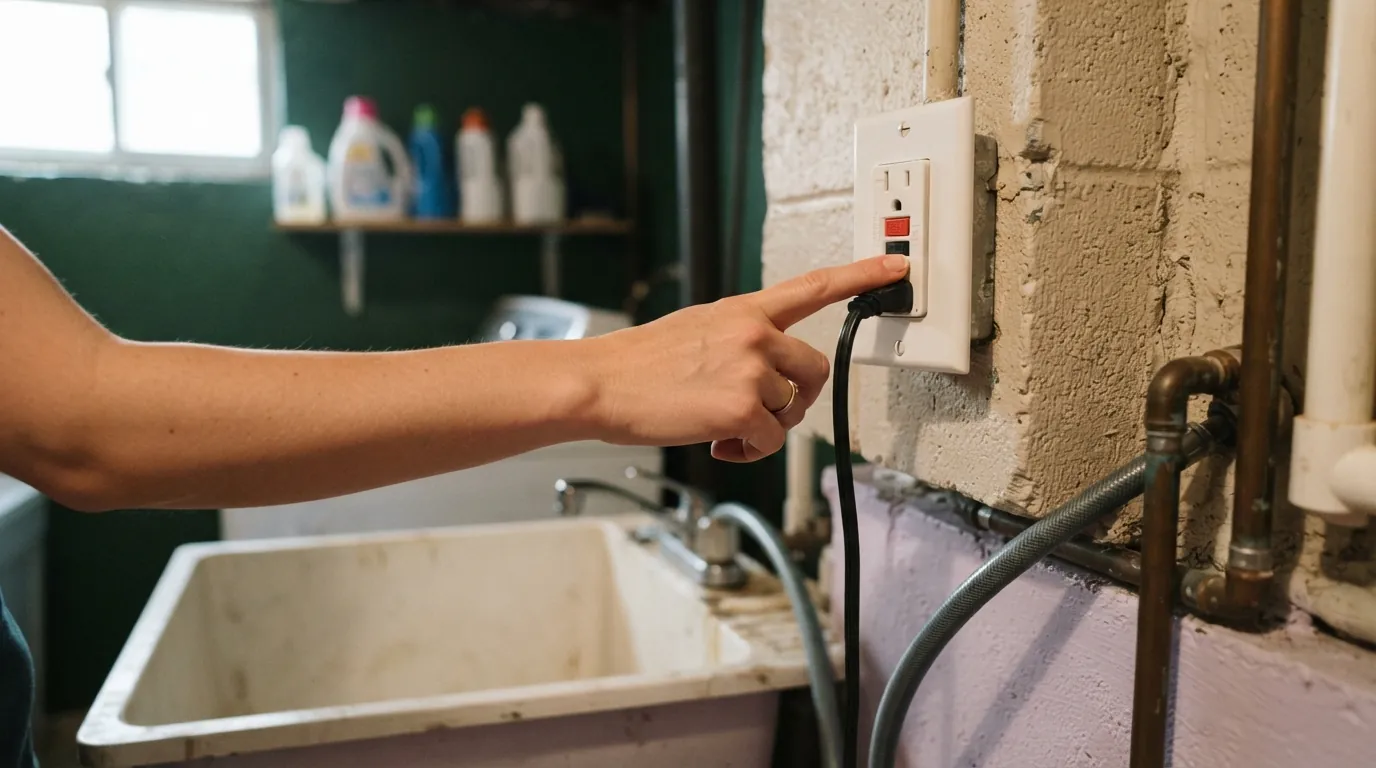
The most common dead outlet is not broken at all. A GFCI outlet in a bathroom, kitchen, garage or outside protects every outlet wired after it, and when it trips those downstream outlets go dead too. The GFCI itself may be in another room entirely, or behind a freezer or a stack of boxes in the basement. We find it, reset it, and then find out why it tripped, because a GFCI that keeps tripping is reporting a real ground fault on that circuit.
Loose neutral or backstab connection
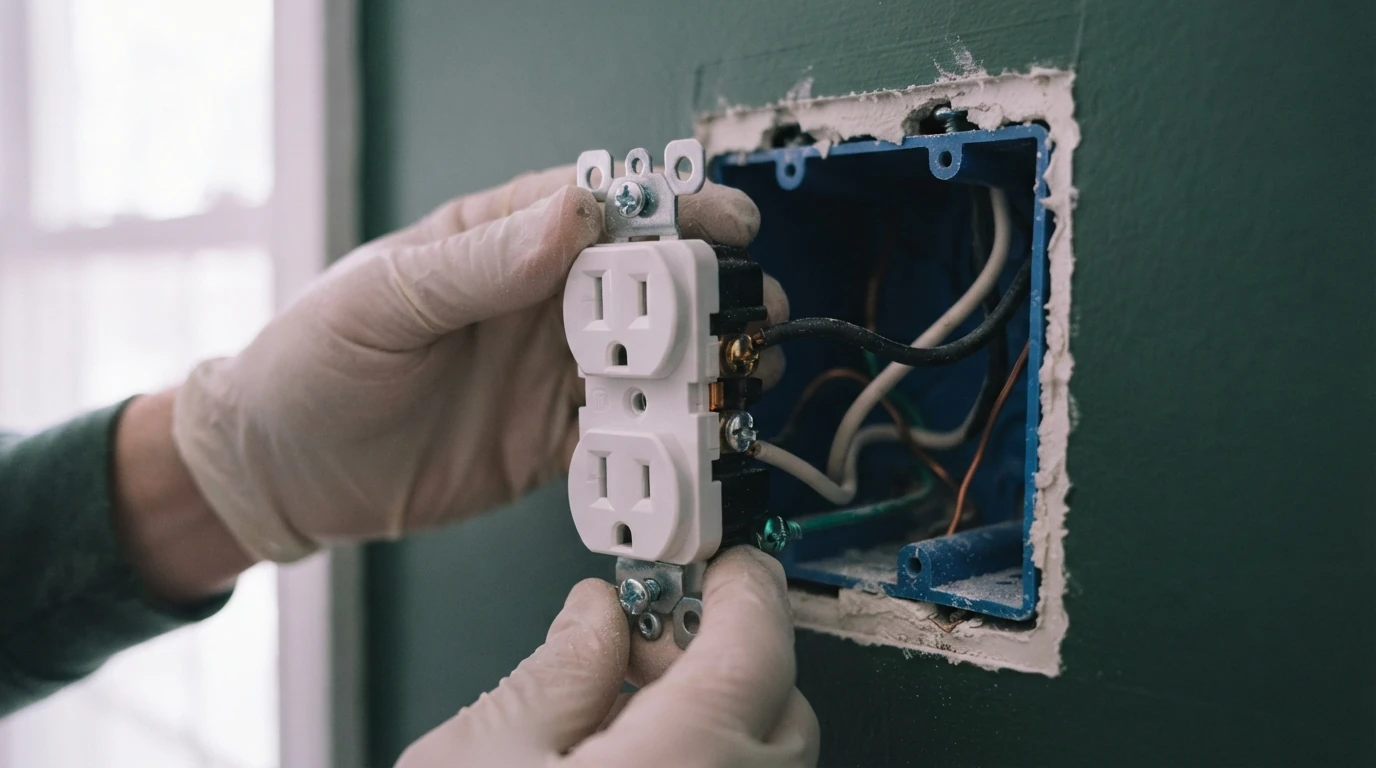
Push-in backstab connections were common for decades, and the spring contacts loosen as the wire heats and cools. Eventually one lets go and every outlet after it goes dead, or works only some of the time. We open the boxes along the run, find the loose or burned connection, and rewire the devices onto their screw terminals or with proper splices. That fixes the dead outlet and heads off the next one on the same chain, which is usually the next to fail.
Worn or damaged receptacle
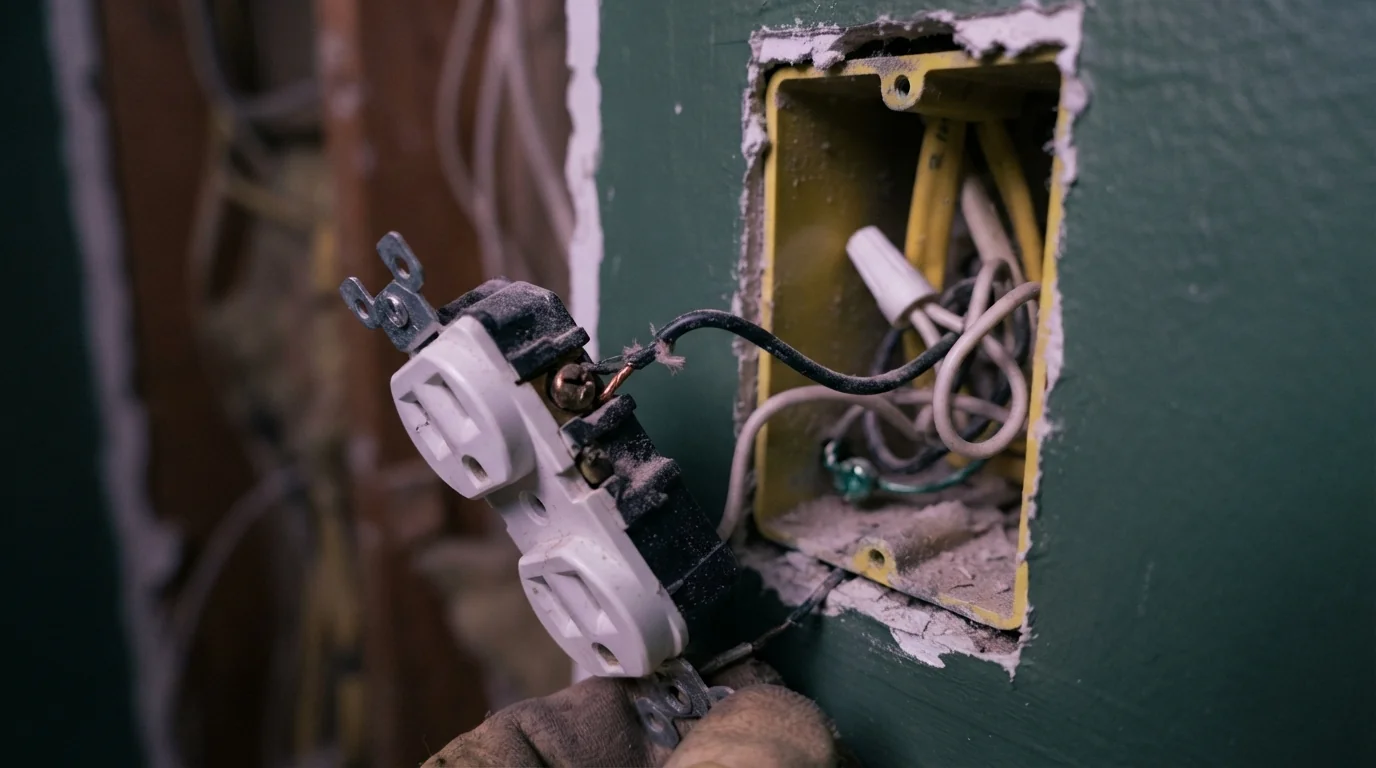
Outlets wear out. Contacts lose their grip after years of plugs going in and out, and heavy loads such as space heaters can cook the device from inside. A worn receptacle may work only when a plug is wiggled, or not at all. We replace it with a current tamper-resistant receptacle, check the box and wiring behind it for heat damage, and upgrade to GFCI protection where the location requires it under current code. If a space heater was the cause, we will suggest a dedicated circuit for it.
Switched outlet confusion
Many older living rooms and bedrooms have outlets controlled by a wall switch, originally meant for a floor lamp. When the switch is off, the outlet looks dead, and after a remodel or a switch swap nobody remembers which switch does what. We identify the switched outlets, relabel or rewire them to suit how the room is used now, and make sure the switch loop is wired correctly so the outlet is either reliably switched or reliably always on, and mark the switched half so the next person knows.
How the job runs
How we trace a dead outlet
Check the easy things
Breaker, GFCIs and switches first.
Map the circuit
Which outlets and lights share it.
Test along the run
Voltage at each box until the break is found.
Repair the connection
Screw terminals, proper splices, new device.
Check the rest
Other boxes on the run for heat or looseness.
Confirm it works
Every outlet tested under load.
Local conditions
Local conditions that change the work
Eastown, Creston and Alger Heights are bungalow neighborhoods where older panels, fuse boxes and even knob-and-tube wiring are still in service. Dead outlet calls in those houses are often older connections letting go after decades of heat cycles, so we check the other outlets on the same run before we leave rather than fixing only the one that stopped working.
Before you call
What you can check yourself and what needs an electrician
| Situation | Safe to do yourself | Leave to us |
|---|---|---|
| One outlet is dead | Reset GFCIs in kitchen, baths, garage, outside | Trace the circuit if they do not fix it |
| Breaker looks on | Switch it fully off, then on | Test the circuit for a break |
| Outlet is controlled by a switch | Try the wall switches nearby | Rewire if the switch loop is wrong |
| Outlet is warm or marked | Turn that breaker off | Replace the device and connection |
Cost factors
What moves the price on this job
Most of the time goes into finding the break; the repair is usually small.
Typical regional ranges: $120 to $350 for an outlet installation and $79 to $179 for a service call fee, as planning figures rather than our price.
- 01
Time to trace
A tripped GFCI is quick; an intermittent break is not.
- 02
Number of devices
Rewiring a whole run costs more than one outlet.
- 03
Device type
GFCI and AFCI devices cost more than standard ones.
- 04
Box condition
Heat-damaged boxes and wire need replacing.
- 05
Wall access
Plaster walls take more care to open.
- 06
Wiring age
Knob-and-tube found on the run widens the job.
- 07
Timing
Night calls can cost more than a booked visit.
Straight answers
Questions about dead outlet repair in Grand Rapids
Still unsure? Call (616) 699-4794 and ask a technician.
Usually a tripped GFCI elsewhere on the circuit or a loose connection at an upstream outlet.
Check bathrooms, kitchen, garage, basement and outside outlets; it can be in a different room.
It can be if it is warm, marked or smells hot. Turn off that breaker and call.
Replacing a device is possible, but if the fault is upstream a new outlet will not fix it.
A typical regional range for an outlet installation is $120 to $350; tracing the fault is most of the visit.
Same category