Emergency and Troubleshooting
Well pump electrical repair for homes on private wells around Grand Rapids
When the taps go dry on a private well, the fault is often electrical rather than the pump itself: a burned pressure switch, a failed control box or capacitor, or a tripped or damaged circuit. We test the electrical side first, so you are not paying to pull a pump that did not need it.
Updated September 2026
- Answered 24/7
- Electrical side tested first
- Pressure switch and control box
- Kent County townships
Quick answer
Well pump electrical repair near Grand Rapids starts with the parts between the panel and the pump: the breaker, the pressure switch, the control box and capacitor for three-wire pumps, and the wiring. Many no-water calls are a burned pressure switch or failed start components, which are repaired without pulling the pump from the well.
What you notice first
Signs the problem is electrical
No water and no pump sound
Power is not reaching the pump.
Breaker trips when the pump starts
A short, a failing motor or start parts.
Pressure switch contacts scorched
Burned contacts no longer close.
Pump runs, then stops quickly
Overload or a failing capacitor.
Clicking at the control box
A relay or capacitor failing.
Lights dim when the pump starts
A loose connection or undersized circuit.
What this job is
Test the electrical side before anyone pulls the pump
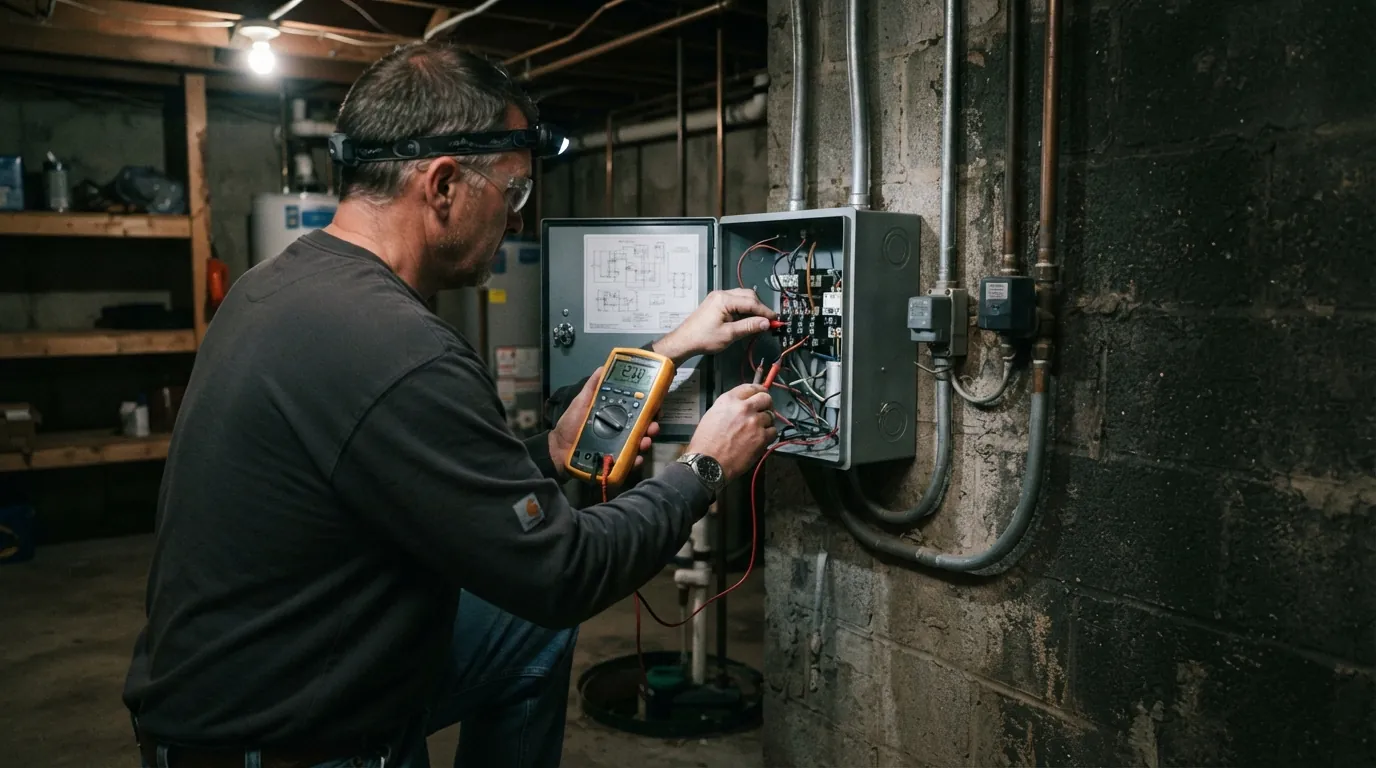
Pulling a submersible pump is a big, expensive job. Before that happens, the electrical path should be proven: power at the breaker, a pressure switch that closes, a control box with good start components, and wiring with no breaks down to the well. Most of that can be tested from the basement and the wellhead in an hour, and it often finds the real fault.
The versions of this job
No water, pump not running
When the pump is silent, we work down the path from the panel: breaker, disconnect, pressure switch, control box and the wiring to the wellhead. A meter at each point shows where power stops. Often it is the pressure switch, whose contacts burn over years of cycling, or a tripped breaker caused by a failing component. If power reaches the pump leads and the motor still does not start, that is the point at which the pump itself becomes the suspect and a well contractor is involved.
Pressure switch failure
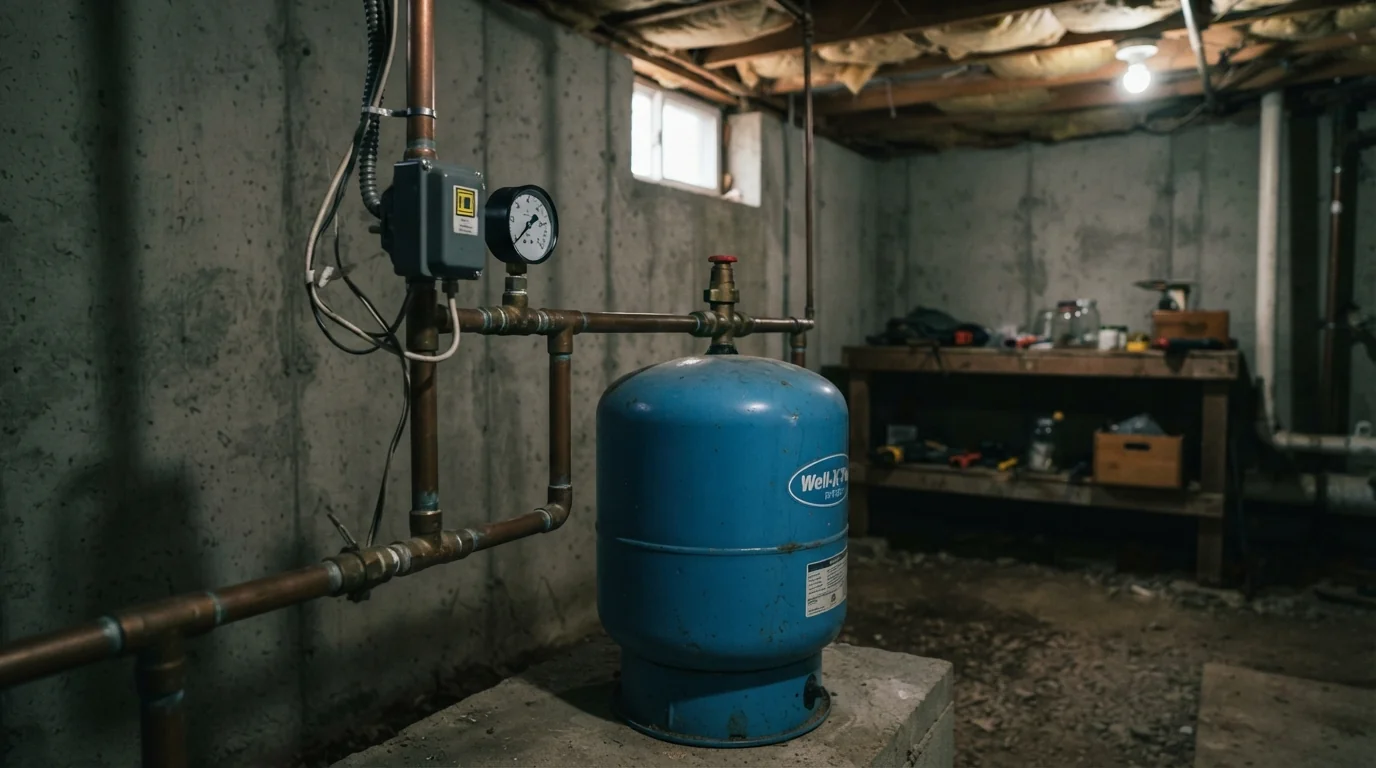
The pressure switch turns the pump on and off as the tank pressure falls and rises. Its contacts wear, pit and burn, and the small tube feeding it can clog with sediment. Symptoms include no water, a pump that will not stop, or rapid on-off cycling. We replace the switch, clear or replace its sensing tube, set the cut-in and cut-out pressures to match the tank, and check the tank's air charge so the new switch is not cycling itself to an early failure.
Control box and capacitor
Three-wire submersible pumps use a control box above ground with a start capacitor and relay. When the capacitor fails, the pump hums, trips its overload or will not start at all. We test the capacitor and relay, replace failed parts or the whole control box, and match it to the pump's horsepower and voltage. It is one of the most common well repairs and one of the easiest to fix without disturbing the well itself. Two-wire pumps have these parts inside the motor instead, which changes the diagnosis.
Well pump circuit and wiring
The circuit from the panel to the pump carries a heavy motor load, sometimes over long distances to an outbuilding or the wellhead. Loose connections, undersized wire and damaged buried cable cause voltage drop, overheating and early pump failure. We test the circuit under load, repair or replace damaged sections, and make sure the pump is on a dedicated circuit that can be included in your generator or backup plan, since no power also means no water for the house or the livestock.
How the job runs
How a no-water call runs
Tell us the symptoms
Silent pump, tripping or cycling.
Check power
Breaker and disconnect first.
Test the pressure switch
Contacts, settings and sensing tube.
Test the control box
Capacitor and relay on three-wire pumps.
Test the circuit
Voltage at the wellhead under load.
Repair and restore water
Or hand off to a well contractor if the motor failed.
Local conditions
Why this looks different across Grand Rapids
Kent County requires a permit to install an on-site water well, and its environmental health staff inspect private well and septic systems, often before a sale. Homes in the rural townships east and north of Grand Rapids rely on those private systems, so a well pump that will not start is a no-water emergency, and we treat it as one.
Before you call
What you can check before we arrive
| Situation | Safe to do yourself | Leave to us |
|---|---|---|
| No water | Check the well pump breaker once | Test the switch, control box and circuit |
| Breaker trips again | Leave it off | Find the short or failing part |
| Pressure gauge reads zero | Note it and do not tap the switch | Test and replace the pressure switch |
Cost factors
What moves the price on this job
Most well pump electrical repairs are parts at the wellhead or in the basement.
Typical regional ranges: service call fees $79 to $179 and electrician labor $75 to $150 per hour, as planning figures rather than our price.
- 01
What failed
A pressure switch costs less than a control box.
- 02
Pump type
Two-wire and three-wire pumps differ in parts.
- 03
Circuit distance
Long runs to the wellhead take longer to test.
- 04
Buried cable damage
Excavation adds cost.
- 05
Tank condition
A waterlogged tank shortens switch life.
- 06
Pump replacement
If the motor failed, a well contractor pulls it.
- 07
Timing
Night and weekend calls can cost more.
Straight answers
Questions about well pump electrical repair in Grand Rapids
Still unsure? Call (616) 699-4794 and ask a technician.
Common causes are a tripped breaker, a burned pressure switch or failed start components in the control box.
An electrician fixes the electrical side; if the pump motor itself failed, a well contractor pulls it.
It turns the pump on and off as tank pressure falls and rises.
A short, a failing motor or bad start components; it needs testing, not repeated resets.
Yes, if the generator and transfer setup include the pump circuit and can handle its starting surge.
Same category