EV Chargers, Generators and Backup
Generator transfer switch installation for Grand Rapids homes
The transfer switch is what makes a generator safe to connect: it keeps generator power off the utility line and utility power off the generator. We fit automatic switches for standby units, manual switches for portables, and load-shedding modules so a smaller generator can carry a bigger house.
Updated September 2026
- Answered 24/7
- Automatic and manual switches
- Load-shedding options
- Permit and inspection
Quick answer
A generator transfer switch in Grand Rapids connects a generator to the house wiring while physically isolating it from the utility line. Automatic transfer switches start a standby generator and move the load within seconds of an outage; manual switches let you move chosen circuits to a portable generator. Regional installs typically run $300 to $700 manual and $1,500 to $3,500 automatic.
What this job is
The switch decides what runs and how safely
A generator is only as useful as the connection behind it. The transfer switch decides which circuits get power, how the switch-over happens, and whether a line worker is protected from backfeed. A service-rated automatic switch can run the whole house; a smaller switch covers essential circuits. We match the switch to the generator size and to the loads you listed, not the other way round.
Cost factors
What moves the price on this job
Switch type, size and how many circuits move decide most of the price.
Typical regional ranges: automatic transfer switches $1,500 to $3,500 installed; manual transfer switches $300 to $700 installed. Planning figures, not our price.
- 01
Automatic or manual
Automatic switches cost several times more.
- 02
Switch size
Service-rated whole-house switches are largest.
- 03
Circuits moved
More circuits mean more labor.
- 04
Load-shedding modules
Each managed load adds a module.
- 05
Panel condition
An old panel may need replacing first.
- 06
Utility disconnect
Meter-side installs need utility scheduling.
- 07
Permit
Required and inspected.
Choosing between them
Which transfer setup fits your generator
| Setup | Best for | Trade-off |
|---|---|---|
| Automatic, whole-house | Standby generator sized for everything | Largest switch and generator |
| Automatic, essential circuits | Standby covering heat, sump, fridge | Other circuits stay dark |
| Manual transfer switch | Portable generator, chosen circuits | You switch it over by hand |
| Interlock kit | Portable generator through the main panel | Panel-specific, manual breaker changes |
The versions of this job
Automatic transfer switch
An automatic transfer switch watches the utility supply. When power drops, it signals the standby generator to start, waits for it to reach speed, then moves the load over within seconds. When utility power returns and holds steady, it switches back and lets the generator cool down. We size the switch to the service and the generator, mount it beside or ahead of the main panel, and test a real outage with you watching the switch-over, so you know what the house will do the next time the lights go out.
Manual transfer switch
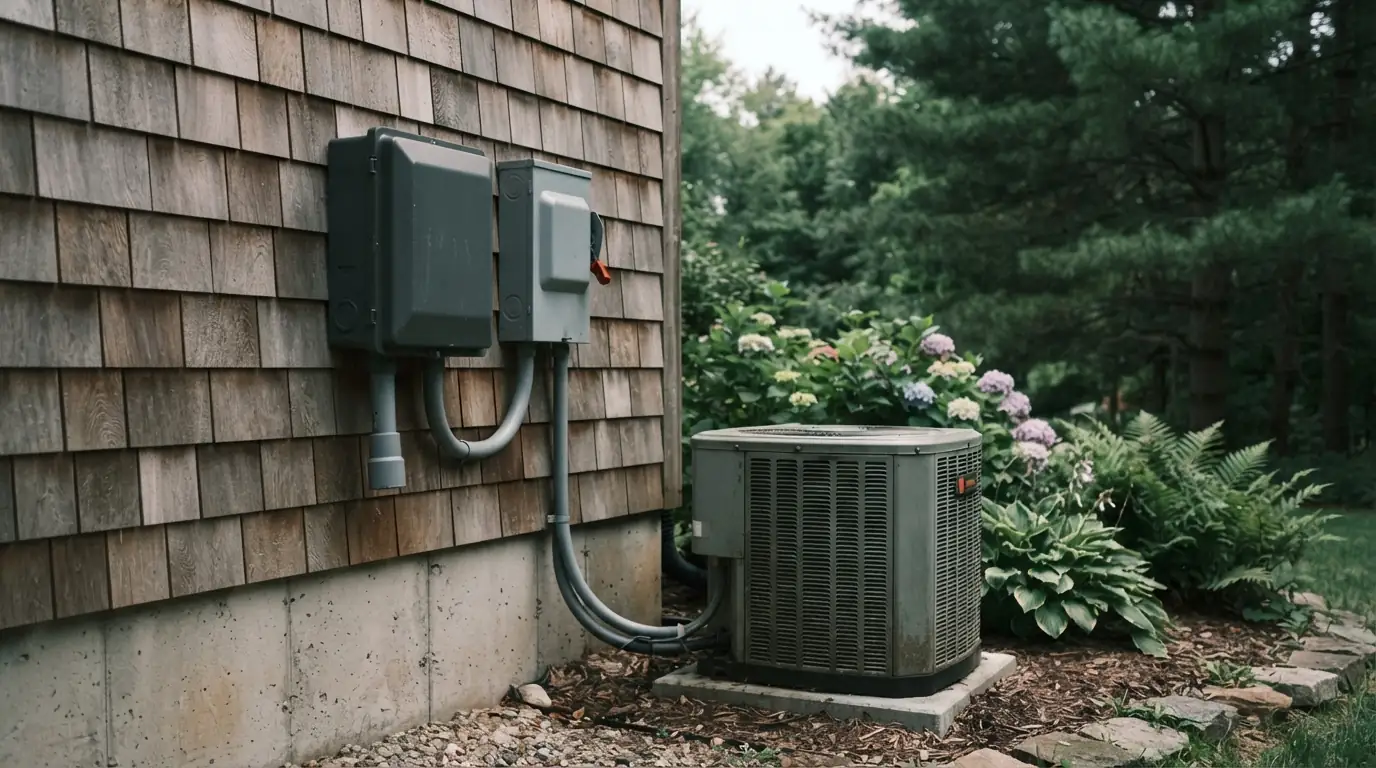
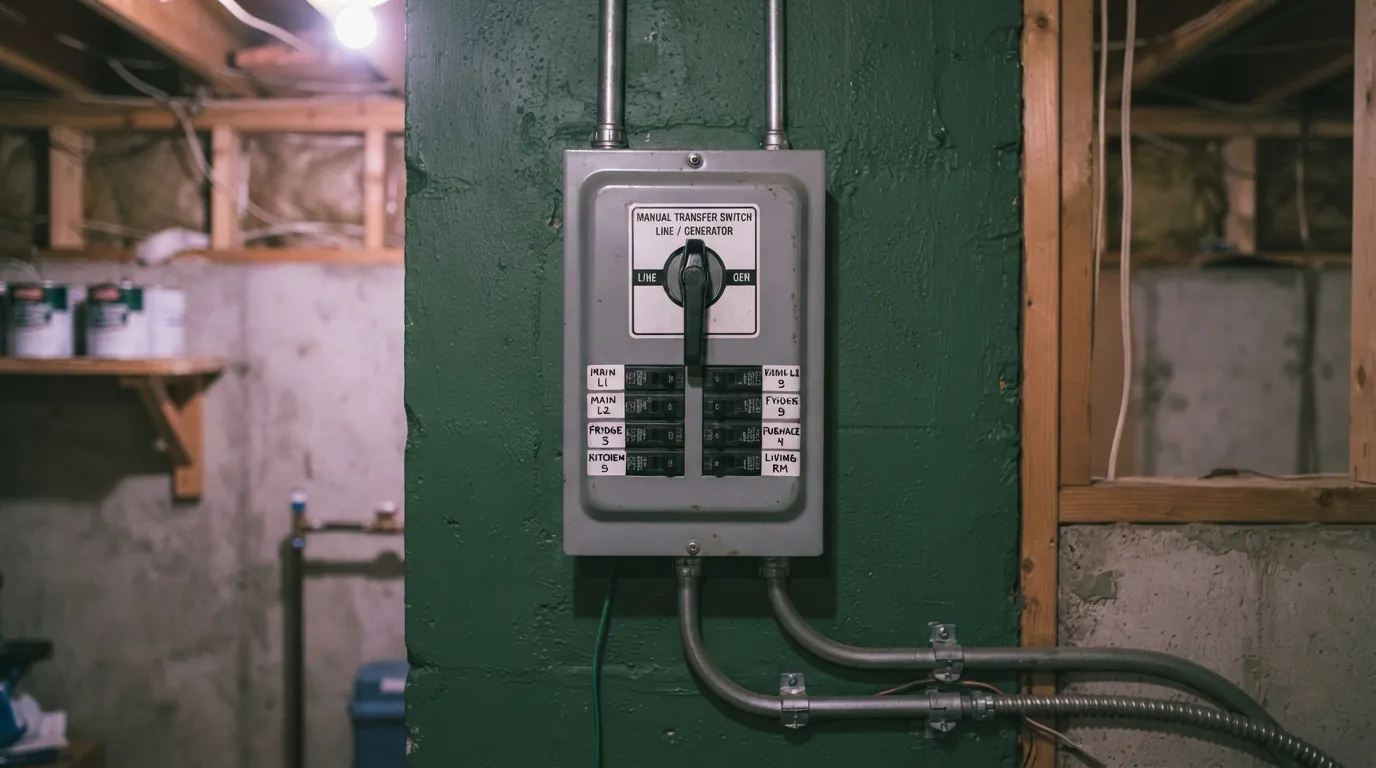
A manual transfer switch is a small subpanel for your essential circuits, fed from the main panel normally and from a portable generator through an inlet during an outage. You flip the circuits over by hand. It suits homes that want heat, sump, fridge and lights on a portable generator without the cost of a standby unit. We help you choose the circuits, wire the switch and inlet, and label everything for outage night, with the order to flip the circuits printed inside the switch door.
Load-shedding modules
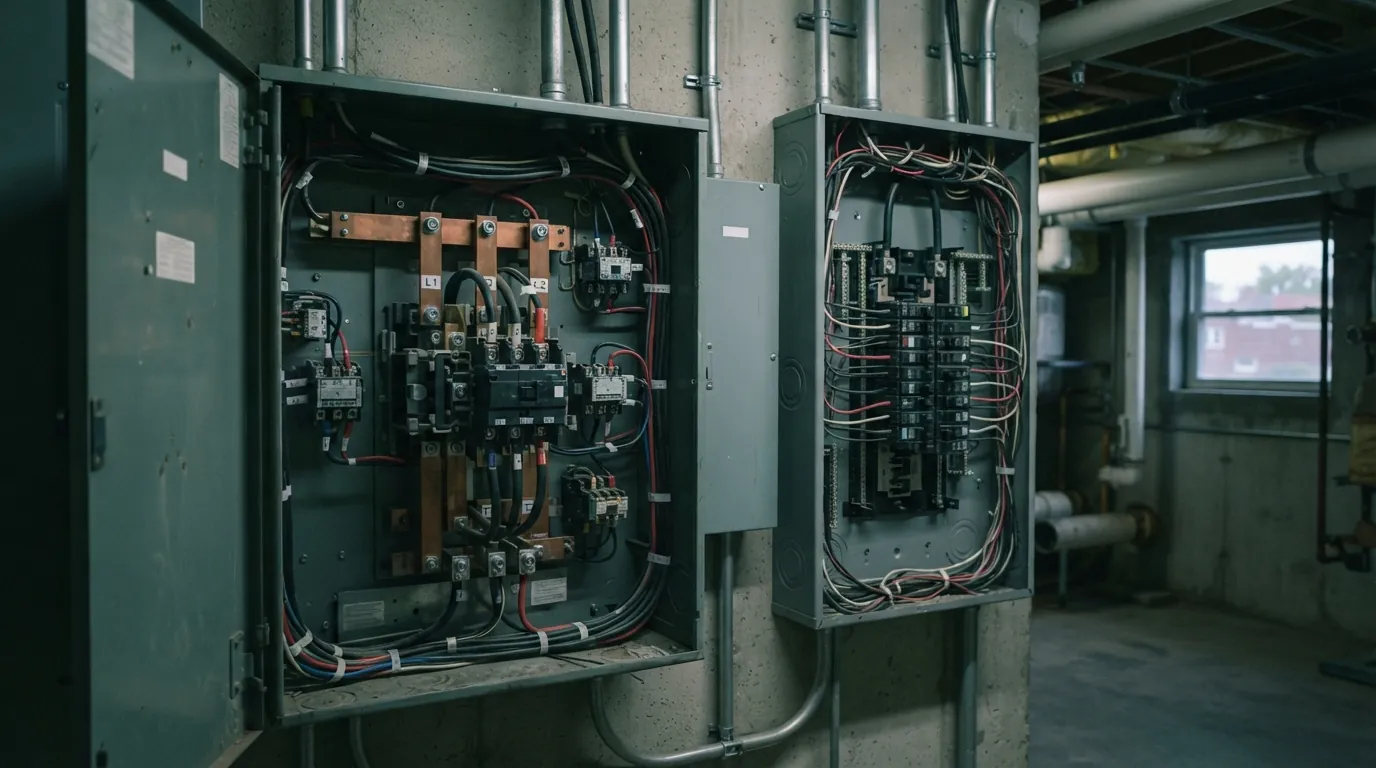
Load shedding lets a generator smaller than the house's full demand still cover the whole house. Modules temporarily hold off large loads, such as central air, a dryer or an electric water heater, when the generator nears its limit, then release them when there is room. It is often the difference between buying a much larger generator and not. We set the priorities with you so the furnace and sump always win over the dryer, and you do not have to manage the loads yourself during a storm.
Transfer switch replacement
Older transfer switches wear out, get damaged in storms, or no longer match a new generator or a panel upgrade. Signs include a switch that fails to transfer, relays that chatter, or a unit that throws faults the generator's controller cannot clear. We test the existing switch, replace it with one matched to the current generator and service, and re-test the whole system. It is also the time to move from a manual switch to automatic if you added a standby unit.
Local conditions
How Grand Rapids homes shape this job
After the December 2025 storm, Consumers Energy reminded customers around Grand Rapids never to run a generator in an attached garage or basement. A proper transfer switch and outdoor inlet keep the generator outside where it belongs. And because Michigan's 2023 code expanded the rules for energy storage, battery backup systems now go through the same careful planning at the panel.
Time on site
How long a transfer switch install takes
Most transfer switch installs are a single day on site, with the power off for part of it while circuits are moved. Whole-house automatic switches at the meter can need a utility disconnect, which adds scheduling time. The inspection follows before the generator is used in earnest. We give you the power-off window in advance so the freezer and sump are planned for.
How the job runs
How a transfer switch install runs
List the loads
What must run, what can wait.
Match switch to generator
Size, type and load shedding.
Permit and scheduling
Utility too, if the meter is involved.
Install and move circuits
Switch mounted, circuits relocated.
Real outage test
Utility off, transfer, and back.
Label and explain
What runs on generator, and how.
Transfer switches for Generac, Kohler and Briggs & Stratton generators.
Straight answers
Questions about generator transfer switch installation in Grand Rapids
Still unsure? Call (616) 699-4794 and ask a technician.
Yes, or an interlock, for any generator connected to house wiring. It prevents dangerous backfeed.
Automatic for standby generators; manual or an interlock for portables.
Often, with load-shedding modules that hold back large loads when needed.
Typical regional ranges are $300 to $700 for manual and $1,500 to $3,500 for automatic, installed.
Yes. Transfer switch installs are permitted and inspected.
Same category