EV Chargers, Generators and Backup
Standby generator installation for Grand Rapids homes
A standby generator starts itself within seconds of an outage and keeps the furnace, sump and fridge running until the lines are back. We size it to what the house actually needs, set it on a pad, wire the transfer switch and get it inspected.
Updated September 2026
- Answered 24/7
- Sized to your loads
- Automatic transfer switch
- Permit and inspection
Quick answer
A standby generator installation in Grand Rapids includes sizing the unit to the loads that must run, setting it on a pad at code clearances, connecting natural gas or propane, and wiring an automatic transfer switch. Typical 14 to 22 kW whole-house installs run $7,000 to $12,000 regionally, depending on size and fuel run.
What this job is
What decides the size, and why bigger is not always better
Sizing starts with a list, not a brochure. The furnace blower, sump pump, refrigerator, well pump and a few lighting circuits need far less than central air, an electric range and a dryer running together. Covering only essential circuits allows a smaller unit and a simpler switch; covering the whole house needs a larger unit and load management. We run the numbers both ways before you pick.
Cost factors
What moves the price on this job
Size, fuel run and the transfer switch decide most of the price.
Typical regional ranges: whole-house standby generators installed $1,516 to $8,810 (national average $5,159); 14 to 22 kW units $7,000 to $12,000; automatic transfer switches $1,500 to $3,500 installed. Planning figures, not our price.
- 01
Generator size
Kilowatt rating is the biggest single factor.
- 02
Coverage
Whole-house switches cost more than essential-circuit ones.
- 03
Fuel run
Distance from the gas meter or propane tank.
- 04
Gas meter capacity
An undersized meter needs a utility upgrade.
- 05
Pad and site
Slope, access and soil affect the pad.
- 06
Panel condition
An old panel may need replacing first.
- 07
Permits
Electrical and mechanical permits and inspections.
What is included
What a standby generator install includes
- Load calculation and generator sizing
- Placement at code clearances from windows and vents
- Concrete or composite pad
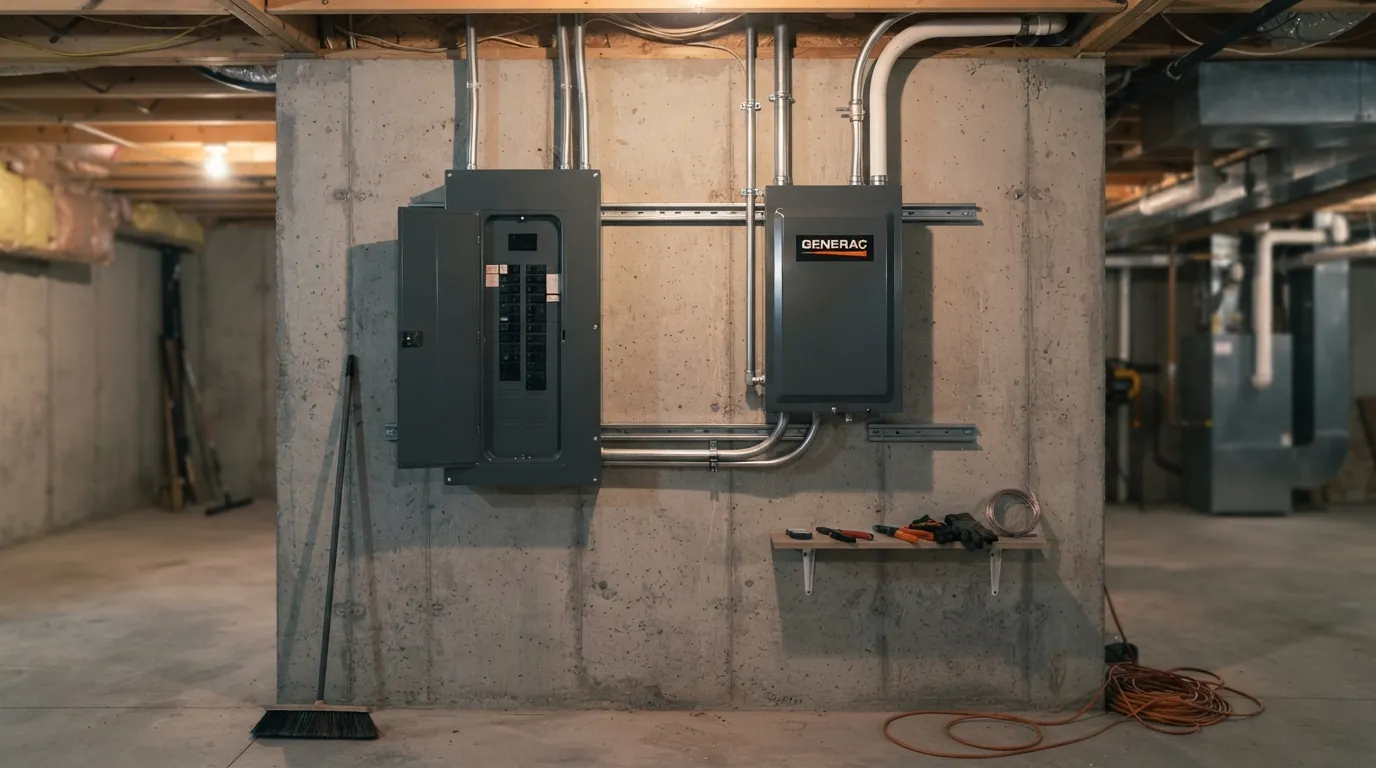
- Automatic transfer switch wired to the panel
- Fuel line from gas meter or propane tank
- Electrical and mechanical permits
- Utility and fuel supplier coordination
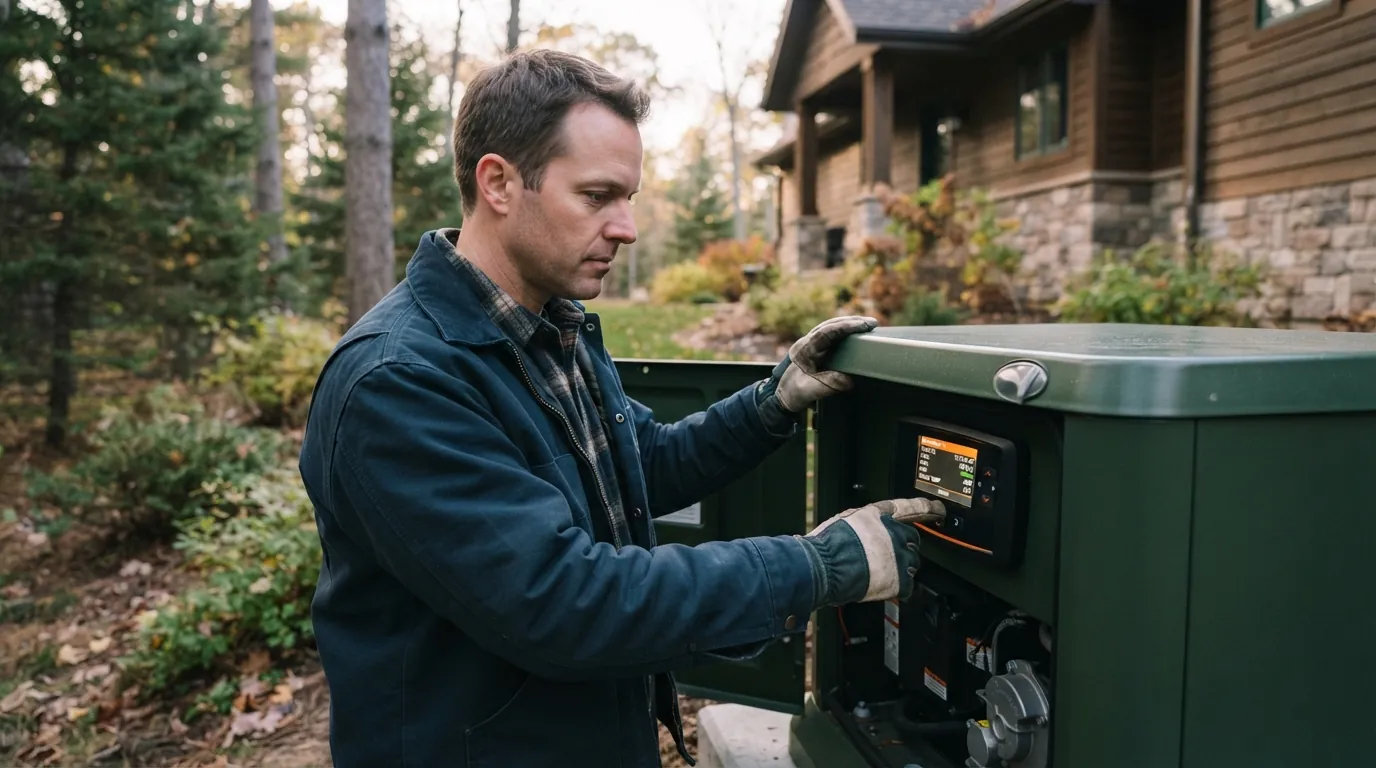
- Startup, programming and transfer test
- Walkthrough of the exercise schedule and alerts
Choosing between them
Whole-house or essentials, gas or propane
| Choice | Best for | Trade-off |
|---|---|---|
| Whole-house coverage | Homes that want no change in routine | Larger unit and higher cost |
| Essential circuits only | Heat, sump, fridge, lights | Some rooms go dark in an outage |
| Natural gas fuel | Homes already on a gas line | Gas meter may need an upgrade |
| Propane fuel | Homes without natural gas | Tank size limits run time |
The versions of this job
Whole-house standby generator
A whole-house unit powers everything in the panel, including central air and cooking, usually through a service-rated automatic transfer switch at the meter. It is the most comfortable option and the most expensive, and on larger homes it often pairs with load-shedding modules that briefly hold back the air conditioner or dryer so the generator is not overloaded. We confirm the gas meter can supply the unit at full load, which is the part of a whole-house install that is most often missed.
Partial-home essential circuits
Many Grand Rapids homeowners care most about heat in winter, the sump pump during spring rain, the refrigerator and a few lights. Those circuits move to a smaller transfer switch panel, and a smaller generator carries them comfortably. It costs less, fuels for longer, and covers what actually matters in an outage. We help you pick the circuits, label them clearly, and leave room to add one or two later if you change your mind, such as a basement freezer or a home office.
Natural gas versus propane
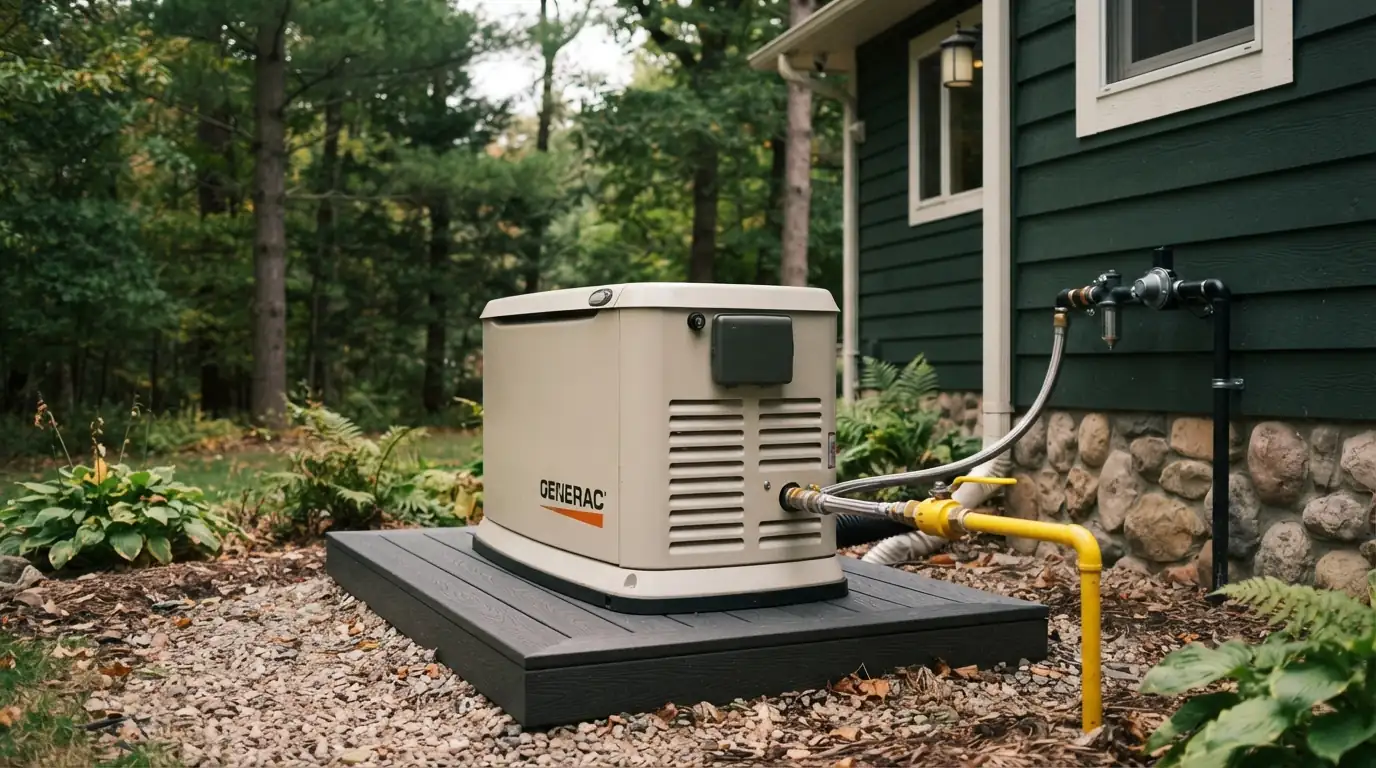
Natural gas is the easy choice where the house already has a gas line: no tank, no deliveries, and effectively unlimited run time. The gas meter and line have to be large enough to feed the generator and the furnace at the same time, which sometimes means asking the gas utility for a meter upgrade. Propane suits homes without gas service; the tank size then sets how many days the generator can run before a refill is needed, so we size the tank to a realistic multi-day outage.
Concrete pad and clearances
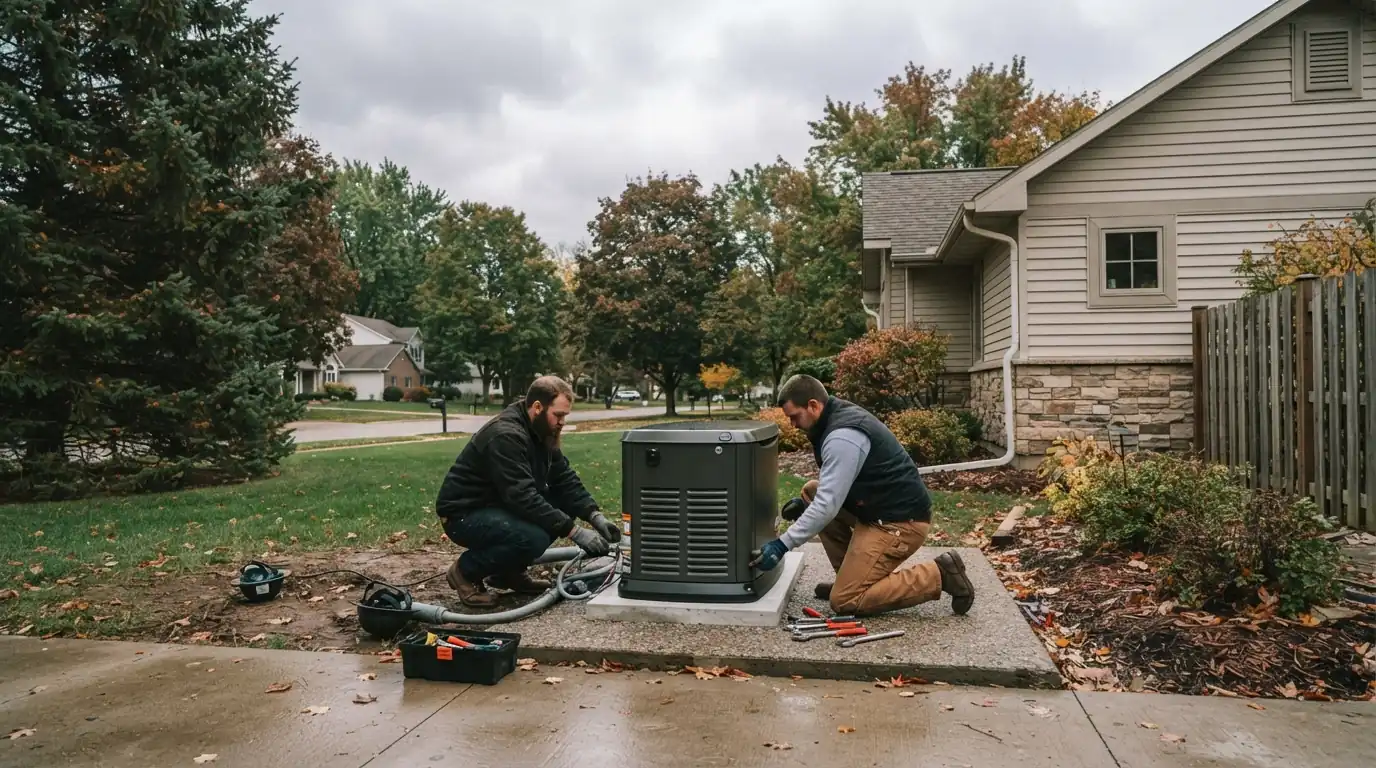
The generator sits on a level pad at set distances from windows, doors, air intakes and property lines, which keeps exhaust out of the house and satisfies the manufacturer and the inspector. We pick a spot that keeps the fuel and electrical runs short and the unit reachable for service, clear of snow drifts and downspouts. On tight city lots near neighbors, placement is often the hardest decision of the whole job, so we settle it on the first visit.
Local conditions
Local conditions that change the work
After the June 2026 wind storms, Consumers Energy had more than 100,000 customers out statewide and staged out-of-state crews along Alpine Avenue in Walker. Across Kent County the year brought summer wind, winter ice and blizzard-force gusts, and each of those outages lasted long enough to make a sump pump or a furnace the reason people call about standby power.
Lost heat or the sump in the last outage?
Winter outages here are when standby calls peak; booking before the ice season keeps the install ahead of the next storm.
Call (616) 699-4794How the job runs
How a standby generator install runs
Load list and site walk
What must run and where the unit can sit.
Size and price
Generator, switch, fuel run, in writing.
Permits and utility
Filed and scheduled with fuel supplier.
Set the pad and unit
Level, at code clearances.
Wire and fuel
Transfer switch, circuits and gas line.
Test and hand over
Real outage test and a walkthrough.
Standby brands we install include Generac, Kohler and Briggs & Stratton.
Straight answers
Questions about standby generator installation in Grand Rapids
Still unsure? Call (616) 699-4794 and ask a technician.
Most whole-house installs around Grand Rapids land in the 14 to 22 kW class; essential-circuit setups can be smaller.
The on-site work is usually a few days; permits and gas utility scheduling set the overall timeline.
Yes. Electrical and mechanical permits are required and the install is inspected.
Natural gas if the house has it; propane where it does not, with tank size setting run time.
Yes. Annual service keeps it ready, and we handle repair calls any hour.
Same category