Wiring, Outlets and Remodels
Electric baseboard and wall heater installation in Grand Rapids
Electric heat is the simplest way to warm a room the furnace never reaches, as long as the circuit is sized for it. We install baseboard, wall and kick-space heaters on dedicated 240 volt circuits, fit thermostats that handle the load, and check the panel can carry the new heat.
Updated September 2026
- Answered 24/7
- Dedicated 240 volt circuits
- Line-voltage thermostats
- Panel capacity checked
Quick answer
Electric baseboard heater installation in Grand Rapids means sizing heaters to the room, running a dedicated circuit, usually 240 volt, sized to the total heater wattage, and installing a line-voltage thermostat rated for the load. Heaters run for long periods in winter, so the panel's capacity is checked first, especially on 100 amp services.
What this job is
Heaters are continuous loads; size the circuit that way
A baseboard heater may run for hours on a January night, which makes it a continuous load. The circuit has to be sized with that in mind, and several heaters on one circuit add up quickly. We total the wattage, size the circuit and breaker to match, and place heaters under windows and along outside walls where they do the most good, with clearances from furniture and drapes.
Cost factors
What moves the price on this job
The number of heaters, the circuit runs and the panel decide the price.
Typical regional ranges: electrician labor $75 to $150 per hour and an electrical permit $50 to $300, as planning figures rather than our price.
- 01
Number of heaters
Each heater adds a unit and a connection.
- 02
Circuits needed
Total wattage decides how many circuits.
- 03
Distance from the panel
Longer runs mean more wire.
- 04
Panel capacity
Several heaters may need panel work.
- 05
Thermostat type
Programmable and smart units cost more.
- 06
Finished walls
Fishing wire through finished rooms takes longer.
- 07
Permit
New circuits are permitted and inspected.
Choosing between them
Which electric heater fits the room
| Heater | Best for | Trade-off |
|---|---|---|
| Baseboard heater | Bedrooms, additions, sunrooms | Needs clear wall space along the floor |
| Wall heater with fan | Bathrooms and small rooms | Fan noise, faster warm-up |
| Kick-space heater | Kitchens under cabinets | Small output, spot heating |
| Hydronic electric baseboard | Rooms that want steady heat | Higher cost, slower response |
The versions of this job
Baseboard heater circuits
Most baseboard heaters run on 240 volts, which carries more heat on smaller wire than 120 volts. We add up the wattage of every heater on a circuit, size the breaker and wire to that continuous load, and keep heaters in separate rooms on separate thermostats. In older homes we check whether the panel has spare capacity before adding several kilowatts of heat, because a 100 amp service with an electric dryer and range can run short on a cold evening.
Wall and kick-space heaters
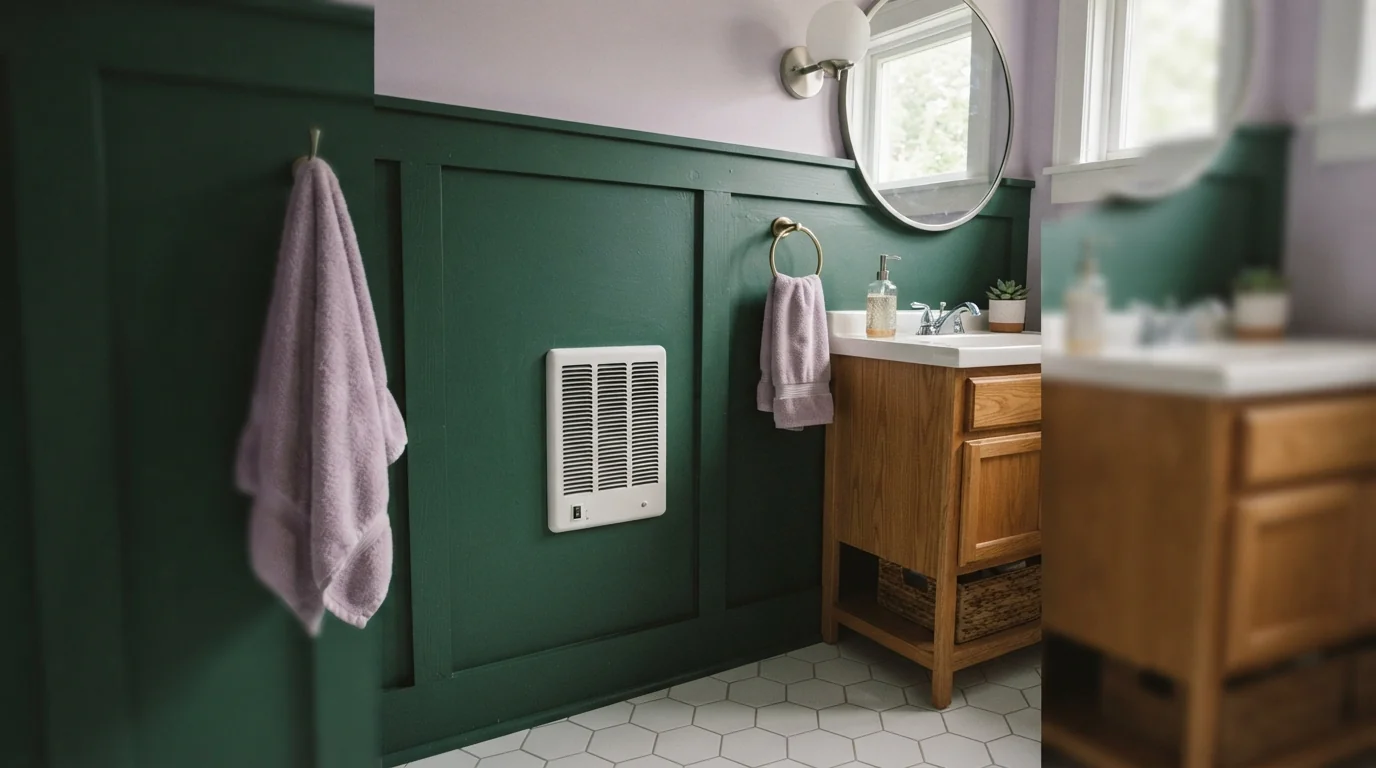
Wall heaters with a fan warm a bathroom or small room quickly and fit where a baseboard will not. Kick-space heaters tuck under kitchen cabinets and warm the floor where you stand. Both need a dedicated circuit and a box placed accurately during rough-in or cut in carefully in finished walls. We match the heater to the room's size and use, and place it where furniture and cabinets will not block the airflow. Bathroom units are kept clear of the tub and shower zones the code sets.
Line-voltage thermostats
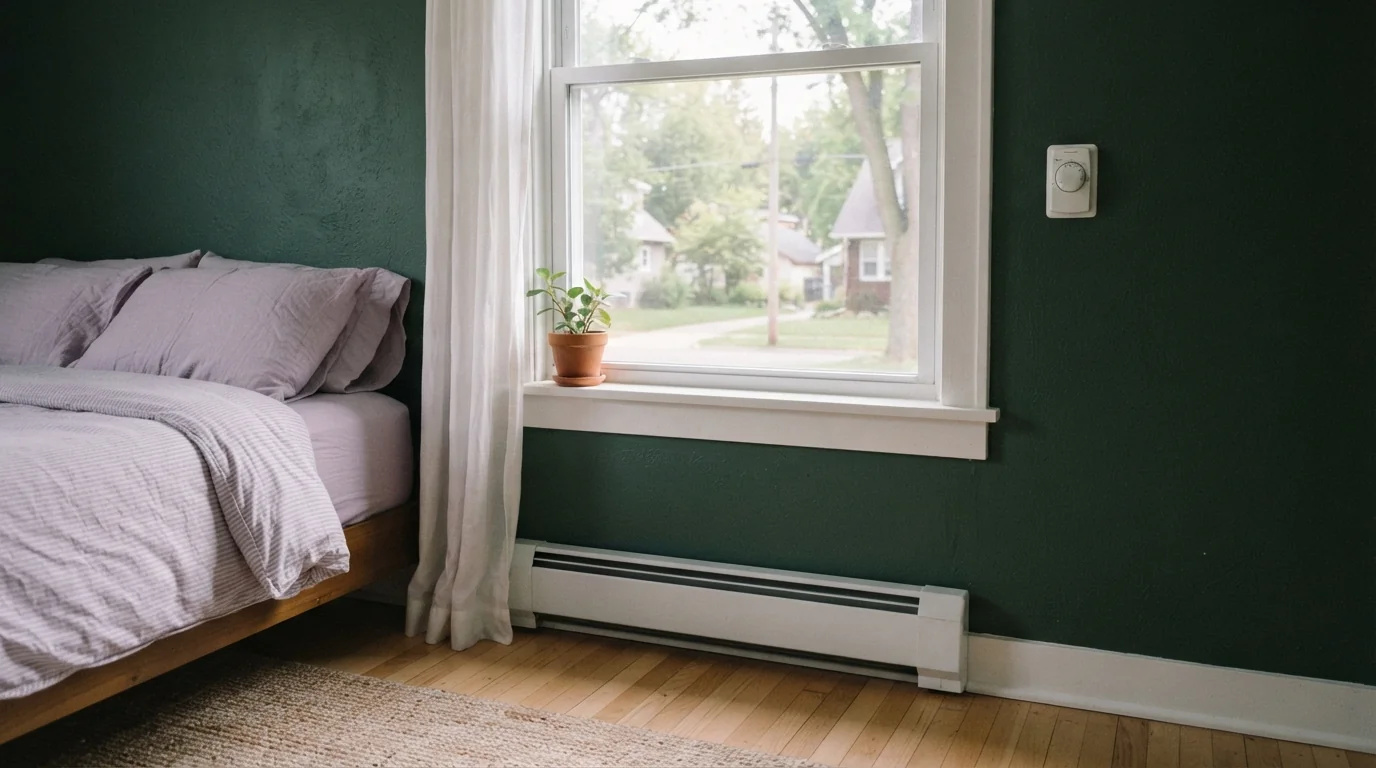
Electric heaters are controlled by thermostats that switch the full heater current, not the low-voltage thermostats used with furnaces. They must be rated for the load, and cheap ones wear out and drift. We fit programmable or smart line-voltage thermostats where you want schedules, so a basement office or guest room is not heated all day when nobody is there, which is where most of the running cost of electric heat goes. A setback of a few degrees overnight adds up over a Michigan winter.
Heater repair and replacement
Older baseboard heaters fail at the element, the limit switch or the thermostat, and some units from decades ago have loose, heat-darkened connections in the junction end. We test the heater, repair or replace failed parts, and replace the whole unit where it is corroded or damaged. Heat-marked wiring at the heater or thermostat is replaced, not just reconnected, because that is how small faults become burned wires. We also check that nothing combustible sits against the heater, which is the most common safety issue we find.
Local conditions
Why this looks different across Grand Rapids
January is Grand Rapids' coldest month, with an average high of 31 degrees F and an average low of 17 degrees F, so electric heaters in cold rooms, basements and additions can run for long stretches. That is why we size every heater circuit as a continuous load and check the panel before adding several heaters to any older house.
Before you call
What you can check yourself and what needs an electrician
| Situation | Safe to do yourself | Leave to us |
|---|---|---|
| Heater not warming | Check the thermostat setting and breaker | Test the thermostat and element |
| Breaker trips with heaters on | Turn some heaters down | Resize the circuit or split it |
| Want heat in a cold room | Measure the room | Size heaters and run the circuit |
How the job runs
How an electric heat install runs
Measure the room
Size and heat loss.
Size the heaters
Wattage and placement.
Check the panel
Capacity for the new load.
Run the circuit
Dedicated, sized as continuous load.
Mount and connect
Heaters and thermostat.
Test and set
Every heater heats, thermostat set.
Straight answers
Questions about electric baseboard heater installation in Grand Rapids
Still unsure? Call (616) 699-4794 and ask a technician.
Yes, sized to the total wattage of the heaters on it.
Most are 240 volt; some small units are 120 volt.
It depends on the service and other loads; we check before installing.
Too many heaters on one circuit, or a failing heater or thermostat.
Yes, with a line-voltage smart thermostat rated for the load.
Same category