Panels and Electrical Service
Meter base and service mast repair after storm damage in Grand Rapids
When a limb or ice load pulls the service drop, the mast, weatherhead or meter socket on your house takes the damage. The utility owns the wires to the house; the mast and meter base are yours. We repair or replace them, get the inspection, and coordinate the reconnect with Consumers Energy.
Updated September 2026
- Answered 24/7
- Mast, weatherhead, meter socket
- Utility reconnect coordinated
- Permit and inspection
Quick answer
Meter base and service mast repair in Grand Rapids fixes the homeowner-owned parts of the electrical service: the mast, weatherhead, entrance cable and meter socket. After storm damage, the mast is repaired or replaced, inspected, and then the utility reconnects the service drop and meter. Stay clear of any downed or sagging wires.
What you notice first
Signs the service entrance is damaged
Mast bent or pulled from the wall
The drop was pulled by a limb or ice load.
Wires sagging near the roof
Stay clear and call the utility.
Meter socket scorched or melted
A loose jaw or connection overheated.
Lights dim across the house
A damaged entrance or neutral connection.
Weatherhead cracked or missing
Water can run into the meter socket.
Meter tilted or loose
The socket or its mounting has failed.
What this job is
Who owns what at the side of the house
The service drop from the pole to your house and the meter itself belong to the utility. The mast or riser, the weatherhead, the entrance conductors and the meter socket belong to the homeowner, and repairing them needs an electrician and an inspection before the utility will restore power. Knowing that split up front saves a day of phone calls after a storm.
The versions of this job
Bent or leaning service mast
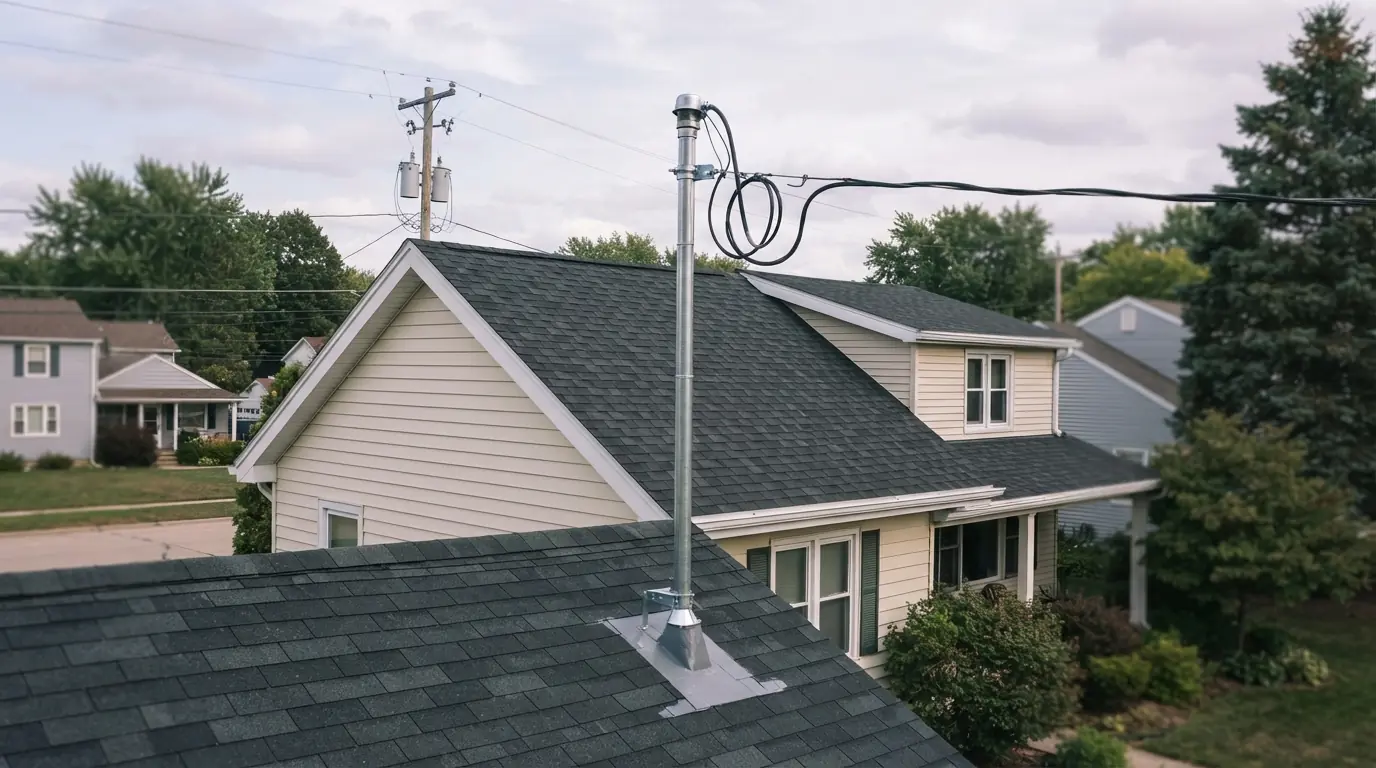
An overhead service mast has to hold the tension of the service drop. When a limb falls on the drop or ice loads it in a storm, the mast bends, pulls its straps, or cracks the roof flashing around it. We replace the mast with one sized for the service, secure it properly, reflash the roof penetration, and set the weatherhead so the drop can be reattached. The inspection and utility reconnect follow, and we coordinate both so the wait for power is as short as possible.
Burned meter socket
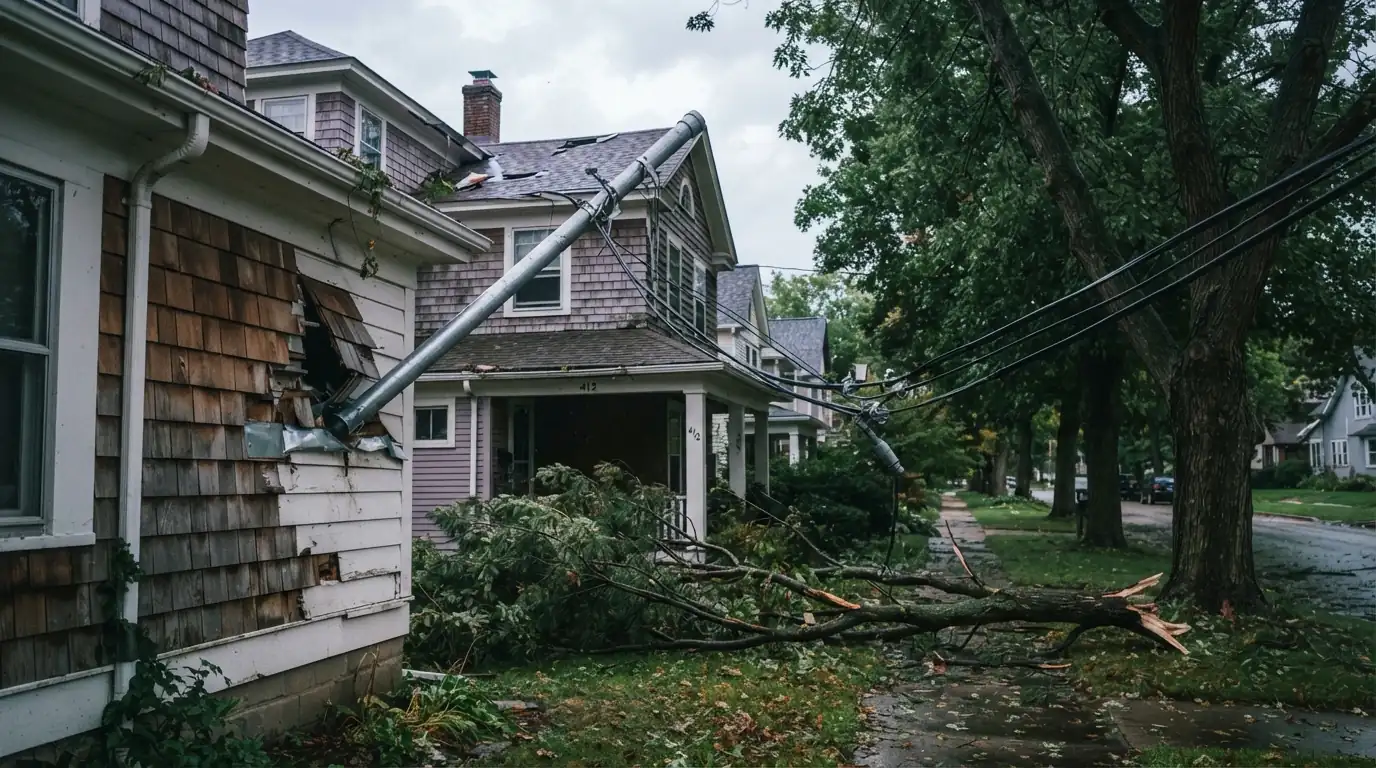
Meter sockets can fail even without a storm. Loose jaws or corroded connections heat up under load, and the socket scorches or melts. Symptoms include flickering across the whole house, a hot meter, or a burned smell outside. The utility pulls the meter, and we replace the socket and the entrance connections behind it. If the socket is original to an older, smaller service, it is often the moment to consider a service upgrade instead of a like-for-like swap. Either way, the new socket is rated for the service it feeds.
Weatherhead and drip loop
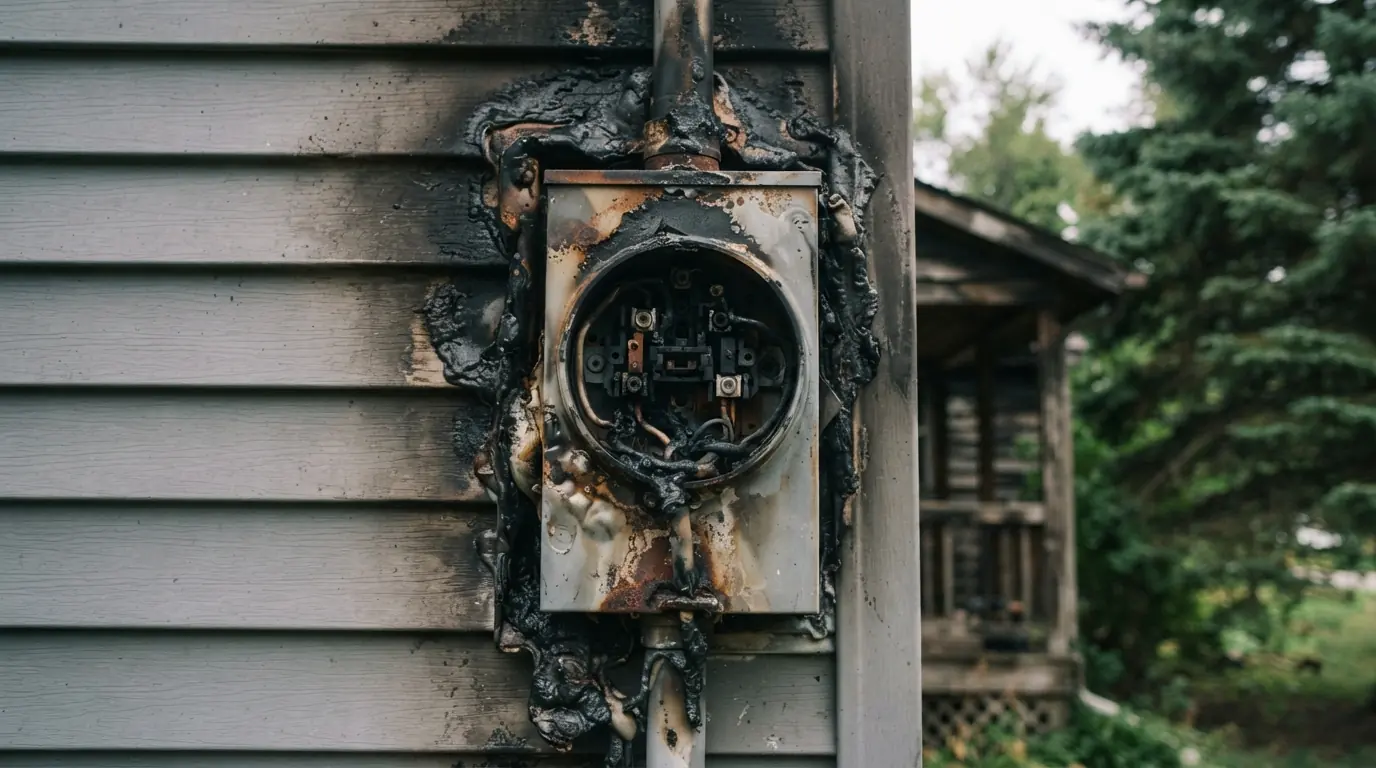
The weatherhead at the top of the mast keeps rain out of the entrance conductors, and the drip loop makes water run off before it reaches the head. A cracked weatherhead or a missing drip loop lets water run down into the meter socket and panel, which causes corrosion and, eventually, failures inside. We replace the head and reset the conductors so the loop drains correctly, and check the meter socket and panel for water damage while we are there.
Utility disconnect coordination
Mast and meter repairs usually need the utility to disconnect the drop and pull the meter, then reconnect after inspection. We handle the paperwork and the scheduling with Consumers Energy and the inspector so the steps happen in order. After a large storm the utility's queue can be long, so we make the repair ready for reconnect as quickly as possible and tell you honestly what the utility's timing looks like, so you can plan for a generator or a night elsewhere if the queue is long.
How the job runs
How a storm-damaged service gets back on
Make it safe
Stay clear of wires; utility called if needed.
Assess the entrance
Mast, head, conductors, socket, panel.
Permit filed
Needed for reconnect.
Repair or replace
Mast, weatherhead, socket, disconnect.
Inspection
Signed off for the utility.
Utility reconnect
Drop reattached and meter set.
Local conditions
What we see around Grand Rapids
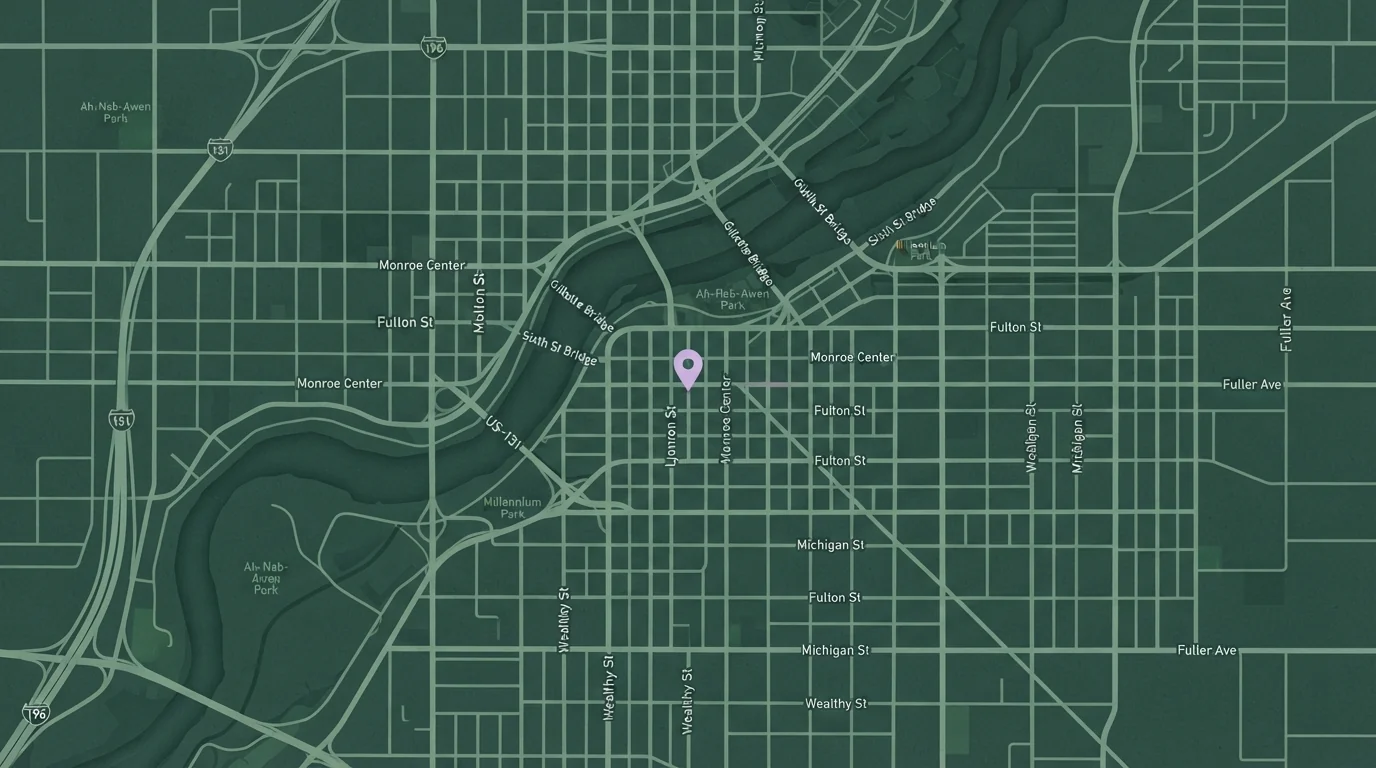
Freezing rain across the region in December 2025 put ice on lines and pulled drops and masts on houses around Grand Rapids. Under the 2023 Michigan Electrical Code, enforced since March 12, 2024, one- and two-family dwellings also need an outdoor emergency disconnect, so a replaced service entrance often includes one, and we price it in the first visit rather than as a surprise at inspection.
Before you call
What you should and should not do
| Situation | Safe to do yourself | Leave to us |
|---|---|---|
| Wires down or sagging | Stay at least 25 feet away, call the utility | Repair the mast once it is safe |
| Power partly out | Check the main breaker in the panel | Test the entrance and meter socket |
| Mast bent, power on | Keep people and ladders clear | Replace the mast and weatherhead |
Cost factors
What moves the price on this job
The extent of the damage and the utility's requirements decide the price.
Typical regional ranges: a full 200 amp service upgrade with meter base and mast $3,000 to $6,000, and service call fees of $79 to $179. Planning figures, not our price.
- 01
Mast only or full entrance
A mast swap costs less than a new entrance.
- 02
Meter socket condition
A burned socket must be replaced.
- 03
Roof penetration
Reflashing and roof repair around the mast.
- 04
Service size
Upgrading at the same time changes the parts.
- 05
Outdoor disconnect
Current code may require one on a new service.
- 06
Permit and inspection
Required before reconnect.
- 07
After-hours timing
Night and storm calls can cost more.
Straight answers
Questions about meter base and service mast repair in Grand Rapids
Still unsure? Call (616) 699-4794 and ask a technician.
The mast, weatherhead and meter socket are the homeowner's; the drop and meter belong to the utility.
Yes. Stay at least 25 feet from downed or sagging wires and call the utility.
After our repair and the inspection, it depends on the utility's reconnect schedule.
Yes. The utility will not reconnect until the repair is inspected.
Often it is the most economical time, especially on an older, smaller service.
Same category