Wiring, Outlets and Remodels
Dedicated circuits for appliances, heat pumps and shop tools in Grand Rapids
A new appliance is only as reliable as the circuit feeding it. We run dedicated 120 and 240 volt circuits sized to the appliance you bought, check that the panel has the space and capacity for it, and get the work permitted and inspected.
Updated September 2026
- Answered 24/7
- Sized to the nameplate
- Panel capacity checked
- Permit and inspection
Quick answer
A dedicated circuit in Grand Rapids is a single circuit from the panel that feeds one appliance or load, sized to its nameplate: a 240 volt 30 amp circuit for most dryers, 40 or 50 amp for ranges, and the manufacturer's size for mini splits and heat pumps. The panel needs a free space and enough spare capacity first.
What this job is
One appliance, one circuit, sized to match
Sharing is what trips breakers. A microwave on the same circuit as the toaster, or a space heater on a bedroom circuit, will trip the moment both run. Code already requires dedicated circuits for many appliances, and heat pumps and induction ranges pull enough current that the wire size, breaker and receptacle all have to match the nameplate. We read the label on the appliance before we size anything.
Cost factors
What moves the price on this job
Distance from the panel and the circuit size drive most of the price.
Typical regional ranges: $120 to $350 for an outlet installation and $50 to $300 for an electrical permit, as planning figures rather than our price.
- 01
Circuit size
Larger 240 volt circuits need heavier wire.
- 02
Distance from the panel
Longer runs mean more wire and labor.
- 03
Route through the house
Finished walls and ceilings take longer to fish.
- 04
Panel space
A full panel may need a subpanel or rework.
- 05
Service capacity
An undersized service needs an upgrade first.
- 06
Receptacle or disconnect
Outdoor disconnects and special receptacles add cost.
- 07
Permit
Required and inspected.
What is included
What a dedicated circuit install includes
- Appliance nameplate read and circuit sized
- Panel space and load calculation checked
- Correct breaker type for your panel brand
- Wire sized for the load and distance
- Receptacle or disconnect matched to the plug
- GFCI or AFCI protection where required
- Wall and ceiling openings kept small and patched
- Permit pulled and inspection booked
- Circuit labeled in the panel directory
Choosing between them
Common dedicated circuits and what they need
| Load | Typical circuit | Watch for |
|---|---|---|
| Electric dryer | 240 volt, 30 amp | Old three-prong outlet vs four-wire cord |
| Range or induction cooktop | 240 volt, 40 or 50 amp | Nameplate decides, not the old circuit |
| Mini split or heat pump | 240 volt, size per maker | Outdoor disconnect required |
| Microwave, dishwasher, disposal | 120 volt, 15 or 20 amp each | Often shared in older kitchens |
| Welder or compressor | 240 volt, per nameplate | Garage panel space and wire run |
The versions of this job
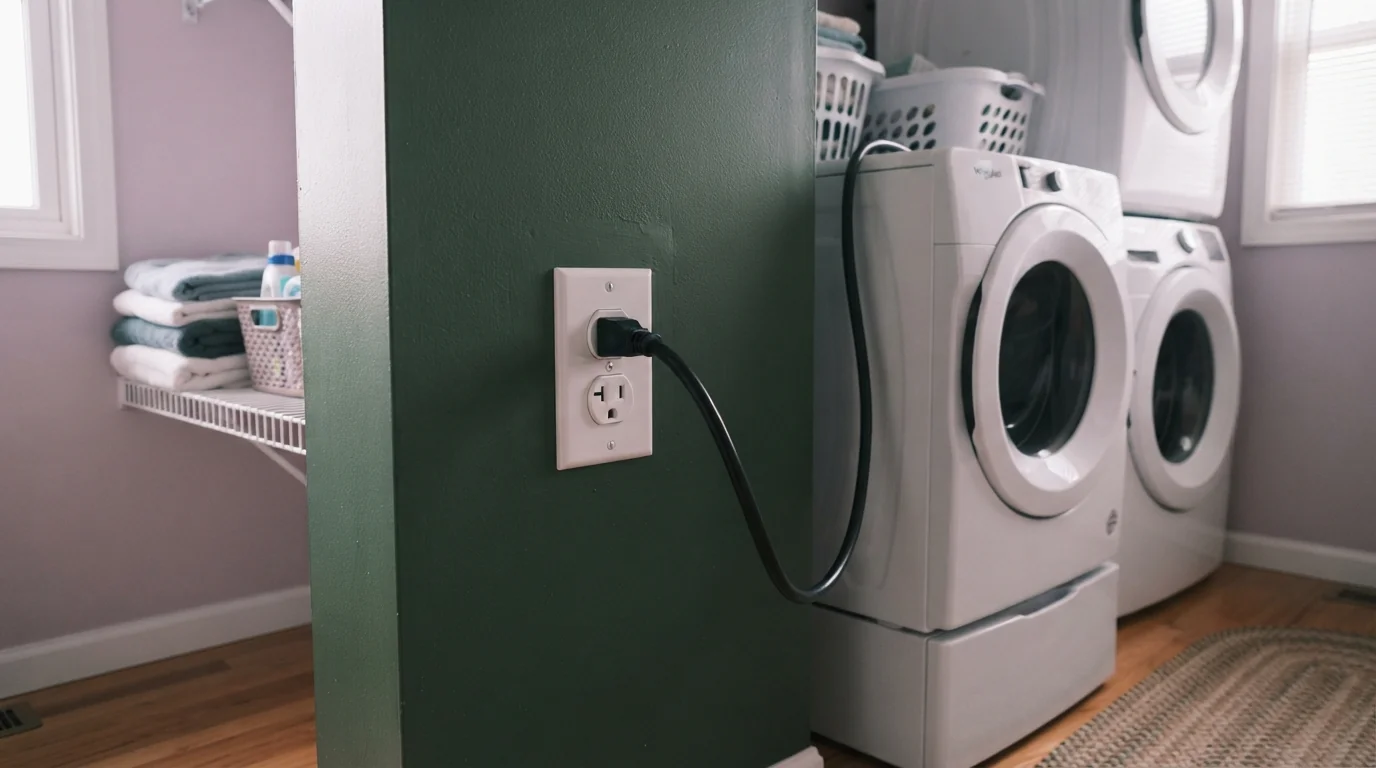
240 volt dryer and range outlets
Dryers and ranges are the most common 240 volt circuits, and older homes often still have three-prong receptacles that current appliances no longer ship cords for. We match the receptacle to the cord, and where the circuit is an older three-wire run we explain the options: a new four-wire circuit, or a code-compliant approach for the existing one. Switching to an induction range usually means checking the circuit size against the new nameplate, because many induction units need more current than the old range drew.
Microwave and dishwasher circuits
Kitchens built decades ago often put the microwave, dishwasher and disposal on one or two shared circuits, which is why the breaker trips when the dishwasher heats while the microwave runs. We separate them so each has its own protected circuit, and bring the kitchen closer to current code at the same time. It is often a small job with a big effect, especially in houses where the breaker trips during every evening routine and nobody has worked out why.
Mini split and heat pump circuits
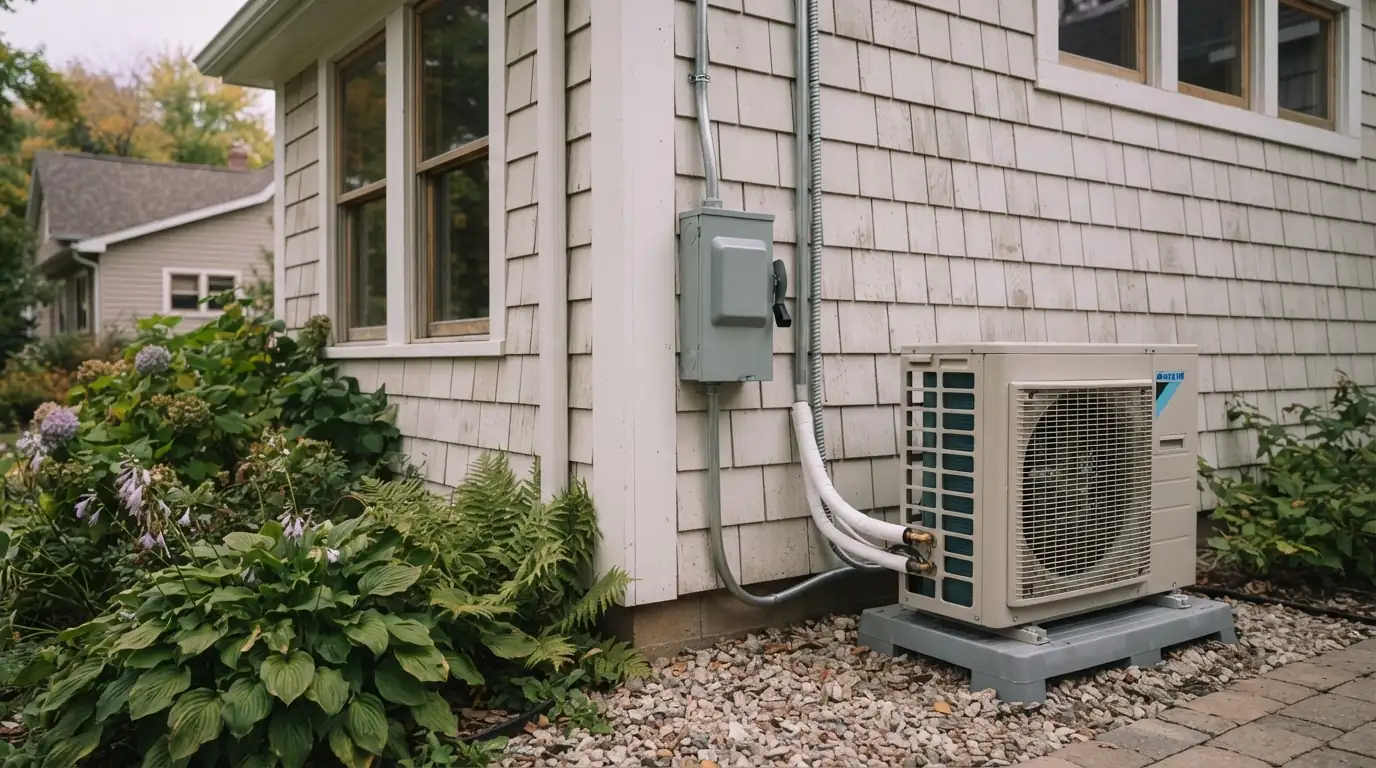
Ductless mini splits and heat pumps need a 240 volt circuit sized to the manufacturer's minimum circuit ampacity and maximum breaker, plus a disconnect within sight of the outdoor unit. We coordinate with the HVAC installer so the circuit, disconnect and whip are ready when the equipment arrives. Before any of that, we check the panel, because a heat pump plus an existing electric water heater and dryer can push a 100 amp service past what it can safely carry.
Welder and shop circuits
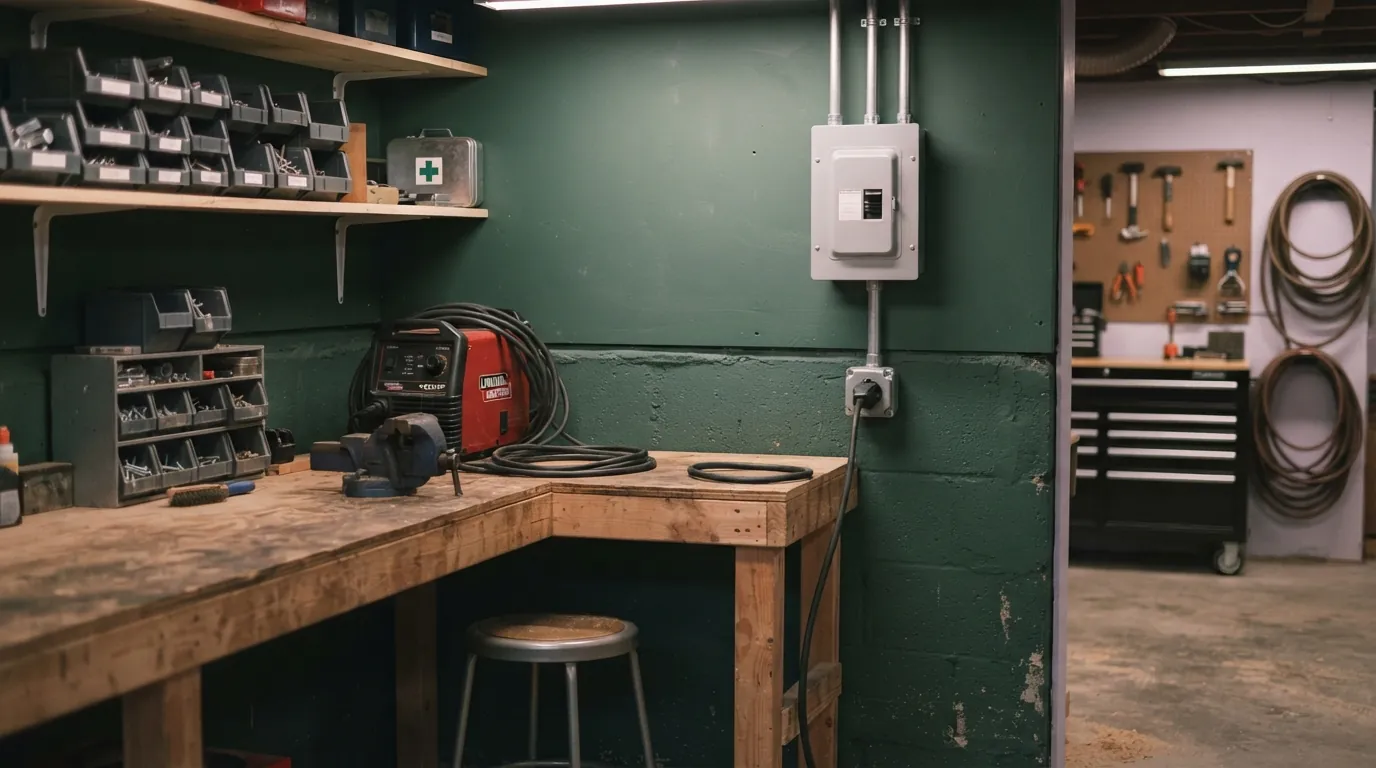
Welders, compressors and table saws in a garage or shop need circuits sized to their nameplates, and a 240 volt welder circuit is a different job from a standard outlet. Where the garage panel is short on space or capacity, we add a subpanel so the shop has room for future tools. Receptacles are matched to the plugs you already own, and the circuit is run to the spot where the tool actually sits rather than to the nearest convenient wall.
Local conditions
Local conditions that change the work
Most homes built before 1980 came with 100 amp service sized for the appliance load of that era, and a large share of Grand Rapids housing predates 1950. That is why dedicated circuit requests here so often start with a load calculation: a heat pump, induction range or welder can be the load that tells us the service needs an upgrade first.
How the job runs
How a dedicated circuit gets added
Read the nameplate
Voltage, amps and plug type.
Check the panel
Space, capacity and breaker type.
Plan the route
Shortest path with the fewest openings.
Pull the permit
Filed before work starts.
Run and connect
Wire, breaker, receptacle or disconnect.
Test and label
Load test, inspection, directory updated.
Breakers and devices from Square D, Eaton and Leviton.
Straight answers
Questions about dedicated circuit installation in Grand Rapids
Still unsure? Call (616) 699-4794 and ask a technician.
Ranges, dryers, dishwashers, microwaves, disposals, heat pumps, mini splits and most shop tools, depending on the nameplate and code.
Only if it matches the new nameplate. Many induction units need a larger circuit.
Yes. Michigan requires a permit for new circuits, and the work is inspected.
A subpanel or tandem breakers may work; if capacity is the issue, a panel upgrade comes first.
Yes. We have the circuit and disconnect ready when the equipment is set.
Same category